




















-
 +31 +1
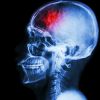
Researchers Find Gut Bacteria Can Trigger Brain Lesions That Lead to Strokes
In yet another study that has connected conditions in the gut to diseases of the brain, scientists have linked the cause of common blood vessel abnormalities in the brain to bacteria colonies in the stomach.
-
 +37 +1
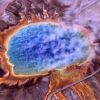
The ‘Dark Matter’ of the Microbial World
You’ve probably heard about your gut bacteria—now get to know your gut archaea. By Sarah Zhang.
-
 +38 +1
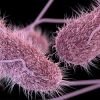
Diarrhea-causing Salmonella can be weaponized to flush out cancer
A notorious germ best known for getting people rushing to the bathroom may one day have cancer patients headed to clinics for a new treatment instead. With some genetic tweaking, Salmonella typhimurium transformed from a germ that causes mayhem in people’s intestines to one that can infiltrate deep into the bowels of tumors and spark immune system warfare.
-
 +25 +1
Organisms created with synthetic DNA pave way for entirely new life forms
E coli microbes have been modified to carry an expanded genetic code which researchers say will ultimately allow them to be programmed. By Ian Sample.
-
 +24 +1
Break in the Search for the Origin of Complex Life
A group of newly discovered microbes, named after Norse gods, may belong to the lineage from which we evolved. By Ed Yong.
-
 +28 +1
The “Asgard archaea” are our own cells’ closest relatives
We can’t culture them, but their genes suggest a close relationship.
-
 +26 +1
What’s Lurking in Your Showerhead
A new citizen-science initiative is cataloguing the weird microbes that live among us.
-
 +11 +1
Alien life could thrive in the clouds of failed stars
There’s an abundant new swath of cosmic real estate that life could call home—and the views would be spectacular. Floating out by themselves in the Milky Way galaxy are perhaps a billion cold brown dwarfs, objects many times as massive as Jupiter but not big enough to ignite as a star. According to a new study, layers of their upper atmospheres sit at temperatures and pressures resembling those on Earth, and could host microbes that surf on thermal updrafts. The idea expands the concept of a habitable zone to include a vast population of worlds that had previously gone unconsidered.
-
 +22 +1
A Conductor of Evolution’s Subtle Symphony
At first, the biologist Richard Lenski thought his long-term experiment on evolution might last for 2,000 generations. Nearly three decades and over 65,000 generations later, he’s still amazed by evolution’s “awesome inventiveness.” By Stephanie Bucklin.
-
 +13 +1
Unlocking the secrets of bacterial biofilms – to use against them
The vast majority of the bacteria that surround us are not free-floating but prefer to band together in cooperative communities called biofilms. How do biofilms form and cooperate? By Karin Sauer.
-
 +20 +1
Breasts have their own microbiome - and it could influence your cancer risk
Bacteria live in women's breast tissue, and new research has found evidence that a person’s unique breast microbiome can either prevent or promote the growth of breast cancer.
-
 +31 +1
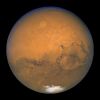
Marsquakes Could Potentially Support Red Planet Life
Marsquakes — that is, earthquakes on Mars — could generate enough hydrogen to support life there, a new study finds. Humans and most animals, plants and fungi get their energy mainly from chemical reactions between oxygen and organic compounds such as sugars. However, microbes depend on a wide array of different reactions for energy; for instance, reactions between oxygen and hydrogen gas help bacteria called hydrogenotrophs survive deep underground on Earth, and previous research suggested that such reactions may have even powered the earliest life on Earth.
-
 +28 +1
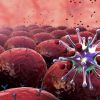
Researchers discover how human immune receptors become activated in the presence of harmful substances
In George Orwell's classic dystopian novel Animal Farm, as the barnyard devolves into chaos the slogan "all animals are equal" quickly becomes "all animals are equal but some animals are more equal than others". The same might be true for the tiny immune receptors scattered across the surface of our T-cells. Before now, it was unclear how these complex molecular receptors recognised harmful invaders (or antigens) and sent warning signals into the cell. It was largely assumed that "all receptors were equal".
-
 +25 +1
Water bottles may not be clean.
Bad news for people using refillable bottles
-
 +33 +1
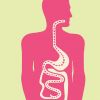
Is your gut making you sick?
A gut full of diverse microbes – bacteria, viruses and fungi – is essential for a healthy mind and body. And evidence is growing that our modern diet, overuse of antibiotics and obsession with cleanliness are damaging the diversity of microbes that live in our guts, contributing to a range of conditions including depression, multiple sclerosis, obesity and rheumatoid arthritis. Microbes live in our guts, bodily fluids, cavities and skin. For every one of our human cells, there’s at least one of them.
-
 +30 +1
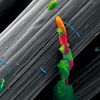
New Life Found That Lives Off Electricity
Scientists have figured out how microbes can suck energy from rocks. Such lifeforms might be more widespread than anyone anticipated. By Emily Singer. (June 21, 2016)
-
 +50 +1
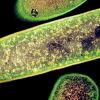
Coming Soon: Gut Bacteria That Actually Cure Your Disease
Everybody's talking about gut bacteria. Pick a disease or disorder, and somebody, somewhere, has said that a probiotic supplement—an over-the-counter, unregulated pill usually filled with a single strain of friendly gut bacteria—might cure it, whether it’s cancer, obsessive-compulsive disorder, or a yeast infection. But there’s very little evidence that probiotic supplements do any good. “There’s a lot of promise here but not a lot of proof yet,” said Cliff McDonald, associate director for science at the Centers for Disease Control and Prevention's Division of Healthcare Quality Promotion.
-
 +16 +1
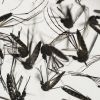
While Brazil Was Eradicating Zika Mosquitoes, America Made Them Into Weapons
The exact moment when one of the world’s most dangerous mosquitoes arrived in the Americas is unknown. It's clear that they came from Africa, and they may have crossed the Atlantic as early as 1495, on some of the first European ships to reach Hispanola. By 1648, when yellow fever broke out on the Yucatan peninsula, Aedes aegypti had definitely arrived. Their behavior upon arrival, though, was unusual. Most of the world's 3,500-plus mosquito species are innocent of lust for human blood but on these long journeys across the sea, the mosquitoes that survived were the ones willing to bite humans.
-
 +17 +1
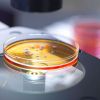
99.999 percent of microbe species have yet to be discovered, say scientists.
Earth could contain 1 trillion microbial species, but humans only know about 0.001 percent of them, two biologists from Indiana University suggest in a paper published Monday in Proceedings of the National Academy of Sciences. "We've done a pretty good job of cataloguing macrobes. Maybe every few years you'll hear about a new worm at the bottom of the ocean, but the rate we are exploring new [plants and animals] is slowing down," Jay Lennon, a microbial biology researcher at...
-
 +22 +1
Get cozy with your skin bacteria — they’re not going anywhere
Even with all the surfaces our skin comes into contact with, our microbes are pretty steadfast.
Submit a link
Start a discussion