





















-
 +15 +1
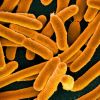
Space Dust Could Help Life Jump from Planet to Planet
It may not take an asteroid strike to transport life from one planet to another. Fast-moving dust could theoretically knock microbes floating high up in a world's atmosphere out into space, potentially sending the bugs on a trip to another planet — perhaps even one orbiting a different star, according to a new study. "The proposition that space-dust collisions could propel organisms over enormous distances between planets raises some exciting prospects of how life and the atmospheres of planets originated," study author Arjun Berera, a professor in the School of Physics and Astronomy...
-
 +28 +1
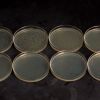
Kill switches for engineered microbes gone rogue
Synthetic biologists are fitting the genomes of microorganisms with synthetic gene circuits to break down polluting plastics, non-invasively diagnose and treat infections in the human gut, and generate chemicals and nutrition on long haul space flights. Although showing great promise in the laboratory, these technologies require control and safety measures that make sure the engineered microorganisms keep their functional gene circuits intact over many cell divisions, and that they are contained to the specific environments they are designed for.
-
 +17 +1
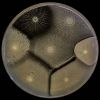
The Beautiful Intelligence of Bacteria and Other Microbes
Bacterial biofilms and slime molds are more than crude patches of goo. Detailed time-lapse microscopy reveals how they sense and explore their surroundings, communicate with their neighbors and adaptively reshape themselves. By John Rennie.
-
 +24 +1
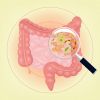
Chronic fatigue syndrome: Could altered gut bacteria be a cause?
Researchers find that people with chronic fatigue syndrome have an altered gut microbiome, which may shed light on the cause of the elusive condition.
-
 +6 +1
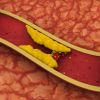
+6 +1Clogged arteries may be down to bacteria, not diet
An analysis of the chemical signatures of fatty deposits in clogged arteries found that they matched lipids produced by mouth and gut bacteria.
-
 +24 +1
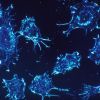
Suicide molecules kill any cancer cell
Small RNA molecules originally developed as a tool to study gene function trigger a mechanism hidden in every cell that forces the cell to commit suicide, reports a new Northwestern Medicine study, the first to identify molecules to trigger a fail-safe mechanism that may protect us from cancer. The mechanism -- RNA suicide molecules -- can potentially be developed into a novel form of cancer therapy, the study authors said.
-
 +15 +1
Synthetic Biology Could Allow Bad Actors to Re-Create Smallpox
SynBioBeta, which bills itself as the world’s premier forum for innovators and investors interested in synthetic biology, concluded its sixth annual conference in San Francisco earlier this month. Companies from across the country and from around the world delivered presentations on how they are finding biological solutions to human problems. The conference showcased how synthetic biology can be used to develop new drugs, protect the environment, and improve agricultural productivity.
-
 +29 +1
Viruses discovered a century ago may be our best defence against a threat that could kill 10 million people a year by 2050
Antibiotic resistance is a growing threat around the world. So some drugmakers are starting to turn to other solutions, including one that’s actually had a fairly long history: phage therapy.
-
 +1 +1
+1 +1More Than 30 Years Since Their Discovery, Prions Still Fascinate, Terrify and Mystify Us
Figuring out what they were was just the beginning of a field of research into prions and prion diseases that's still growing. By Kat Eschner.
-
 +36 +1
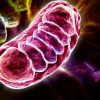
Explainer: what are mitochondria and how did we come to have them?
To explain why we have a mitochondria, we have to go back about two billion years to a time when none of the complexity of life as we see it today existed.
-
 +25 +1
Do Microbes Trigger Alzheimer’s Disease?
The once fringe idea is gaining traction among the scientific community. By Jill U. Adams. (Sept. 1, 2017)
-
 +1 +1
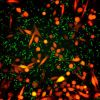
+1 +1See jerkface bacteria hiding in tumors and gobbling chemotherapy drugs
Of all the kinds of bacteria, some are charming and beneficial, others are malicious and dangerous—and then there are the ones that are just plain turds. That’s the case for Mycoplasma hyorhinis and its ilk. Researchers caught the little jerks hiding out among cancer cells, gobbling up chemotherapy drugs intended to demolish their tumorous digs. The findings, reported this week in Science, explain how some otherwise treatable cancers can thwart powerful therapies.
-
 +38 +1
Scientists Just Added a Shocking 20 New Branches to The Tree of Life
Scientists have identified the genomes of close to 8,000 microorganisms from samples taken out in the field – and around a third of them are distinct from any life forms known to science, adding a crazy 20 new branches to our tree of microscopic...
-
 +27 +1
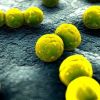
Bacteria Use Brainlike Bursts of Electricity to Communicate
Bacteria have an unfortunate—and inaccurate—public image as isolated cells twiddling about on microscope slides. The more that scientists learn about bacteria, however, the more they see that this hermitlike reputation is deeply misleading, like trying to understand human behavior without referring to cities, laws or speech. “People were treating bacteria as … solitary organisms that live by themselves,” said Gürol Süel, a biophysicist at the University of California, San Diego. “In fact, most bacteria in nature appear to reside in very dense communities.”
-
 +23 +1
Bacteria Use Brainlike Bursts of Electricity to Communicate
With electrical signals, simple cells organize themselves into complex societies and negotiate with other colonies. Research has suggested that bacteria can affect their hosts’ appetite or mood
-
 +34 +1
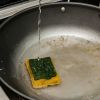
Your kitchen sponge harbors zillions of microbes. Cleaning it could make things worse
That sponge in your kitchen sink harbors zillions of microbes, including close relatives of the bacteria that cause pneumonia and meningitis, according to a new study. One of the microbes, Moraxella osloensis, can cause infections in people with a weak immune system and is also known for making laundry stink, possibly explaining your sponge’s funky odor. Researchers made the discovery by sequencing the microbial DNA of 14 used kitchen sponges, they report this month in Scientific Reports.
-
 +17 +1
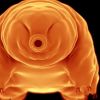
The last survivors on Earth
The world’s most indestructible species, the tardigrade, an eight-legged micro-animal, also known as the water bear, will survive until the Sun dies, according to a new Oxford University collaboration.
-
 +23 +1
Do probiotic deodorants really work?
I was intrigued by the new wave of probiotic deodorants; underarm salves that supposedly use a healthy mix of bacteria to combat body odor without the chemicals that cause armpit stains. So myself and five other Popular Science staffers put these products to the test. This is...
-
 +24 +1
There are diseases hidden in ice, and they are waking up
Long-dormant bacteria and viruses, trapped in ice and permafrost for centuries, are reviving as Earth's climate warms.
-
 +30 +1
During a hospital stay, all microbial hell breaks loose between you and the room
Within 24 hours, your microbes stake their flags in their new hospital territory.
Submit a link
Start a discussion