





















-
 +14 +1
Earth may be home to one trillion species: Largest-ever analysis of microbial data reveals an ecological law concluding 99.999 percent of species remain undiscovered
Earth could contain nearly 1 trillion species, with only one-thousandth of 1 percent now identified, according to a study from biologists at Indiana University. The estimate, based on the intersection of large datasets and universal scaling laws, appears May 2 in the Proceedings of the National Academy of Sciences. The study's authors are Jay T. Lennon, associate professor...
-
 +37 +1
How The Bacteria In Your Gut Could Be Used To Treat Mental Illness
New research finds that altering gut bacteria in mice changes the way their brains work.
-
 +6 +1
+6 +1Your City Has A Bacterial Fingerprint That's As Unique As Its Skyline
So does your officeand even your officemates.
-
 +27 +1
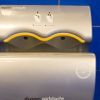
Dyson Airblades 'spread germs 1,300 times more than paper towels'
Dyson Airblade hand-driers spread 60 times more germs than standard air dryers, and 1,300 times more than standard paper towels, according to research published in the Journal of Applied Microbiology.
-
 +7 +1
+7 +1Neuroscientists Fight Brain Damage with Gut Microbes
Hacking the body's inflammatory immune response via the gut microbiome. By Michael Byrne.
-
 +38 +1
Unlocking the Mechanics of the Urinary Tract Infection
New research helps explain how bacteria send their victims running to the bathroom. By Lina Zeldovich.
-
 +36 +1
This common bacterium grows 60% better in space than on Earth
It’s something that no one can explain right now, but scientists have found that of the 48 harmless bacteria strains they’ve been raising on the International Space Station, one has not just adapted to its new microgravity environment some 400 km above Earth - it prefers it. According to a new study, Bacillus safensis JPL-MERTA-8-2 - a strain that was first discovered on one of the Mars Exploration Rovers at the Kennedy Space Center in Florida before they...
-
 +21 +1
The Bacteria That Make Perfect, Tiny Magnets
Learn how magnetic bacteria work, and how scientists think they can help technology in the future!
-
 +38 +1
Scientists may have finally solved Zika's scariest mystery
Public health experts have long suspected that a spike in birth defects in Central and South America was linked to the Zika virus, but they didn't know how. Today, the picture became a little bit clearer. A team of US researchers has discovered what they believe could be the mechanism by which the mosquito-borne virus hinders brain development in unborn children. Their study finds that the virus targets the outer layer...
-
 +30 +1
Zika hysteria is way ahead of research into virus, says expert
Leslie Lobel says it’s unclear whether birth defects in Brazil are linked to Zika, and any panic can cause more harm than the virus itself.
-
 +48 +1
Millions could die as world unprepared for pandemics, says UN
A global epidemic far worse than the Ebola outbreak is a real possibility and could kill many millions if the world does not become better prepared to deal with the sudden emergence and transmission of disease, the UN has said in a hard-hitting report. The report has emerged in draft form, as experts rally to deal with the rapid spread of the Zika virus across Latin America, which has been linked to thousands of cases of brain damage in babies.
-
 +8 +1
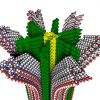
+8 +1Completely new kind of polymer developed
Imagine a polymer with removable parts that can deliver something to the environment and then be chemically regenerated to function again. Or a polymer that can lift weights, contracting and expanding the way muscles do. These functions require polymers with both rigid and soft nano-sized compartments with extremely different properties that are organized in specific ways. A completely new hybrid polymer of this type has been developed...
-
 +22 +1
All your germaphobic habits are pretty much useless
Don't want to get sick this season? Sure, you've heard the basics: carry hand sanitiser everywhere. Grab public-bathroom door handles with paper towels. Hold your breath when your unwell-looking subway seat partner starts coughing. Bad news, germaphobe - your meticulous habits likely aren't doing much to protect you. Here's a look at all the weird germ-avoidance behaviours that are probably useless.
-
 +40 +1
Bearded men are probably more hygienic, new research finds
The trendiness of beards seems to ebb and flow depending on where in the world you are and what decade you happen to be living in, but what about the health implications of these dense patches of 'face fur'? The BBC has been investigating whether beards are actually good or bad for our health, whether you're growing one yourself or coming into contact with someone who is.
-
 +38 +1
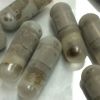
Human trials will test freeze-dried poop pills as a weight-loss treatment
If you want to lose weight, a new diet or gym membership sounds a whole lot better than consuming someone else's poop in pill form, but that's exactly the method researchers are about to investigate in a clinical trial that's been approved for later this year. It's not the most pleasant treatment you can imagine, but there's strong evidence that faeces is good for the microbiome environment inside our guts. Reports have shown that in some situations...
-
 +36 +1
The Flu Virus May Affect Men Worse Than Women, Study Says
According to recent research, women may have a biological advantage over men when flu season rolls around. The study, conducted by a team from Johns Hopkins University, shows that estrogen is an effective shield against flu viral replication. Studies have shown estrogen to have antiviral effects on HIV, Ebola, and hepatitis in the past, so the team was inspired to investigate if the same is true with influenza. To test their hunch, the researchers sampled nasal cells...
-
 +43 +1
Tomorrow’s Heart Drugs Might Target Gut Microbes
If your cholesterol levels are high, your doctor might prescribe you a statin, a drug that blocks one of the enzymes involved in creating cholesterol. But in the future, she might also prescribe a second drug that technically doesn’t target your body at all. Instead, it would manipulate the microbes in your gut. Each of us is home to trillions of bacteria and other microbes—a teeming mass collectively known as the microbiome.
-
 +26 +1
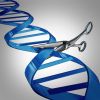
Where to Draw the Line on Gene-Editing Technology
New techniques that could make germline genetic engineering unprecedentedly easy are forcing policymakers to confront the ethical implications of moving forward
-
 +14 +1
The scientists whose garden unlocked the secret to good health
When Anne Biklé and David Montgomery fed soil with organic matter, they were astonished by the results. When Biklé was diagnosed with cancer, they had an idea…By Lucy Rock.
-
 +39 +1
We know the city where HIV first emerged
When HIV and AIDS appeared they seemed to come from nowhere, but genetics has told us when and where the virus first entered the human population
Submit a link
Start a discussion