





















-
 +20 +1
Brain activity study links social anxiety to a preoccupation with making errors
A new study that monitored children’s brain activity suggests that social anxiety is related to a preoccupation with making mistakes. The research, published in the Journal of the American Academy of Child & Adolescent Psychiatry, provides insight into the neurological mechanisms underlying social anxiety symptoms.
-
 +2 +1
+2 +1New study shows musicians have a remarkable behavioral advantage when it comes to learning
"Currently, there is striking evidence showing that both plastic changes in the auditory-related cortex (ARC), as well as altered neural network characteristics, lead to remarkable behavioral advantages of musicians..." Says Stefan Elmer - Lead author of the study, 'Theta Coherence Asymmetry in the Dorsal Stream of Musicians Facilitates Word Learning' published in Nature on 15th March 2018
-
 +17 +1
Poverty Impedes Cognitive Function
Lacking money or time can lead one to make poorer decisions, possibly because poverty imposes a cognitive load that saps attention and reduces effort. Mani et al. (p. 976; see the Perspective by Vohs) gathered evidence from shoppers in a New Jersey mall and from farmers in Tamil Nadu, India. They found that considering a projected financial decision, such as how to pay for a car repair, affects people's performance on unrelated spatial and reasoning tasks.
-
 +20 +1
A philosopher’s 350-year-old trick to get people to change their minds is now backed up by psychologists
The 17th century philosopher Blaise Pascal is perhaps best known for Pascal’s Wager which, in the first formal use of decision theory, argued that believing in God is the most pragmatic decision. But it seems the French thinker also had a knack for psychology. As Brain Pickings points out, Pascal set out the most effective way to get someone to change their mind, centuries before there was any formal study of persuasion...
-
 +19 +1
We view ourselves and those we care about through ‘rose-tinted glasses’, study says
New research from City, University of London, University of Oxford and Yale University has shown that we see our own lives, and also those we care about, through ‘rose-tinted glasses’. The study, which is the first to show that such an ‘optimism bias’ extends beyond the self, found that people readily changed their beliefs about a person they like when receiving good news but barely changed their opinions about them after receiving bad news.
-
 +2 +1
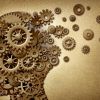
+2 +1The Limits of Logic
Logicians don't rule the world or get the most done. Could it be that a consistent world view is neither desirable nor achievable? If we abandon the straightjacket of rationality might this lead to a more powerful and exciting future, or is it a heresy that leads to madness?
-
 +29 +1
Study finds reading information aloud to yourself improves memory
You are more likely to remember something if you read it out loud, a study from the University of Waterloo has found. A recent Waterloo study found that speaking text aloud helps to get words into long-term memory. Dubbed the “production effect,” the study determined that it is the dual action of speaking and hearing oneself that has the most beneficial impact on memory.
-
 +1 +1
+1 +1A Harvard philosopher’s argument for not loving yourself just as you are
The importance of loving yourself is a common catchphrase among feel-good gurus and the subject of countless self-help books. But Harvard University’s Michael Puett argues that loving yourself—and all your flaws—can actually be quite harmful. Puett, who earlier this year published a book on what Chinese philosophy can teach us about the good life, suggests that ancient Chinese philosophers would strongly disapprove of today’s penchant for self-affirmation.
-
 +22 +1
The Real Link Between Creativity and Mental Illness
“There is only one difference between a madman and me. I am not mad.” — Salvador Dali. The romantic notion that mental illness and creativity are linked is so prominent in the public consciousness that it is rarely challenged. So before I continue, let me nip this in the bud: Mental illness is neither necessary nor sufficient for creativity.
-
 +15 +1
Close friends linked to a sharper memory
Maintaining positive, warm and trusting friendships might be the key to a slower decline in memory and cognitive functioning, according to a new Northwestern Medicine study. SuperAgers -- who are 80 years of age and older who have cognitive ability at least as good as people in their 50s or 60s -- reported having more satisfying, high-quality relationships compared to their cognitively average, same-age peers, the study reports.
-
 +25 +1
UCLA neuroscientists use weak electrical signal to stimulate human brain and improve memory
Neuroscientists at the David Geffen School of Medicine at UCLA have discovered precisely where and how to electrically stimulate the human brain to enhance people’s recollection of distinct memories. People with epilepsy who received low-current electrical pulses showed a significant improvement in their ability to recognize specific faces and ignore similar ones.
-
 +4 +1
+4 +1Analytic thinking undermines religious belief while intelligence undermines social conservatism, study suggests
Religion and politics appear to be related to different aspects of cognition, according to new psychological research. Religion is more related to quick, intuitive thinking while politics is more related to intelligence. The study, which was published in the scientific journal Personality and Individual Differences, found evidence that religious people tend to be less reflective while social conservatives tend to have lower cognitive ability.
-
 +22 +1
Silicon Valley is obsessed with meditation, and there’s new evidence it changes the brain for the better
The idea of sitting in a quiet room doing nothing for a few minutes each day might sound absurd — unless you understand how meditation works. By giving our bustling mind a dedicated break from its day-to-day worries, meditation appears to empower it to run more efficiently. A growing body of research suggests that even a few minutes of a daily mindfulness practice is linked to lower stress levels, more positivity, better focus, and creativity.
-
 +21 +1
Feeling bad about feeling bad can make you feel worse
Pressure to feel upbeat can make you feel downbeat, while embracing your darker moods can actually make you feel better in the long run, according to new UC Berkeley research. “We found that people who habitually accept their negative emotions experience fewer negative emotions, which adds up to better psychological health,” said study senior author Iris Mauss, an associate professor of psychology at UC Berkeley.
-
 +20 +1
Your Brain Really Can Form New Memories While You Sleep
A sleeping brain can form fresh memories, according to a team of neuroscientists. The researchers played complex sounds to people while they were sleeping, and afterward the sleepers could recognise those sounds when they were awake. The idea that humans can learn while asleep, a concept sometimes called hypnopaedia, has a long and odd history. It hit a particularly strange note in 1927, when New York inventor A. B. Saliger debuted the Psycho-phone. He billed the device as an "automatic suggestion machine."
-
 +26 +1
How your mind protects you against hallucinations
More than 300 years ago, the philosopher René Descartes asked a disturbing question: If our senses can’t always be trusted, how can we separate illusion from reality? We’re able to do so, a new study suggests, because our brain keeps tabs on reality by constantly questioning its own past expectations and beliefs. Hallucinations occur when this internal fact-checking fails, a finding that could point toward better treatments for schizophrenia and other psychiatric disorders.
-
 +13 +1
The Speed in Which You Perceive The World Can Be Altered With a Video
The speed in which you see moving objects around you, can be shifted up or down with the help of a stimulus such as a video. In their study, Visual adaptation alters the apparent speed of real-world actions, researchers from University of Lincoln and University of Stirling have shown that the perceived speed of a moving object can be altered with a stimulus, such as an adapting video, which was used in their experiment.
-
 +14 +1
Why religious people 'cling' to beliefs even when contradicted by evidence
Religious people "cling" to certain beliefs in the face of evidence because those views are closely tied to their moral compasses, new studies have suggested. Dogmatic individuals hold confidently to their faith even when contradicted by experts because those beliefs have "emotional resonance," researchers said. In contrast, militant atheists struggle to see anything positive about religion because their brains are dominated by analytical thinking, scientists found.
-
 +2 +1
+2 +1How Rational is our Rationality?
If you calculate a tip when you’re drunk, you should think of yourself as taking a belief-gamble – you’re forming a belief in a way that gives you a 50% shot at getting things right and a 50% shot at getting things wrong. This is the equivalent of guessing. Since the way in which we care about the accuracy of our beliefs prohibits guessing, this way of caring about accuracy also prohibits forming beliefs while drunk.
-
 +4 +1
+4 +1What Is Reflective Reasoning? | Nick Byrd
Last week I was talking about intuition. I think of intuition as — among other things — an unconscious and automatic reasoning. The opposite of that would be a conscious and deliberative reasoning. We might call that reflective reasoning. In this post I want to talk about reflective reasoning. How does it work? And why does it work? And — spoiler alert — why does it sometimes not work?
Submit a link
Start a discussion