




















-
 +27 +1
A New Way to Become More Open-Minded
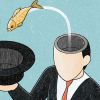
Benjamin Franklin knew he was smart — smarter than most of his peers — but he was also intelligent enough to understand that he couldn’t be right about everything. That’s why he said that whenever he was about to make an argument, he would open with something along the lines of, “I could be wrong, but…” Saying this put people at ease and helped them to take disagreements less personally. But it also helped him to psychologically prime himself to be open to new ideas.
-
 +17 +1
People who are religious and 'ontologically confused' are more likely to share pseudo-profound bullshit
A new study has found that the more literally a person understands metaphorical statements and the more religious they are, the more likely they are to share pseudo-profound bullshit on social media. The new research, published in Applied Cognitive Psychology, replicated Gordon Pennycook’s 2015 study on bullshit receptivity — meaning the propensity to interpret nonsensical sentences as profound statements — using a sample from two Eastern European countries.
-
 +22 +1
Mind’s quality control center found in long-ignored brain area
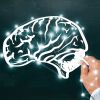
The cerebellum can’t get no respect. Located inconveniently on the underside of the brain and initially thought to be limited to controlling movement, the cerebellum has long been treated like an afterthought by researchers studying higher brain functions. But researchers at Washington University School of Medicine in St. Louis say overlooking the cerebellum is a mistake. Their findings, published Oct. 25 in Neuron, suggest that the cerebellum has a hand in every aspect of higher brain functions — not just movement, but attention, thinking, planning and decision-making.
-
 +7 +1
+7 +1Why The Mind Is Not the Brain
Let’s start with the title of your latest book. Why is the mind not the brain? The shortest argument goes something like this: there’s what philosophers call a mereological fallacy. Mereology is the discipline which studies the relation between wholes and parts. So imagine someone tells you that David Beckham didn’t score a goal, it was his foot. That would be an odd thing to say because Beckham couldn’t shoot for the goal without his foot, but it was the whole beast, so to speak, which shot the goal.
-
 +16 +1
Sex on the Brain: Frequent Sex Might Have Cognitive Benefits
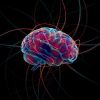
Frequent sex might enhance our performance on certain cognitive tasks. A growing body of research on both humans and animals published in the last decade points to this conclusion, including a new study in the Archives of Sexual Behavior. Here's a look at the accumulated evidence and what it suggests about how sex might benefit the brain.
-
 +14 +1
If You’re Bad, Here's How to Get People to Think You’re Good
Consider the protagonist Walter White from the series Breaking Bad. Throughout the series, he manufactures methamphetamine, repeatedly puts his family in danger, and commits multiple murders. And yet viewers liked him. In fact, some even defended him. How is this possible?
-
 +27 +1
16 Going on 66: Will You Be the Same Person 50 years from Now?
How much do you change between high school and retirement? The answer depends on whether you’re comparing yourself to others or to your younger self. The results of a new study, the first to test how personality might change over 50 years and relying on the same data source at both time points, finds that broad patterns of thoughts, feelings and behaviors – personality – do change, and this change appears to accumulate with time. But don’t compare yourself to others; those who are the most emotionally stable when young are probably going to continue being the most stable as they age.
-
 +12 +1
Yuval Noah Harari: ‘The idea of free information is extremely dangerous’
As his new book is published, the bestselling author talks fake news, meditation and appearing with Natalie Portman
-
 +10 +1
Why your brain never runs out of problems to find
Why do many problems in life seem to stubbornly stick around, no matter how hard people work to fix them? It turns out that a quirk in the way human brains process information means that when something becomes rare, we sometimes see it in more places than ever. Think of a “neighborhood watch” made up of volunteers who call the police when they see anything suspicious. Imagine a new volunteer who joins the watch to help lower crime in the area. When they first start volunteering, they raise the alarm when they see signs of serious crimes, like assault or burglary.
-
 +22 +1
People With Autoimmune Disorders More Likely To Have Psychosis, Research Shows
‘People with any autoimmune disorder are around 40 percent more likely to develop psychotic disorders such as schizophrenia,’ researchers from King’s College London concluded.
-
 +8 +1
+8 +1Why ‘Find your passion!’ may be bad advice
The belief that interests arrive fully formed and must simply be “found” can lead people to limit their pursuit of new fields and give up when they encounter challenges, according to a new Stanford study.
-
 +13 +1
Mind wandering is fine in some situations, Harvard-based study says
While most of the psychological literature calls mind wandering a detrimental “failure of executive control” or a “dysfunctional cognitive state,” a new study led by Paul Seli, a Banting Postdoctoral Fellow working in the lab of Dan Schacter, suggests that in some cases there’s no harm in it.
-
 +5 +1
+5 +1Bad news becomes hysteria in crowds, new research shows
News stories about terrorism, disease outbreaks, natural disasters, and other potential threats become increasingly negative, inaccurate and hysterical when passed from person to person, according to new research by the University of Warwick.
-
 +1 +1
+1 +1Taking a photo of something impairs your memory of it, but the reasons remain largely mysterious
Avid photographers celebrate the viewfinder as a means of helping us see the world anew. But psychology research has shown that under some conditions taking a photo of something actually makes it harder to remember. One possible reason is that we give less attention to an experience when we know that it will be safely stored in a photograph. But in a new paper in the Journal of Applied Research in Memory and Cognition, Julia Soares and Benjamin Storm from the University of California show that the photo-taker’s memory will suffer whether they expect to keep the photo or not.
-
 +11 +1
People who think their opinions are superior to others are most prone to overestimating their relevant knowledge and ignoring chances to learn more
We all know someone who is convinced their opinion is better than everyone else’s on a topic – perhaps, even, that it is the only correct opinion to have. Maybe, on some topics, you are that person. No psychologist would be surprised that people who are convinced their beliefs are superior think they are better informed than others, but this fact leads to a follow on question: are people actually better informed on the topics for which they are convinced their opinion is superior? This is what Michael Hall and Kaitlin Raimi set out to check in a series of experiments in the Journal of Experimental Social Psychology.
-
 +21 +1
The Overkill Backfire Effect: on the Danger of Having Too Much Evidence
The overkill backfire effect is a cognitive bias that causes people to reject arguments that they think are too complex, in favor of arguments that are easy for them to understand. Accounting for this bias is important, because it means that past a certain point, presenting additional evidence in support of your argument can actually make people less likely to accept it.
-
 +12 +1
In Virtual Reality, How Much Body Do You Need?
How connected are your body and your consciousness? When Michiteru Kitazaki, a professor of engineering at Toyohashi University of Technology in Japan, recently posed this question in an email, he evoked an idea from Japanese culture known as tamashii, or the soul without a body.
-
 +22 +1
Attentive adults increase children’s ability to empathise
For human beings to function socially, they need to be able to perceive, understand, and talk about others’ mental states, such as beliefs, desires and intentions. There is no consensus among researchers as to when children develop this ability. Previous research indicates that it emerges around the age of four, but research at Lund University in Sweden shows that children can demonstrate this ability earlier – within social situations that they experience together with an engaged adult.
-
 +7 +1
+7 +1Why Psychopaths Make Such Bad First Impressions
When you meet someone for the first time, your mind actively turns on the assessment machinery to help gauge whether this is a person you can trust or not. You try to evaluate whether this person will have your best interests at heart, or whether you’re at risk of having this person take advantage of you. If you’re good at this skill, you’ll easily be able to figure out what your approach should be and react accordingly. If not, you stand to lose anything from your hard-earned money to a chunk of your well-being.
-
 +13 +1
Theoretically, Recording Dreams Is Possible...Scientists Are Trying
Dreams can feel awfully real when you’re deep in sleep. Perhaps you find a hidden doorway in your home that leads to entirely new rooms and passageways. Maybe you went to work in your underwear—yikes. When you wake up, you check your closet for that mysterious doorway; maybe you jolt awake in a cold sweat, instantly relieved you still have plenty of time to properly clothe yourself before leaving the house. Regardless, whatever you were experiencing felt very real just moments ago.
Submit a link
Start a discussion