



















-
 +8 +3
+8 +3Could recent supernovae be responsible for mass extinctions?
Two nearby supernovae that exploded about 2.5 and eight million years ago could have resulted in a staggered depletion of Earth's ozone layer, leading to a variety of repercussions for life on Earth. By Julia Demarines.
-
 +14 +4
Was Science Wrong About Being Right?
Handedness is an ancient trait, but researchers are rethinking its roots. By Gemma Tarlach.
-
 +33 +9
'Sea Nomads' Are First Known Humans Genetically Adapted to Diving
If you hold your breath and plunge your face into a tub of water, your body automatically triggers what's called the diving response. Your heart rate slows, your blood vessels constrict, and your spleen contracts, all reactions that help you save energy when you're low on oxygen. Most people can hold their breath underwater for a few seconds, some for a few minutes. But a group of people called the Bajau takes free diving to the extreme, staying underwater for as long as 13 minutes at depths of around 200 feet.
-
 +12 +2
Having Big Genitals Can Spell Evolutionary Disaster, say Paleobiologists
For most animals, survival is all about being good at getting laid. That’s why sexual dimorphism exists: Males often look and act differently than females of their same species because it helps them attract and secure mates. Some examples are the bright colors that the male bird of paradise flaunts while sexy-dancing for its more demure-looking mate, or the bulbously attractive nose of a male sea elephant.
-
 +16 +4
Species with big sex differences are more likely to die out
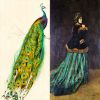
When sexual selection leads to extreme differences between sexes like the peacock's tail, it makes species more likely go extinct
-
 +28 +4
A Dangerous Antibiotic-Resistant Gene Has Spread The World. We Now Know Where It Started
We did this. By David Nield.
-
 +24 +2
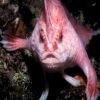
This blind, cave-dwelling fish can climb walls
Scientists have long been trying to figure out how exactly our ancestors evolved from fish to land vertebrates some 375 million years ago. Now a tiny, eyeless fish that walks and climbs up waterfalls could offer some clues... By Kaitlyn Tiffany.
-
 +39 +5
How Cheese, Wheat and Alcohol Shaped Human Evolution
Over time, diet causes dramatic changes to our anatomy, immune systems and maybe skin color
-
 +21 +6
Hawaii: Where Evolution Can Be Surprisingly Predictable
On each Hawaiian island, stick spiders have evolved into the same basic forms—gold, white, and dark. It’s a stunning example of how predictable evolution can be.
-
 +1 +1
+1 +1Pruitt tapes revealed: Evolution's a 'theory,' 'majority' religions under attack
Environmental Protection Agency Administrator Scott Pruitt dismissed evolution as an unproven theory, lamented that “minority religions” were pushing Christianity out of “the public square” and advocated amending the Constitution to ban abortion, prohibit same-sex marriage and protect the Pledge of Allegiance and the Ten Commandments, according to a newly unearthed series of Oklahoma talk radio shows from 2005.
-
 +8 +3
+8 +3Men with higher testosterone levels report being more protective of their romantic relationships
New research suggests that men with higher levels of testosterone tend to devote more energy to keeping their romantic partners faithful and in a relationship with them. The study, published in the journal Physiology & Behavior, examined what is known as mate retention behavior. “A great deal of research has previously focused on the role that testosterone (an androgen) plays in men’s mate-seeking and competition for mates,” explained study author Steven Arnocky, an associate professor and founding director of the Human Evolution Laboratory at Nipissing University, Canada.
-
 +12 +3
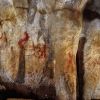
Neanderthals – not modern humans – were first artists on Earth, experts claim
More than 65,000 years ago, a Neanderthal reached out and made strokes in red ochre on the wall of a cave, and in doing so, became the first known artist on Earth, scientists claim. The discovery overturns the widely-held belief that modern humans are the only species to have expressed themselves through works of art.
-
 +18 +2
A gene that prevents people from drinking too much is spreading throughout the globe
Humans may be evolving a genetic variant that would make them physically unable to consume large amounts of alcohol, new research suggests. If this gene is able to take hold on the global population, it could one day help reduce alcoholism and alcohol-abuse related health ailments
-
 +23 +6
Evolution Deniers Are Mad at Wikipedia for “Censoring” Intelligent Design
David Klinghoffer, a senior fellow at the Intelligent Design-promoting Discovery Institute, just announced its winner for the Censor of the Year award, given to the media outlet or publisher that refuses to acknowledge the other side of a story. This year’s winner? Wikipedia. Because apparently the article about Intelligent Design doesn’t treat the concept on par with evolution.
-
 +13 +2
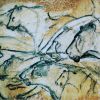
Neanderthals’ Lack of Drawing Ability May Relate to Hunting Techniques
Neanderthals had large brains and made complex tools but never demonstrated the ability to draw recognizable images, unlike early modern humans who created vivid renderings of animals and other figures on rocks and cave walls. That artistic gap may be due to differences in the way they hunted, suggests a University of California, Davis, expert on predator-prey relations and their impacts on the evolution of behavior.
-
 +17 +2
Why Alien Life Would be our Doom - The Great Filter
Finding alien life on a distant planet would be amazing news - or would it? If we are not the only intelligent life in the universe, this probably means our days are numbered and doom is certain.
-
 +22 +3
In Birds’ Songs, Brains and Genes, He Finds Clues to Speech
The neuroscientist Erich Jarvis found that songbirds’ vocal skills and humans’ spoken language are both rooted in neural pathways for controlling learned movements. By Jordana Cepelewicz.
-
 +14 +1
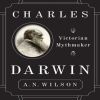
Darwin on Endless Trial
Morten Høi Jensen weighs two takes on Darwin’s legacy.
-
 +27 +3
Before the Iron Age, Most Iron Came From Space
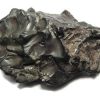
New research is showing just how coveted meteoritic iron was in the Bronze Age. Earth is not short of iron—the metal makes up much of our planet’s core and is the fourth most abundant element in the crust. But actually getting that iron out to use it—to make tools, for example—hasn’t always been a simple process. Most iron is packed away in ore, and you have to know how to smelt it to produce the metal, long prized for its strength and workability. Humans didn’t really master the process and produce iron at a large scale until around 1200 B.C...
-
 +20 +4
The origin of the thesis; Charles Darwin in his time
Clare Pettitt on Charles Darwin’s method and approach to his scientific discoveries and the influence of ideology in shaping his theory of sexual selection.
Submit a link
Start a discussion