




















-
 +17 +2
How evolutionary biology makes everyone an existentialist
Ethics cannot be based on human nature because, as evolutionary biology tells us, there is no such thing. Questions about what matters, and why, and what exists in the world, are quintessentially philosophical. The answers to many of these questions are informed by how we conceive of ourselves. How has what is often described as the ‘Copernican revolution’ effected by Charles Darwin changed our self-conception? One particularly surprising feature of evolutionary biology is that it lends significant support to existentialism.
-
 +4 +1
+4 +1The Neoliberal Survival Game
One of the ways the media has shaped the public’s attitude concerning the distribution of wealth and power in our society, has been by the dissemination of a familiar but menacing ideology, an ideology which teaches that human success and failure is determined by evolutionary fitness — ‘the survival of the fittest’ ethic. By Kelly Wilkins.
-
 +23 +4
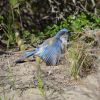
Birds Rub Ants on Themselves, and No One Knows Exactly Why
It’s called “anting,” and it is weird. By Eric Grundhauser.
-
 +25 +1
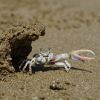
The Mate Selection Trapdoor
Tracing the evolution of hidden sexual preferences. By Michael J. Ryan.
-
 +16 +4
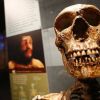
Scientists make find that could rewrite human history
A skull found in China could re-write our entire understanding of human evolution. That's according to scientists who have examined the important, ancient head and say that it proves the existing theory of how humans came to be is wrong. Most anthropologists believe that our species came about in Africa around 200,000 years ago – and that one group left around 80,000 years later before spreading across the world. But instead of humans purely coming out of Africa, the new research suggests that important characteristics of humans actually developed in east Asia.
-
 +28 +9
Kill switches for engineered microbes gone rogue
Synthetic biologists are fitting the genomes of microorganisms with synthetic gene circuits to break down polluting plastics, non-invasively diagnose and treat infections in the human gut, and generate chemicals and nutrition on long haul space flights. Although showing great promise in the laboratory, these technologies require control and safety measures that make sure the engineered microorganisms keep their functional gene circuits intact over many cell divisions, and that they are contained to the specific environments they are designed for.
-
 +1 +1
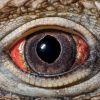
+1 +1Inside the Eye: Nature’s Most Exquisite Creation
To understand how animals see, look through their eyes. By Ed Yong. (Feb. 2016)
-
 +22 +6
300,000-year-old skulls could rewrite the human origin story
Precisely when and where did our species emerge? Anthropologists have struggled with that question for decades, and scattered clues had suggested the answer lay somewhere in sub-Saharan Africa about 200,000 years ago. But new evidence outlined in two papers published in the journal Nature challenges that hypothesis. Instead, the authors describe recently discovered remains that suggest the first Homo sapiens showed up more than 100,000 years earlier than we thought in a place many experts didn't suspect.
-
 +11 +3
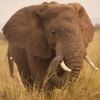
A Zombie Gene Protects Elephants From Cancer
Elephants and other large animals have a lower incidence of cancer than would be expected statistically, suggesting that they have evolved ways to protect themselves against the disease. A new study reveals how elephants do it: An old gene that was no longer functional was recycled from the vast “genome junkyard” to increase the sensitivity of elephant cells to DNA damage, enabling them to cull potentially cancerous cells early.
-
 +15 +4
The Randomness of Language Evolution
English is shaped by more than natural selection. By Ed Yong.
-
 +18 +2
Bonobos Help Strangers Without Being Asked
A passer-by drops something and you spring to pick it up. Or maybe you hold the door for someone behind you. Such acts of kindness to strangers were long thought to be unique to humans, but recent research on bonobos suggests our species is not as exceptional in this regard as we like to think. Famously friendly apes from Africa’s Congo Basin, bonobos will go out of their way to help strangers too, said Jingzhi Tan, a postdoctoral associate in evolutionary anthropology at Duke University.
-
 +1 +1
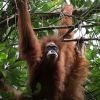
+1 +1New great ape species identified
Scientists who have been puzzling for years over the genetic "peculiarity" of a tiny population of orangutans in Sumatra have finally concluded that they are a new species to science. The apes in question were only reported to exist after an expedition into the remote mountain forests there in 1997. Since then, a research project has unpicked their biological secret.
-
 +36 +5
How a Quarter of Cow DNA Came From Reptiles
By hopping between species, jumping genes have radically altered the course of animal evolution.
-
 +22 +5
What is life?
Is there a definition for life? The great physicist, Erwin Schrodinger, in his influential 1944 book What is Life? posed this question and remarked that “the obvious inability of present-day physics and chemistry to account for such events is no reason at all for doubting that they can be accounted for by those sciences”. But, indeed, can the “events in time and space which take place within the spatial boundary of a living organism be accounted for by physics and chemistry” as Schrodinger so earnestly posed? How do the fundamental laws of physics and chemistry converge to produce biological systems of seemingly ordered complexity?
-
 +1 +1
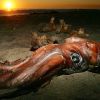
+1 +1When Squid Ruled the Earth
Prehistoric squid were far more numerous, and their reign lasted longer, than the dinosaurs. Why do we know so little about them? By Colin Dickey.
-
 +1 +1
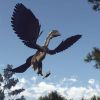
+1 +1How did dinosaurs evolve beaks and become birds? Scientists think they have the answer
Once you know that many dinosaurs had feathers, it seems much more obvious that they probably evolved into birds. But there's still a big question. By Michael J. Benton.
-
 +20 +5
Ancient boy’s DNA pushes back date of earliest humans
A boy who lived in what’s now South Africa nearly 2,000 years ago has lent a helping genome to science. Using the long-gone youngster’s genetic instruction book, scientists have estimated that humans emerged as a distinct population earlier than typically thought, between 350,000 and 260,000 years ago.
-
 +31 +4
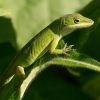
Evolution Isn’t Always Slow. Sometimes It Happens Overnight
There are still people out there who don't believe in evolution, and frankly, we don't want to start that argument. Instead, we'd prefer to just point to those moments when natural selection made itself suddenly, dramatically known.
-
 +16 +4
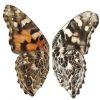
Scientists Can Now Repaint Butterfly Wings
Thanks to CRISPR, scientists are studying animal evolution in ways that were previously thought to be impossible. By Ed Yong.
-
 +1 +1
+1 +1Introducing ‘dark DNA’ – the phenomenon that could change how we think about evolution
Some animals seem to have missing genes – but the reality is a lot more intriguing. By Adam Hargreaves.
Submit a link
Start a discussion