





















-
 +15 +4
Neandertals probably lived a much less violent- life's than modern humans which their skull damage suggests
Neandertals are shaking off their notoriety for being head bangers. Our nearby transformative cousins experienced a lot of head wounds, yet no more so than late Stone Age people, an investigation proposes. Rates of cracks and other bone harm in a huge example of Neandertal and old Homo sapiens skulls generally coordinate rates recently revealed for human foragers and agriculturists who have lived inside the previous 10,000 years, closes a group driven by paleoanthropologist Katerina Harvati of the University of Tübingen in Germany.
-
 +16 +2
How Did Life Emerge?
How did life begin? Two common answers come to mind. One is that, at some point, a deity decided to suspend the laws of physics and will a slew of slimy creatures into being. A second is that a one-in-a-trillion collision of just the right atoms billions of years ago happened to produce a molecular blob with the unprecedented capacity to reproduce itself.
-
 +22 +4
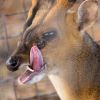
Why 'Vampire Deer' Have Fangs, While Other Hoofed Mammals Have Horns
When do you need a broadsword, and when would you be better off with a dagger? That’s the question that faced artiodactyls, the group of mammals that includes deer, antelope, goats, giraffes, pigs, buffalo and cows, during their evolution. Many male artiodactyls fight over females using weaponized body parts such as horns and antlers. But pigs and several groups of deerlike animals have tusks instead, and a few species have both. Water deer have tusks so pronounced they are nicknamed “vampire deer.”
-
 +16 +2
Neanderthals Were Just As Violent As Early Humans
Is it time to put the stereotype of the violent and brutish Neanderthal to rest? New research paints a different picture of the ancient hominin — one that looks similar to Homo sapiens. Researchers previously thought that Neanderthal lives were far more nasty, brutish and short than ancient H. sapiens, based mainly on studies looking at levels of injury among both groups. Now, however, in a much more comprehensive look, a team of University of Tübingen (UIT) researchers found that both Neanderthals and H. sapiens living in the Ice Age sustained similar levels of head trauma.
-
 +18 +4
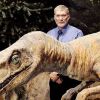
Paleontologists brought to tears, laughter by Creation Museum
For a group of paleontologists, a tour of the Creation Museum seemed like a great tongue-in-cheek way to cap off a serious conference. But while there were a few laughs and some clowning for the camera, most left more offended than amused by the frightening way in which evolution -- and their life's work -- was attacked.
-
 +12 +1
The Creative Spark: How Imagination Made Humans Exceptional
With his new book, The Creative Spark, Agustín Fuentes, a primatologist and anthropologist currently at the University of Notre Dame in Indiana, boldly puts forth the idea that what makes humans special is creativity. The ability of humans to switch back and forth between considering what is, and dreaming of what might be, and to then put these thoughts into actions (often collaboratively), has brought us a very long way from our primate origins to the tool-wielding, world-shaping force of nature of today.
-
 +15 +4
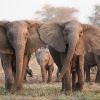
Elephants are evolving to lose their tusks
The oldest elephants wandering Mozambique’s Gorongosa National Park bear the indelible markings of the civil war that gripped the country for 15 years: Many are tuskless. They’re the lone survivors of a conflict that killed about 90 percent of these beleaguered animals, slaughtered for ivory to finance weapons and for meat to feed the fighters.
-
 +3 +1
+3 +1Oldest fossil of a flying squirrel sheds new light on its evolutionary tree
The oldest flying squirrel fossil ever found has unearthed new insight on the origin and evolution of these airborne animals. Writing in the open-access journal eLife, researchers from the Institut Català de Paleontologia Miquel Crusafont (ICP) in Barcelona, Spain, described the 11.6-million-year-old fossil, which was discovered in Can Mata landfill, approximately 40 kilometers outside the city.
-
 +21 +7
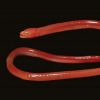
New species of blind eel that burrows through the soil discovered
Considered by many to be the least fish-like of fishes, swamp eels are a real oddity and rarely documented. Now Museum scientists have described an entirely new species. The fish was discovered not in water but in damp soil. Museum researcher Dr Rachunliu G Kamei uncovered it while searching the rainforest for an entirely different group of animal, the legless amphibians called caecilians.
-
 +23 +5
Human big toe was 'late to evolve'
Our big toe was one of the last parts of the foot to become human-like, as our early ancestors evolved to walk on two legs.
-
 +34 +5
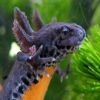
Bizarre Newts Live Their Whole Lives, and Reproduce, As Babies
Salamanders in the European Alps and elsewhere can put off developing into adults for years—or their entire lives—in certain circumstances. By Elizabeth Anne Brown.
-
 +1 +1
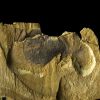
+1 +1Mysterious, Plant-Like Fossil May Have Been One of the Earliest Animals
New research suggests that soft-bodied organisms called Ediacarans may have been related to an animal of the Cambrian era
-
 +13 +5
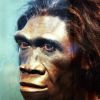
Homo erectus were too short-sighted and lazy to survive, research finds
It may have been a lazy, 'why bother?' attitude that led to the downfall of an early species of human, according to new research. Findings from the Australian National University after an archaeological excavation in Saudi Arabia found Homo erectus tended to do the bare minimum to get by, while other species of human were inclined to put in the effort. They used "least-effort strategies" for tool making and collection of resources, as opposed to Homo sapiens and Neanderthals, who would climb mountains and haul materials over dozens of kilometres to ensure they had quality goods, the research showed.
-
 +26 +7
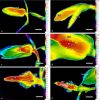
Warm-Blooded Plants
Why do these plants do this? By Cynthia Wood.
-
 +9 +3
+9 +3A century-old model for life's origin gets significant substantiation
In an article just appeared in the Journal of the Royal Society Interface. Lancet and colleagues report an extensive literature survey, showing that lipids can exert enzyme-like catalysis, similar to ribozymes.
-
 +10 +1
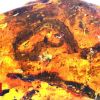
Baby snake fossil 'frozen in time'
The fossil of a baby snake has been discovered entombed inside amber. The creature has been frozen in time for 99 million years. The snake lived in what is now Myanmar, during the age of the dinosaurs. Scientists say the snake fossil is "unbelievably rare". "This is the very first baby snake fossil that we have ever found," Prof Michael Caldwell of the University of Alberta in Canada told BBC News.
-
 +12 +3
Descended testicles: DNA study drops new hints on secrets of low hanging glands
Keeping everything outside the body seems like a strange choice.
-
 +13 +1
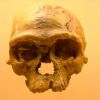
The Story of Human Origins in Africa Is Changing in a Way We Never Expected
The t-shirt representation of human evolution as a sequence of hunched primates standing tall is a popular cliché.
-
 +18 +3
Humans are still evolving - and it's happening faster than ever
Humans are evolving more quickly than at any time in history, researchers say. In the past 5,000 years, humans have evolved up to 100 times more quickly than any time since the split with the ancestors of modern chimpanzees 6m years ago, a team from the University of Wisconsin found. The study also suggests that human races in different parts of the world are becoming more genetically distinct, although this is likely to reverse in future as populations become more mixed.
-
 +15 +3
Certain genetic mutations give humans superhuman abilities
A lot of the powers found in the comics exist in real life. They’re just a bit different.
Submit a link
Start a discussion