



















-
 -1 +1
-1 +1Genealogy of Esau, Jesus' Other Relatives
Genealogy of Esau https://youtu.be/XpxYJOh0vlk Genesis Chapter 36 Genealogy of Esau Now, admittedly I get thoroughly lost when it comes to genealogy. I tried to do what my mom and grandpa does and learn about my ancestors. They have last I heard maybe 15 generations recorded? I get lost who is who, and
-
 +20 +1
World’s First Mammal CRISPR/Cas-9 Genetic Inheritance Control Achieved
CRISPR/Cas9 is a form of genetic editing that holds a lot of promise, such as the killing of cancer cells, but also comes with some hefty warnings, such as that it may cause DNA damage. So far, scientists have been using CRISPR/Cas9 in a variety of plants and animals to edit genetic information, including attempts to practice what is called 'active genetics'.
-
 +16 +1
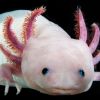
Complete Axolotl Genome Could Pave the Way Toward Human Tissue Regeneration
The adorable and enigmatic axolotl is capable of regenerating many different body parts, including limbs, organs, and even portions of its brain. Scientists hope that a deeper understanding of these extraordinary abilities could help make this kind of tissue regeneration possible for humans. With news today of the first complete axolotl genome, researchers can now finally get down to the business of unraveling these mysteries.
-
 +2 +1
+2 +1Powerful whole-species gene editing tool fails first tests in mice
When it comes to mammals, both the optimism and the fears about gene drives are overblown. So say a team who have tested the concept in mice for the first time. Their studies in mice suggests that existing gene drives don’t work nearly well enough to be used to eliminate mammalian pests – invasive rodents on islands, for instance. On the flip side, this means that gene drives would pose little danger to, say, wild mice if one somehow got out of a lab.
-
 +3 +1
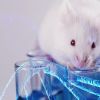
+3 +1Gene drive technology makes mouse offspring inherit specific traits from parents
As mouse geneticists, we spend a lot of time waiting for mice to make more mice. Their small size, ease of care and willingness to mate have made mice the “mammal of choice” for scientists for more than a century. Indeed, these wriggly fur balls that strike fear in the hearts of some are owed a debt of gratitude for all they’ve taught researchers about human health and how mammalian bodies are built and function.
-
 +30 +1
Coming Soon to a Police Station Near You: The DNA ‘Magic Box’
With Rapid DNA machines, genetic fingerprinting could become as routine as the old-fashioned kind. But forensic experts see a potential for misuse.
-
 +16 +1
CRISPR Just Got More Powerful With an "On” Switch
For all its gene-editing prowess, mechanistically CRISPR is a bit like a power tool with a broken “off” switch. Hear me out: the entire CRISPR machinery is designed in a test tube, and once constructed it’s always on. When introduced into animals or humans, CRISPR is set to roam the entire body, seeking its target gene to edit or destroy until it loses steam and gets metabolized by the body.
-
 +3 +1
+3 +1Twins get some 'mystifying' results when they put 5 DNA ancestry kits to the test
Last spring, Marketplace host Charlsie Agro and her identical twin sister, Carly, bought DNA ancestry kits from five of the most popular companies in the industry. Find out why some of the results they received left a team of computational biologists at Yale University baffled.
-
 +25 +1
Twins get some 'mystifying' results when they put 5 ancestry DNA kits to the test
Last spring, Marketplace host Charlsie Agro and her identical twin sister, Carly, bought DNA ancestry kits from five of the most popular companies in the industry. Find out why some of the results they received left a team of computational biologists at Yale University baffled.
-
 +10 +1
Neanderthal Dental Plaque Shows What a Paleo Diet Really Looks Like
Neanderthal dental plaque is a precious commodity, so it’s a little embarrassing when you’re trying to dislodge a piece and it goes flying across the room. “We just stood still, and everyone’s like: Where is it? Where is it?” recalls Laura Weyrich from the University of Adelaide. “Usually, we try to wrap the skull in foil and work underneath it, but that time, the foil didn’t happen to cover a small area.”
-
 +15 +1
AI Created in DNA-Based Artificial Neural Networks
Mention artificial intelligence (AI) or artificial neural networks, and images of computers may come to mind. AI-based pattern recognition has a wide variety of real-world uses, such as medical diagnostics, navigation systems, voice-based authentication, image classification, handwriting recognition, speech programs, and text-based processing.
-
 +10 +1
DNA-testing company 23andMe has signed a $300 million deal with a drug giant. Here's how to delete your data if that freaks you out.
Popular spit-in-a-tube genetics-testing companies like Ancestry and 23andMe can — and frequently do — sell your data to drugmakers. But on Wednesday, one of those partnerships became much more explicit, when the pharmaceutical giant GlaxoSmithKline announced it was acquiring a $300 million stake in 23andMe. As part of a four-year deal between the two companies, GlaxoSmithKline will comb 23andMe's genetic data to look for new drugs to develop, also referred to as drug targets. It will also use the genetic data to inform how patients are selected for clinical trials.
-
 +22 +1
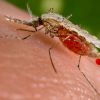
Using gene drives to control wild mosquito populations and wipe out malaria
What is the deadliest animal on earth? It’s a question that brings to mind fearsome lions, tigers, sharks and crocodiles. But the answer is an animal that is no more than 1 centimeter long. A few mosquito species, out of the thousands that populate different environments, are the deadliest animals on earth. Anopheles mosquitoes alone, transmit malaria through their bite and annually infect more than 200 million people, and are responsible for 400,000 deaths per year, of which 70 percent are children under the age of 5.
-
 +3 +1
+3 +1World's smallest tic-tac-toe game board made with DNA
Researchers have developed new dynamic DNA origami technology.
-
 +21 +1
This company brings in $7 million a year testing dog poop DNA to catch non-scoopers
Tom Boyd is 80 years old. He loves to play golf. He loves to make money. "I've had 17 businesses, and I never had one that didn't make money." His latest money-making endeavor tests dog poop left unscooped in public spaces. Using DNA, Boyd hunts down the dog's owner. Don't laugh. His detective work will bring in up to $7 million in revenues this year. "Sometime in the next five years it's going to be $120 million," he says, confidently.
-
 +20 +1
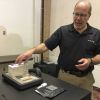
FBI plans 'Rapid DNA' network for quick database checks on arrestees
Though DNA has revolutionized modern crime fighting, the clues it may hold aren't revealed quickly. Samples of saliva, or skin, or semen are sent to a crime lab by car (or mail), and then chemists get to work. Detectives are accustomed to waiting days or weeks, or more, for the results. Some labs are so backed up, they only take the most serious crimes. Some samples never get tested.
-
 +30 +1
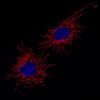
Plot twist: Mitochondrial DNA can come from both parents
Study confirms rare paternal mitochondrial transmission in three families.
-
 +17 +1
AI shown to successfully predict changes in DNA
AI is now at the forefront of DNA structural analysis thanks to new genomics research from a team at Stanford University, California. The paper, published in Nature Genetics reveals that deep learning AI is now capable of understanding and predicting pattern changes in DNA structures. These findings suggest that AI analysis of DNA structures now surpass human capabilities due to its speed and accuracy. This also means that genomics is likely the next field of research to benefit from developments in artificial intelligence.
-
 +18 +1
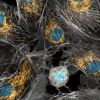
Radical Findings Show Mitochondrial DNA Can Be Inherited From Dads
Not all DNA is the same, and science has long held that not all kinds of DNA are passed down from both your mother and your father. But it looks like the time has come to rewrite the textbooks.
-
 +12 +1
The Key to a Long Life Has Little to Do With ‘Good Genes’
IN 2013, Google cofounder and CEO Larry Page announced the formation of a new Alphabet entity dedicated to solving the pesky puzzle of mortality. Since then, the billion-dollar longevity lab known as Calico—short for California Life Company—has been trying to tease apart the fundamental biology of aging in the hopes of one day defeating death.
Submit a link
Start a discussion