




















-
 +3 +1
+3 +1Prenatal sequencing for some autism genes may soon be available
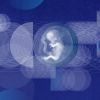
Sequencing can identify mutations linked to autism even before a child’s birth – especially in cases where doctors suspect problems, two new studies suggest1,2. In the studies, scientists sequenced fetal DNA only when ultrasounds revealed atypical development of limbs or other organs, and they gave families only the results that seemed to explain those problems.
-
 +49 +1
FamilyTreeDNA Says It Will Give Your DNA to the FBI
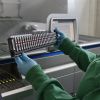
A popular DNA-testing company seems to be targeting true crime fans with a new pitch to let them share their genetic information with law enforcement so cops can catch violent criminals.
-
 +30 +1
Poverty leaves a mark on our genes
A new Northwestern University study challenges prevailing understandings of genes as immutable features of biology that are fixed at conception. Previous research has shown that socioeconomic status (SES) is a powerful determinant of human health and disease, and social inequality is a ubiquitous stressor for human populations globally.
-
 +2 +1
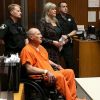
+2 +1FamilyTreeDNA Deputizes Itself, Starts Pitching DNA Matching Services To Law Enforcement
One DNA-matching company has decided it's going to corner an under-served market: US law enforcement. FamilyTreeDNA -- last seen here opening up its database to the FBI without informing its users first -- is actively pitching its services to law...
-
 +14 +1
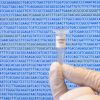
First bacterial genome created entirely with a computer
Scientists at ETH Zurich have developed a new method that greatly simplifies the production of large DNA molecules containing many hundreds of genes. With this method, they have built the first genome of a bacterium entirely designed by a computer algorithm. The method has the potential to revolutionize biotechnology.
-
 +19 +1
Crispr Gene Editing Could One Day Cut Away Human Pain
FOR JO CAMERON, it takes the sight of blood or the smell of her own flesh burning for her to know that something is very wrong. As the 71-year-old Scottish woman recounted to The New York Times earlier this week, she has lived a life virtually free of pain, fear, and anxiety, thanks to a missing stretch of DNA. Doctors discovered there was something different about Cameron when she came in for surgery and turned down painkillers after the nerve blocker from her operation wore off.
-
 +4 +1
+4 +1Woman with ‘mutant’ gene who feels no pain and heals without scarring discovered by scientists
A good-natured Scottish pensioner who experiences virtually no pain has superhuman healing and remains unflappable in life-threatening situations may sound like a Marvel spin-off but has just been reported in a leading scientific journal. UK researchers have discovered Jo Cameron's, now 71, remarkable abilities are apparently down to a previously unreported genetic mutation.
-
 +13 +1
How Forensic Genealogy Is Cracking Decades-Old Cold Cases
Forensic genealogists are using DNA databases to solve cold cases faster than anyone could have imagined. But how will their techniques hold up in court?
-
 +15 +1
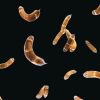
Harvard study unlocks a key to regeneration
Led by Assistant Professor of Organismic and Evolutionary Biology Mansi Srivastava, a team of researchers is shedding new light on how animals perform whole-body regeneration, and uncovering a number of DNA switches that appear to control genes used in the process.
-
 +30 +1
A History of the Iberian Peninsula, as Told by Its Skeletons
With an analysis of DNA from nearly 300 fossilized remains, scientists are peering into human prehistory in the region.
-
 +14 +1
The origin of life: a new theory suggests physics holds the answer
From the expansion of the Universe to the motions of the tiniest subatomic particles, modern-day physics can help us interpret a dizzying number of natural phenomena. But can it explain perhaps the biggest mystery of them all: how did life as we know it begin? Dr Jeremy England, assistant professor of physics at the Massachusetts Institute of Technology (MIT), thinks it can. He is currently working on a bold theory that hopes to reveal how life-like behaviours could emerge from an inert collection of chemicals.
-
 +1 +1
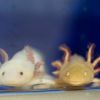
+1 +1Scientists identify gene partnerships that promote spinal cord regeneration
Researchers are one step closer to solving the mystery of why some vertebrates can regenerate their spinal cords while others, including humans, create scar tissue after spinal cord injury, leading to lifelong damage. Scientists at the Marine Biological Laboratory (MBL) have identified gene "partners" in the axolotl salamander that, when activated, allow the neural tube and associated nerve fibers to functionally regenerate after severe spinal cord damage.
-
 +29 +1
Sleep helps to repair damaged DNA in neurons, scientists find
Ernest Hemingway prized sleep for good reason. Not one to dwell on rest and recuperation, the novelist saw snoozing as a form of damage limitation. “I love sleep,” he once said. “My life has the tendency to fall apart when I’m awake.” The author’s observation might be truer than he imagined. In a new study, scientists found that broken DNA builds up in brain cells in the daytime, and that repair work only reverses the damage during sleep.
-
 +37 +1
Is DNA Left on Envelopes Fair Game for Testing?
The genealogist’s dream of testing old, spit-laced artifacts is coming true—but raising questions about who controls dead people’s DNA.
-
 +24 +1
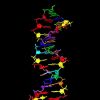
DNA Gets a New — and Bigger — Genetic Alphabet
DNA is spelled out with four letters, or bases. Researchers have now built a system with eight. It may hold clues to the potential for life elsewhere in the universe and could also expand our capacity to store digital data on Earth. In 1985, the chemist Steven A. Benner sat down with some colleagues and a notebook and sketched out a way to expand the alphabet of DNA. He has been trying to make those sketches real ever since.
-
 +19 +1
Scientists Just Added Four New Letters to the Genetic Code
A four-letter alphabet might seem limited, but it’s all nature needed to write the instructions for all life on the planet. News that researchers have added four letters to the genetic alphabet opens the door to new possibilities in synthetic biology, data storage, and even the search for life beyond our planet. The genetic code at the heart of all living things is elegantly simple. Each half of the famous double helix structure is built from four small molecules called bases: adenine, thymine, cytosine and guanine (ATCG).
-
 +24 +1
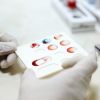
Could we soon be able to detect cancer in 10 minutes?
About seven years ago, researchers at the US DNA sequencing company Illumina started to notice something odd. A new blood test it ran on 125,000 expectant mothers looking for genetic abnormalities such as Down’s syndrome in their foetuses returned some extremely unexpected signals in 10 cases. Chillingly, it dawned on them that the abnormal DNA they were seeing wasn’t from the foetuses but was, rather, undiagnosed cancer in the mothers.
-
 +7 +1
+7 +1Why You Should Be Careful About 23andMe’s Health Test
Their test is F.D.A. approved, but that doesn’t necessarily mean it’s useful.
-
 +2 +1
+2 +1One Of The Biggest At-Home DNA Testing Companies Is Working With The FBI
The Court of Appeals for the D.C. Circuit heard the case of Mozilla v. FCC today to determine whether the Federal Communications Commission (FCC) is allowed to repeal its net neutrality rules and abandon its authority over the broadband industry. The case delved into many different legal and technical issues that reveal the extent the FCC is willing to stretch to abandon the Open Internet. On one side sat public interest advocates, local governments, and Internet companies large and small.
-
 +12 +1
Alcohol triggers DNA changes that increase cravings
“We found that people who drink heavily may be changing their DNA in a way that makes them crave alcohol even more,” says senior author Dipak K. Sarkar, a professor in and the director of the endocrine program in the animal sciences department at Rutgers University–New Brunswick. “This may help explain why alcoholism is such a powerful addiction, and may one day contribute to new ways to treat alcoholism or help prevent at-risk people from becoming addicted.”
Submit a link
Start a discussion