





















-
 +7 +1
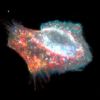
+7 +1Scientists Discover How To Halt and Control Cellular Death Process – Previously Thought To Be Irreversible
A study published by researchers at the University of Illinois Chicago describes a new method for analyzing pyroptosis — the process of cell death that is usually caused by infections and results in excess inflammation in the body — and shows that process, long thought to be irreversible once initiated, can in fact be halted and controlled.
-
 +4 +1
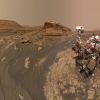
+4 +1Possible sign of Mars life? Curiosity rover finds 'tantalizing' Red Planet organics
NASA's Curiosity rover has found some interesting organic compounds on the Red Planet that could be signs of ancient Mars life, but it will take a lot more work to test that hypothesis. Some of the powdered rock samples that Curiosity has collected over the years contain organics rich in a type of carbon that here on Earth is associated with life, researchers report in a new study.
-
 +27 +3
Psychedelic beer served at intimate dinner parties helped an ancient empire in the Andes rule for centuries, study finds
Beer laced with hallucinogenic drugs may have helped the rulers of an ancient, pre-Incan empire in South America maintain power for about 400 years, according to new archaeological research. The Wari Empire, which spanned across the highlands of modern-day Peru between circa 600 AD and 1000 AD, likely prospered thanks to the political allegiances forged while consuming the hallucinogenic beverage, the study in the Antiquity journal indicates.
-
 +4 +1
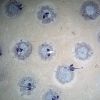
+4 +1Biologists Shocked to Find Millions of Icefish Nesting Near Antarctica
Deep-sea biologists were stunned to find the largest known fish breeding ground, a discovery made last year near Antarctica. Details of the incredible find were published today, with researchers describing a sprawling colony of millions of icefish on seafloor of the Southern Ocean.
-
 +10 +3
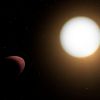
Weird 'hot Jupiter' exoplanet is shaped like a football
A distant exoplanet looks more like a football than the usual sphere, researchers report in a groundbreaking new study. The strange shape of ultrahot WASP-103b, which is more than 1,000 light-years from Earth, is due to the planet being stretched by the gravitational forces of its parent star, according to the new research.
-
 +4 +1
+4 +1Scientists observe a red supergiant going supernova for the first time
Despite the massive number of stars in the sky, spotting one in the throes of a supernova is still an incredibly rare event. Now, astronomers have captured a red supergiant before, during and after a supernova explosion for the first time, gathering crucial new information about these dramatic events.
-
 +16 +1
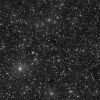
Those aren't stars – they're black holes
An international team of astronomers just released a remarkable map of the night sky without a single star, but which is instead filled with 25,000 supermassive black holes. We know what you're thinking. How is that possible if black holes don't radiate light, you silly gooses? That's only half right though. The black hole itself is more or less invisible, but if it's munching on a star or some other object, the tidal forces of its gravity will tear it apart and create a flattened accretion disk around it.
-
 +29 +2
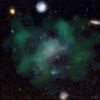
Astronomers Discover a Strange Galaxy Without Dark Matter
THREE YEARS AGO, Filippo Fraternali and his colleagues spotted a half dozen mysteriously diffuse galaxies, which looked like sprawling cities of stars and gas. But unlike almost every other galaxy ever seen—including our own Milky Way—they didn’t seem to be enshrouded in huge masses of dark matter, which would normally hold those stellar metropolises together with their gravity. The scientists picked one to zoom in on, a modest-sized galaxy about 250,000 light-years away, and they pointed the 27 radio telescope antennas of the Very Large Array in New Mexico at it.
-
 +15 +2
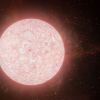
Death star: In cosmic first, scientists observe red supergiant just before it explodes
It's much easier for scientists to see the messy aftermath of stellar explosions than to watch the prelude to the drama. But finally, astronomers managed to observe a red giant star just as it "went supernova," as exploding stars are called. Using a telescope in Hawaii, a team of scientists gathered observations of a red supergiant star in summer 2020. Lo and behold, in September, that very same star died in a supernova dubbed (SN) 2020tlf — an explosion that team members called "one of the most intriguing" supernovas of its type.
-
 +20 +3
Scientists find water in Mars’ Grand Canyon
A spacecraft orbiting Mars has made the unexpected discovery of water in Mars' Grand Canyon, otherwise known as Valles Marineris.
-
 +23 +4
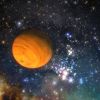
Astronomers find record-breaking haul of starless 'rogue' planets
Astronomers have discovered dozens of new "rogue" planets, roughly doubling the known number of these mysterious free-roaming worlds. A team of researchers found a collection of at least 70 exoplanets without parent stars — the largest single group of rogue planets ever found — in a patch of space about 420 light-years from Earth, a new study reports.
-
 +24 +3
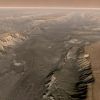
'Significant amounts of water' found in Mars' massive version of the Grand Canyon
Mars has its own version of the Grand Canyon, and scientists have learned this dramatic feature is home to "significant amounts of water" after a discovery made by an orbiter circling the red planet, according to the European Space Agency.
-
 +7 +1
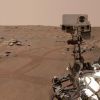
+7 +1NASA's Perseverance rover finds organic chemicals on Mars
NASA's Perseverance Mars rover has found life's building blocks on the Red Planet. Perseverance has identified carbon-containing organic chemicals in some of the rocks it has examined on the floor of Mars' Jezero Crater, mission team members announced on Wednesday (Dec. 15).
-
 +16 +4
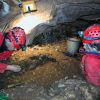
Archaeologists Discover Oldest Domesticated Dog Remains in Americas
When Quentin Mackie first crawled into a limestone cave on the west coast of Haida Gwaii, an archipelago off British Columbia’s north coast, he wasn’t expecting to enjoy the experience. The cave was cold, cramped, and damp, yet Mackie, an archaeologist with the University of Victoria in British Columbia, found the long days excavating underground quite pleasant: “The heightened sensory experience” in the passages was amazing.
-
 +14 +4
Look: Scientists just discovered a gigantic planet that shouldn't exist
A MASSIVE, ODD PLANET was just discovered orbiting around two bright stars in the southern sky. It’s so weird that it’s challenging scientists’ ideas about how planets form and evolve. b Centauri is a double star system that lies 325 light years away from Earth. The newly-discovered gas giant planet is 11 times as massive as Jupiter, with a vast orbit that’s 100 times wider than that of Jupiter’s — and strangely, it most likely formed there.
-
 +3 +1
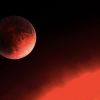
+3 +1Newfound rocky exoplanet has a year less than 8 hours long
A newfound alien world could shed some light on one of the darkest and strangest corners of the exoplanet family tree. The planet, known as GJ 367b, circles a small, dim red dwarf star just 31 light-years from the sun, its discoverers announced in a new study. (For perspective, our Milky Way galaxy is about 100,000 light-years wide.)
-
 +3 +1
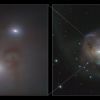
+3 +1Very Large Telescope uncovers closest pair of supermassive black holes yet
Using the European Southern Observatory's Very Large Telescope (ESO's VLT), astronomers have revealed the closest pair of supermassive black holes to Earth ever observed. The two objects also have a much smaller separation than any other previously spotted pair of supermassive black holes and will eventually merge into one giant black hole.
-
 +13 +3
Scientists see a strange — and worrying — climate change effect in frogs
THE ROLE human-induced climate change plays in the decline of frog species just took a strange turn. Scientists are becoming keenly aware that animals’ bodies are being affected in peculiar ways due to climate change. Amphibians are no exception. A study published Monday in the journal Proceedings of the National Academy of Sciences examines the link between rising global temperatures and senescence (mortality related to aging) in frogs and toads in Europe and North America.
-
 +12 +1
New Fossil Shows Ancient Human Relative "Walked Like Humans And Climbed Like Apes"
An international team of scientists from New York University, the University of the Witwatersrand and 15 other institutions announced today in the open-access journal eLife the discovery of ...
-
 +20 +3
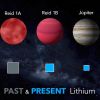
Astronomers Discover Ancient “Failed Star” With Lithium Deposits Intact
A team of researchers at the Instituto de Astrofísica de Canarias (IAC) and the Instituto Nacional de Astrofísica, Óptica y Electrónica (INAOE), Mexico, has discovered lithium in the oldest and coldest brown dwarf where the presence of this valuable element has been confirmed so far.
Submit a link
Start a discussion