





















-
 +23 +8
Thrilled Astronomers in Chile Are First to Photograph a Moon-forming Disc Around an Exoplanet
Using the ALMA (Atacama Large Millimetre/submillimeter Array), astronomers have unambiguously detected the presence of a disc around a planet outside our Solar System for the first time. The observations will shed new light on how moons and planets form in young stellar systems.
-
 +16 +4
Scientists link an odd reaction to a barrier in the center of the Milky Way
Researchers found a dip in the otherwise uniform density of cosmic rays at the center of the Milky Way.
-
 +3 +1
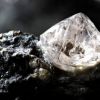
+3 +1Diamond hauled from deep inside Earth holds never-before-seen mineral
Within a diamond hauled from deep beneath Earth's surface, scientists have discovered the first example of a never-before-seen mineral. Named davemaoite after prominent geophysicist Ho-kwang (Dave) Mao, the mineral is the first example of a high-pressure calcium silicate perovskite (CaSiO3) found on Earth.
-
 +16 +3
Element found in our teeth detected for the first time in galaxy 12 billion light-years away
We truly are made of star stuff, as astronomer Carl Sagan once said. For the first time, astronomers have detected an element found in our bodies in a galaxy that is more than 12 billion light-years away.
-
 +13 +1
Scientists Found A Planet In Another Galaxy
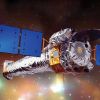
Radioactive evidence of a planet orbiting mid-transit outside our galaxy may have been spotted for the first time, NASA reports on Monday. Reflected optics courtesy of the Chandra X-ray Observatory (CXO) found an exoplanet candidate in a binary system located in the Messier 51 (or “Whirlpool”) galaxy 28 million light-years away. The celestial body in question is twice the size of Saturn, circling its designated star system at about twice the distance of Saturn from our Sun.
-
 +25 +7
Signs of first planet found outside our galaxy
Astronomers have found hints of what could be the first planet ever to be discovered outside our galaxy. Nearly 5,000 "exoplanets" - worlds orbiting stars beyond our Sun - have been found so far, but all of these have been located within the Milky Way galaxy. The possible Saturn-sized planet discovered by Nasa's Chandra X-Ray Telescope is in the Messier 51 galaxy.
-
 +4 +1
+4 +1'A dumpling on legs': Native mouse thought extinct found on Flinders Island
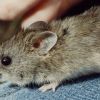
A native species of mouse that was last seen in Tasmania's north-east 17 years ago has been caught on camera on Flinders Island — sniffing a stick dipped in peanut butter.
-
 +18 +3
A particle - a "ghost" was discovered from a black hole at the South Pole - FrontNet Blog
The presence of a very high energy neutrino, a particle – “ghost”, which was created during the destruction of a star by colossal gravity, a black hole with a mass of 30 million suns, scientists have discovered on Earth. The event, 700 million years old, shortly before the first animals appeared on our planet...
-
 +15 +2
Five Human Species You May Not Know About
We’re so used to the idea of being the only people around that it seems outlandish to think that not so long ago in our evolutionary history, multiple types of humans occupied various landscapes. The environments of the Paleolithic, or Stone Age, were dynamic. Populations moved, interacted, and sometimes even interbred.
-
 +17 +3
Violent explosion rips open a giant cavity in space and births new stars
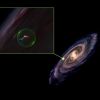
There's a monstrous hole in the universe. Long ago, a star blew up with extreme force and obliterated everything in its path. It even swept minuscule particles of space dust out of its way -- but in a surprising turn of events, that space dust collected, collapsed and eventually gave birth to a bunch of baby stars.
-
 +17 +3
New Giant Penguin Species Unearthed in New Zealand
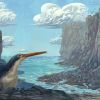
Kairuku waewaeroa roamed Earth during the Oligocene epoch, between 27 and 35 million years ago. “The penguin is similar to the Kairuku giant penguins first described from Otago but has much longer legs,” said Dr. Daniel Thomas, a senior lecturer in zoology in the School of Natural and Computational Sciences at Massey University.
-
 +13 +2
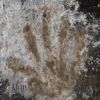
We discovered the earliest prehistoric art is hand prints made by children
Fossilised footprints, and more rarely, hand prints, can be found around the world; left as people went about their daily business, preserved by freak acts of geological preservation. In new research our international team have discovered ancient hand and footprints high on the Tibetan plateau made by children.
-
 +4 +1
+4 +1Scientists discovered a Protein that Turns on all existing cancer in the body
The cancer protein that indicates which tumors are ‘on’ could lead to therapies to keep them ‘off’ forever. A team of scientists from the Lunenfeld-Tanenbaum Research Institute in Canada found a specific protein that turns on cancer in the human body. It is not limited to a specific type of cancerous condition but appears to be common to all variants seen by medicine thus far
-
 +16 +2
World’s Oldest Bread
Researchers have found evidence that hunter-gatherers started making bread 4,000 years prior to starting agriculture. Evidence of bread making was found in the north-eastern part of Jordan. The flatbread charred remains were found to have been made some 14,400 years ago.
-
 +29 +4
Astronomers Locate the Source of High-Energy Cosmic Rays
Roughly a century ago, scientists began to realize that some of the radiation we detect in Earth’s atmosphere is not local in origin. This eventually gave rise to the discovery of cosmic rays, high-energy protons and atomic nuclei that have been stripped of their electrons and accelerated to relativistic speeds (close to the speed of light). However, there are still several mysteries surrounding this strange (and potentially lethal) phenomenon.
-
 +3 +1
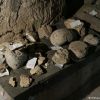
+3 +1Archaeologists discover 'Lost Golden City of Luxor'
Archaeologists have uncovered the remains of an ancient city in the desert outside Luxor ion Egypt. They say it dates back to the golden age of the pharaohs more than 3,000 years ago.
-
 +18 +1
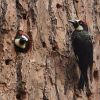
Male woodpeckers that share mates with brothers live longer lives
Male acorn woodpeckers that share mates with their brothers live longer lives, have better quality homes and father more baby woodpeckers than those that choose a monogamous lifestyle
-
 +16 +2
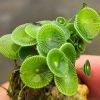
Indian scientists discover 'mermaid' plant species
Indian scientists have discovered a new plant species in India's Andamans archipelago. Biologists found a marine green algae during a trip to the island in 2019. Identification is laborious, and it took the scientists nearly two years to confirm that the species had been discovered for the first time. Scientists say this the first discovery of a species of algae in the islands in nearly four decades.
-
 +10 +2
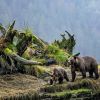
‘Mind blowing’: Grizzly bear DNA maps onto Indigenous language families
The bears and Indigenous humans of coastal British Columbia have more in common than meets the eye. The two have lived side by side for millennia in this densely forested region on the west coast of Canada. But it’s the DNA that really stands out: A new analysis has found that the grizzlies here form three distinct genetic groups, and these groups align closely with the region’s three Indigenous language families.
-
 +2 +1
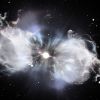
+2 +1Runaway star caught streaking across Milky Way at 2 million mph ... in the wrong direction
In 2017, astronomers noticed a star streaking out of the Milky Way at nearly 2 million mph (3.2 million km/h) — roughly four times faster than our sun orbits — and flying against the direction in which most stars trek around the galactic center. It's also made of completely different star stuff, mostly heavy, "metallic" atoms rather than the usual light elements. LP 40-365, as it was called, was as eye-catching as a wooden car barreling up the interstate against traffic at hundreds of miles per hour.
Submit a link
Start a discussion