





















-
 +8 +2
+8 +2Harvard Professor Says 95% of Purchasing Decisions Are Subconscious
Why do consumers buy one product over another? How do you develop brand loyalty? How do you maximize customer engagement? According to Harvard professor Gerald Zaltman, the answer to all these questions is directly related to the subconscious mind. In Zaltman's book, "How Customers Think: Essential Insights into the Mind of the Market," the professor reveals many exciting ideas that can be helpful to marketers and brands.
-
 +37 +5
Sham news sites make big bucks from fake views
Websites that copy news stories from legitimate sites are making money from Google and Amazon ads.
-
 +30 +6
YouTube needs to chill with its annoying Premium spam
Google is using full-screen pop-up ads to promote YouTube Premium subscriptions.
-
 +22 +3
Targeted ads are one of the world's most destructive trends. Here's why
They have led to a proliferation of fake news and clickbait, fuelled surveillance capitalism and normalised pervasive tracking and data-mining. Then there’s their effect on democracy...
-
 +13 +1
The new dot com bubble is here: it’s called online advertising
In 2018 $273bn was spent on digital ads globally. We delve into the world of clicks, banners and keywords to find out if any of it is real. What do we really know about the effectiveness of digital advertising?
-
 +15 +2
Most TV Viewers Wait to Stream a Show Rather Than Watch Ads
They also like to binge episodes instead of waiting week-to-week, according to a new survey.
-
 +21 +6
87% of Consumers Would Opt Out of Ad Targeting Under CCPA Terms
Research shows hardened public attitudes about selling data, but rewards help.
-
 +13 +1
Here's How Google Sends Advertising Dollars to Fake News Sites
New research shows Google's online ad technologies provide an estimated 70% of ad revenue to 1,700 websites purveying misinformation.
-
 +5 +1
+5 +1Tucker Carlson's Show Bled 70 Advertisers in Less Than a Year
Even more advertisers have abandoned the Fox News host after he called white supremacy "a hoax."
-
 +30 +5
‘Shooting,’ ‘Bomb,’ ‘Trump’: Advertisers Blacklist News Stories Online
Companies are increasingly insisting their ads do not appear near articles or videos that contain any of a long list of words. The blacklists are becoming more sophisticated, specific and extensive. Publishers worry about the revenue hit.
-
 +33 +10
The worst sales promotion in history
In 1992, an electronics company offered two free international flights with any £100 purchase. The rest, well... sucked.
-
 +22 +3
Facebook and Google's dominance in online ads is starting to show some cracks
Earnings reports from Pinterest, Snap, Amazon and Twitter show smaller players are continuing to gain market share in digital advertising.
-
 +6 +1
+6 +1Internet advertising to grow at slowest rate since 2001 dotcom bust
Sector to be outpaced next year by cinema ads as big companies raise fears over digital scandals
-
 +9 +1
+9 +1Adblocking: How About Nah?
For more than a decade, consumer rights groups (including EFF) worked with technologists and companies to try to standardize Do Not Track, a flag that browsers could send to online companies signaling that their users did not want their browsing activity tracked.
-
 +17 +3
Tulsi Gabbard, Democratic Presidential Candidate, Sues Google
The candidate claims Google shut down her ad account after the first debate in June, preventing her from capitalizing on new interest.
-
 +34 +11
Check out this incredible archive of Apple’s promotional photos and ads
Scroll through memory lane.
-
 +25 +5
Advertisers reconsider targeting millennials because they're broke
Although millennials, born between 1981 and 1996, now exceed baby boomers as the largest age cohort in the nation, advertisers are discovering they don't have the free-spending ability of boomers.
-
 +28 +8
Behavioural advertising is out of control, warns UK watchdog
The online behavioural advertising industry is illegally profiling internet users. That’s the damning assessment of the U.K.’s data protection regulator in an update report published today, in which it sets out major concerns about the programmatic advertising process known as real-time…
-
 +10 +1
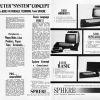
Retro PC Ads - 1975 Sphere 1
The Sphere 1 was a personal computer from 1975 built around the Motorola 6800 CPU. It was built by Sphere Corporation, located in Bountiful, Utah. Marketed as the first real computer (due to having a built in keyboard and monitor) targeted at consumers, it ran PDS (program development system) and included an editor, assembler and an edition of BASIC. The first few editions came as a kit, later on fully assembled units were available.
-
 +15 +2
Advertising as a major source of human dissatisfaction
We have found evidence of negative links between national advertising and national wellbeing
Submit a link
Start a discussion