




















-
 +16 +4
The copy is the original
In China and Japan, temples may be rebuilt and ancient warriors cast again. There is nothing sacred about the ‘original.’ By Byung-Chul Han.
-
 +12 +2
I taught philosophy to prisoners, and I know it can help end the damaging macho prison culture
Teaching prisoners philosophy may sound unconventional, but my research has shown that it not only helps people survive the prison experience but it could also help reduce levels of violence and intimidation. Studies have shown that prisoners get through their incarceration by putting on a front or a prison persona which helps them to navigate life behind bars. But by sitting down and talking through philosophical issues, I was able to provide a space where they could drop their macho fronts and learn to talk with each other about life, morality and identity.
-
 +2 +1
+2 +1The Philosophy of the Midlife Crisis
Can we think our way out of middle-aged ennui?
-
 +12 +3
Berkeley's Idealism
Berkeley thought that the world and everything in it only exists when somebody is observing it. When we stop looking at something it no longer exists. This theory is called Idealism. Not to be confused with “being an idealist,” which usually means something else. And it’s neatly captured by the phrase “esse est percipi;” “to be is to be perceived.” That’s how my old textbooks used to explain it, I think that’s a little bit blunt: Berkeley’s point is actually a little subtler than that. I think the best way to get at what he’s saying is with a challenge.
-
 +15 +4
Philosophy can teach children what Google can’t
With jobs being automated and knowledge being devalued, humans need to rediscover flexible thinking.
-
 +12 +2
A Celebrity Philosopher Explains the Populist Insurgency
Peter Sloterdijk has spent decades railing against the pieties of liberal democracy. Now his ideas seem prophetic. By Thomas Meaney.
-
 +19 +5
Why Study Philosophy?
Physicists study matter, motion, and energy. Chemists study substances and their forms of combination, interaction and decomposition. Biologists study living things. And so forth. But what is it that philosophers study? One answer common throughout the ages is that as physicists study physics, philosophers study meta-physics. Philosophers, or at any rate the deepest of philosophers, we are told, are meta-physicists. Physicists study the contingencies of the world – things that happen to be so. Meta-physicists study the essential, necessary features of all possible worlds.
-
 +18 +4
Ecosophia: Zeno’s Laughter
We really are going to have to start a conversation about ethics, aren’t we? By John Michael Greer.
-
 +15 +5
The Last Jedi and the Problem of Free Will
In every Star Wars film destiny is a central theme, and The Last Jedi is no exception. The main characters – including Kylo Ren, Rey, and Luke Skywalker – are explicitly portrayed as possessing a fixed destiny in that their futures are preordained by a mysterious energy field that governs the entire universe: the Force. This same energy is also presented as determining the outcome of the struggle between the warring sides in which the main characters play their part: the Resistance and the First Order.
-
 +2 +1
+2 +1Potentially Much Better
"Like many who have been influenced by the political philosopher Leo Strauss, Kass sees the decline of custom and tradition and the march of individualism and egalitarianism across all realms of life as the logical outcomes of modern liberal democracy." By Scott Spillman.
-
 +8 +1
+8 +1Lucretius: On the Nature of Things
ICE at Dartmouth
-
 +8 +1
+8 +1The Ghost and the Princess
The correspondence of René Descartes and Princess Elisabeth of Bohemia—a debate about mind, soul, and immortality. By Anthony Gottlieb.
-
 +16 +2
Who serves whom?
The takeover of artificial intelligence seems to be a done deal. The open questions are: When will machines outperform us? Will they annihilate us? And: Should self-driving cars kill one pregnant woman or two Nobel prize winners? Artificial Intelligence is a complex riddle for all sorts of experts. It’s full of magic, mystery, money, mind-boggling techno-ethical paradoxes and sci-fi dilemmas that may or may not affect us in some far or near future.
-
 +13 +5
Camus, Suicide, and Imagining Sisyphus Happy
Albert Camus was a French philosopher, author, and journalist. His views contributed to the rise of the philosophy known as absurdism. To examine Camus’ central ideas and views surely one must get back to one of his best works, The Myth of Sisyphus.
-
 +12 +5
The problem of colour
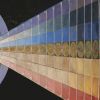
Colours are a familiar and important feature of our experience of the world. Colours help us to distinguish and identify things in our environment: for instance, the red of a berry not only helps us to see the berry against the green foliage, but it also allows us to identify it as a berry. Colours perform a wide variety of symbolic functions: red means stop, green means go, white means surrender.
-
 +8 +3
+8 +3Yacob and Amo: Africa’s precursors to Locke, Hume and Kant
The highest ideals of Locke, Hume and Kant were first proposed more than a century earlier by an Ethiopian in a cave. By Dag Herbjørnsrud.
-
 +12 +2
Such a Stoic
Seneca is revered as a Stoic philosopher—but he was devoted to money and power, and worked as a fixer for Nero. Elizabeth Kolbert weighs the evidence.(Feb. 22, 2015)
-
 +25 +2
Hail Cicero, a Death and Afterlife
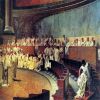
He couldn’t save the Roman republic, but his writing crossed centuries to help inspire ours. By E.J. Hutchinson.
-
 +9 +2
+9 +2What is the Basis for Human Equality?
One of the most fundamental American tenets—that all human beings are created equal—is nowhere near universally accepted. By Samuel Moyn.
-
 +15 +4
The thought police: five works of philosophy that every cop should read
Police officers in Baltimore have been making novel use of their notebooks. Anything Plato has said may be taken down and used, not as evidence against him, but in the classroom, where detective Ed Gillespie has made the ancient Greek philosopher part of the force’s annual in-service training. Gillespie gets his students to discuss cases of police misconduct in terms of Plato’s tripartite model of the soul, which holds that our behaviour is governed, at times, by either the intellect, the “spirit” or the “appetites”.
Submit a link
Start a discussion