





















-
 +38 +1
When Too Cute Is Too Much, The Brain Can Get Aggressive
Adorable babies and cute puppies can make us happy. But researchers say their cuteness can be so overwhelming that it unleashes some ugly thoughts.
-
 +1 +1
+1 +1Awaken The New Year 2019
Written by Dr. Perry, PhD Image Credit: Pixabay “I wake to sleep, and take my waking slow. I feel my fate in what I cannot fear. I learn by going where I have to go.” ~Theodore Roethke …
-
 +1 +1
+1 +1My Poor Scattered Brain How I Miss My Healthy Brain
Scattered Brain It is true how you take things for granted. Then when it is damaged or lost for good it is so missed. I never realized just how much my brain did for me. Your brain is who you are, it regulates everything in your body. It gets damaged you are never the same. After that fateful car accident in 1988
-
 +20 +1
Growing up poor has a lasting impact on brain development, study shows
Growing up in a less well-off family may negatively impact the brain, according to research showing how socioeconomic status can have a lasting impact on a person’s development. US researchers found brain regions responsible for learning, language and emotional development tended to be more complex in people whose parents were educated to a higher level or who worked in professional rather than manual jobs.
-
 +28 +1
The Brain's Autopilot Mechanism Steers Consciousness
Freud’s notion of a dark, libidinous unconscious is obsolete. A new theory holds that the brain produces a continuous stream of unconscious predictions
-
 +13 +1
Mapping the brain, cell by cell
MIT chemical engineers and neuroscientists have devised a new way to preserve biological tissue, allowing them to visualize proteins, DNA, and other molecules within cells, and to map the connections between neurons. The researchers showed that they could use this method, known as SHIELD, to trace the connections between neurons in a part of the brain that helps control movement and other neurons throughout the brain.
-
 +15 +1
Stroking a Baby During Medical Procedures Really Can Reduce an Infant's Pain
Protecting an infant from pain may be a matter of instinct. In a new study, researchers show that gently stroking babies during medical procedures, as parents intuitively do, reduces infants’ feelings of pain about as well as applying a topical anesthetic. The discovery suggests touch and tactile stimulation are effective means to mollify pain in newborns and an alternative to using drugs.
-
 +20 +1
The Riddle of Consciousness
For most of human history, people have assumed that some kind of vitalistic essence had to be added to matter to produce life. The belief in an immaterial soul was pervasive. At one point, a scientist even tried to weigh the soul by weighing a body right before and after death, expecting to find a decrease when the soul departed (see Benjamin Radford’s column in the Skeptical Inquirer “Measuring Near-Death Experience,” May/June 2007).
-
 +16 +1
Why aren't religious views classed as delusions?
If someone told you, in all seriousness, that they talk to invisible beings who control the universe, you’d probably back away slowly, nodding and smiling, while desperately looking for the nearest exit or escape route. If this person then said they wanted to be in charge of your life, you’d probably do the same, but more urgently, and with a view to finding the nearest police officer.
-
 +7 +1
+7 +1The human brain needs to suppress obvious ideas in order to reach the most creative ones
The human brain needs to suppress obvious ideas in order to reach the most creative ones, according to scientists at Queen Mary University of London and Goldsmiths, University of London. Creativity requires us to break away from more common and easily reached ideas but we know little about how this happens in our brain. A new study, published in the Proceedings of the National Academy of Sciences, shows that brainwaves play a crucial role in inhibiting habitual thinking modes to pave the way to access more remote ideas.
-
 +1 +1
+1 +1An intellectually active lifestyle protects against neurodegeneration in people with Huntington's disease
Researchers from the Cognition and Brain Plasticity research group of the Bellvitge Biomedical Research Institute (IDIBELL) and the University of Barcelona (UB), in collaboration with several hospitals, have discovered that an intellectually active lifestyle confers protection against neurodegeneration in people with Huntington's disease, delaying the onset of symptoms and loss of gray matter in the brain.
-
 +24 +1
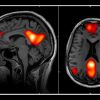
Childhood adversity linked to reduced inhibitory control and alterations in key brain networks
New research suggests that exposure to childhood adversity is associated with reduced cognitive control and alterations in key brain networks. The findings, which appear in the journal Social Cognitive and Affective Neuroscience, could help explain the link between childhood adversity and depression.
-
 +15 +1
Researchers say they’ve identified two brain networks – one responsible for volition, the other for agency – that together underlie our sense of free will
While there’s still a debate about whether we have free will or not, most researchers at least agree that we feel as if we do. That perception is often considered to have two elements: a sense of having decided to act – called “volition”; and feeling that that decision was our own – having “agency”. Now in a paper in PNAS, Ryan Darby at Vanderbilt University Medical Center and colleagues have used a new technique – lesion network mapping – to identify for the first time the brain networks that underlie our feelings of volition and for agency.
-
 +12 +1
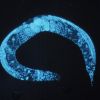
Antibiotic Could Protect against Age-Related Neurodegenerative Diseases
Protein aggregation causes a number of age-related disorders including Alzheimer’s disease, Parkinson’s disease, amyotrophic lateral sclerosis (ALS), and prion diseases. Scientists at the Scripps Research Institute have now found that an FDA-approved antibiotic, minocycline, can prevent the buildup of proteins in aging roundworms and extend the animals’ lifespan.
-
 +1 +1
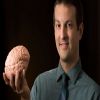
+1 +1Rewriting the brain pathway for consciousness
With a finding that will "rewrite neuroanatomy textbooks," University of Iowa neurologist Aaron Boes, MD, Ph.D., and his colleagues show that the thalamus is not a critical part of the brain pathway involved in keeping humans awake and conscious.
-
 +5 +1
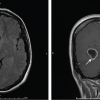
+5 +1Worsening migraine due to neurocysticercosis
When a woman with a history of migraine had new symptoms, MRI revealed a tapeworm scolex in her brain.
-
 +31 +1
How to Control a Machine with Your Brain
A neuroscientist’s research into the mysteries of motion helps a paralyzed woman escape her body.
-
 +11 +1
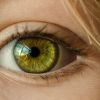
Brain-Destroying Prions Also Spread Through Victims' Eyes
One of the strangest things that can sicken us—a rogue misfolded protein that destroys the brain, known as a prion—is even scarier than we knew. Researchers were able to find the prions responsible for sporadic Creutzfeldt-Jakob disease (sCJD), the most common prion disease in people, seeded everywhere in the eyes of 11 patients affected by it.
-
 +16 +1
Could you have this memory disorder?
Susie McKinnon doesn’t remember being a child or remember being any age other than she is now: in her 60s. She can’t remember special events, either. She knows she went to her nephew’s wedding. She knows her husband went with her. But she can’t actually remember being there. In fact, she has very few memories from her life – but she doesn’t have amnesia.
-
 +15 +1
Scientists Find Brain Cells That Could Explain How We Control Posture
Scientists may have found brain cells to control posture. These neurons could explain spatial awareness in everything from yoga to sitting on the couch.
Submit a link
Start a discussion