





















-
 +21 +1
Using online neurofeedback to modify individual's arousal state and improve performance
Our state of arousal--being fearful, agitated, or calm--can significantly affect our ability to make optimal decisions, judgments, and actions in real-world dynamic environments. Imagine, for instance, walking across a balance beam. Your performance--speed across the beam and the odds of making it across without falling off--are dramatically better if the beam sits a mere six inches off the ground and you are relaxed rather than terror-stricken on a beam 60 feet higher.
-
 +28 +1
Eating mushrooms may reduce the risk of cognitive decline
A team from the Department of Psychological Medicine and Department of Biochemistry at the Yong Loo Lin School of Medicine at the National University of Singapore (NUS) has found that seniors who consume more than two standard portions of mushrooms weekly may have 50% reduced odds of having mild cognitive impairment (MCI).
-
 +18 +1
Study suggests humor could be an emotion regulation strategy for depression
Humor can help decrease negative emotional reactions in people vulnerable to depression, according to new research published in the journal Brain and Behavior. The findings offer preliminary evidence that humor could be an effective emotion regulation strategy.
-
 +19 +1
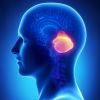
This Is Your "Little Brain" on Cannabis
Increasingly, our “little brain” is being recognized as playing a bigger role than previously thought in cognition, learning, emotions, and addiction. Because human cerebellum has a high density of CB1 cannabinoid receptors, there is speculation that cannabis use most likely affects both cerebellar function and structure. In recent months, two different systematic reviews have done deep and detailed dives into how cannabis affects the cerebellum.
-
 +4 +1
+4 +1Why do we sleep? Scientists find brain repair mechanism
Sleep is an important part of the daily life cycle of most animals — including humans. But when an animal sleeps, it leaves itself defenseless in the face of danger. So, what makes sleeping so important that we all take this risk? Research, both old and new, acknowledges that sleep plays an important role in all aspects of our health. Recent studies we've covered have found that a good night's sleep can support vascular health.
-
 +29 +1
Sleep helps to repair damaged DNA in neurons, scientists find
Ernest Hemingway prized sleep for good reason. Not one to dwell on rest and recuperation, the novelist saw snoozing as a form of damage limitation. “I love sleep,” he once said. “My life has the tendency to fall apart when I’m awake.” The author’s observation might be truer than he imagined. In a new study, scientists found that broken DNA builds up in brain cells in the daytime, and that repair work only reverses the damage during sleep.
-
 +21 +1
How Video Games Can Be Used for Stress Relief
Much has been written about video games, and quite a lot of it is negative. We have feared that video games are making our children less social and more violent, and making us all more stressed. There's been significant research on the topic, and some good news has come out of it: Video games can actually be good for our stress levels!
-
 +26 +1
Why it takes a supercomputer to map a mouse brain
Inside a 25,000 square foot room within Argonne National Laboratory one of the most formidable supercomputers in the world — Theta — is applying its incredible computing power to the largest batch of data ever recorded or analyzed. It’s information that researchers hope might one day contribute to our understanding of intelligence itself.
-
 +33 +1
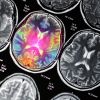
Making sense of how the blind ‘see’ color
What do you think of when you think of a rainbow? If you’re sighted, you’re probably imagining colors arcing through the sky just after the rain. But what about someone who can’t see a rainbow? How does a congenitally blind person’s knowledge of a rainbow — or even something as seemingly simple as the color red — differ from that of the sighted?
-
 +18 +1
The Uprooting of Mind: Can AI Save Us?
The phenomenon of Mind has evaded philosophers, theologians, scientists, and artists since the dawn of civilization. Today, the concept of Mind is front and centre with advances in AI and machine learning. The promises of AI and the hope of a Singularity to lead civilization forward, into uncharted lands towards a utopian future is our latest, human all too human attempt to grasp at an idea to soothe the unsoothable.
-
 +10 +1
How to Become a ‘Superager’
Think about the people in your life who are 65 or older. Some of them are experiencing the usual mental difficulties of old age, like forgetfulness or a dwindling attention span. Yet others somehow manage to remain mentally sharp. My father-in-law, a retired doctor, is 83 and he still edits books and runs several medical websites.
-
 +15 +1
New drug raises hopes of reversing memory loss in old age
An experimental drug that bolsters ailing brain cells has raised hopes of a treatment for memory loss, poor decision making and other mental impairments that often strike in old age. The drug could be taken as a daily pill by over-55s if clinical trials, which are expected to start within two years, show that the medicine is safe and effective at preventing memory lapses. Tests in the lab showed that old animals had far better memory skills half an hour after receiving the drug. After two months on the treatment, brain cells which had shrunk in the animals had grown back, scientists found.
-
 +28 +1
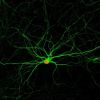
Converting cells into new neurons could lead to a pill that repairs brain damage
As powerful as the human brain is, once it's damaged it can't really recover completely. Now researchers at Penn State may have found a way to boost the brain's regenerative abilities, using certain molecules to convert neighboring cells into new neurons. The technique could eventually lead to pills that treat brain injuries, stroke or Alzheimer's disease.
-
 +15 +1
Rocking improves sleep and memory, studies in mice and people show
Anyone who has ever put a small child to bed or drifted off in a gently swaying hammock will know that a rocking motion makes getting to sleep seem easier. Now, two new studies reported in Current Biology on January 24, one conducted in young adults and the other in mice, add to evidence for the broad benefits of a rocking motion during sleep. In fact, the studies in people show that rocking not only leads to better sleep, but it also boosts memory consolidation during sleep.
-
 +29 +1
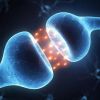
Neuroimaging study sheds new light on how a dose of THC changes the brain
New neuroimaging research provides new insight into how tetrahydrocannabinol, or THC, the main psychoactive compound in cannabis, affects the human brain. The study found that THC increases glutamate concentrations in the striatum, a major brain structure involved in the coordination of body movement, decision-making and the initiation of action.
-
 +16 +1
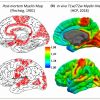
People With Advantageous Personality Traits Have More Nerve-Fibre Insulation (Myelination) In Key Brain Areas
Researchers are getting closer to understanding the neurological basis of personality. For a new paper in the Journal of Personality, Nicola Toschi and Luca Passamonti took advantage of a recent technological breakthrough that makes it possible to use scans to estimate levels of myelination in different brain areas (until fairly recently this could only be done at postmortem).
-
 +10 +1
How Brain Injuries Deprive People of a Sense of Free Will
When Ryan Darby was a neurology resident, he was familiar with something called alien limb syndrome, but that did not make his patients’ behavior any less puzzling. Individuals with this condition report that one of their extremities—often a hand—seems to act of its own volition. It might touch and grab things or even unbutton a shirt the other hand is buttoning up. Patients are unable to control the rebellious hand short of grabbing or even sitting on it.
-
 +3 +1
+3 +1Scientists have established a link between brain damage and religious fundamentalism
A study published in the journal Neuropsychologia has shown that religious fundamentalism is, in part, the result of a functional impairment in a brain region known as the prefrontal cortex. The findings suggest that damage to particular areas of the prefrontal cortex indirectly promotes religious fundamentalism by diminishing cognitive flexibility and openness—a psychology term that describes a personality trait which involves dimensions like curiosity, creativity, and open-mindedness.
-
 +3 +1
+3 +1How does the brain learn by talking to itself?
UNIGE scientists uncover the role of synaptic feedback systems in shaping learning processes in the brain’s cortex — a discovery that may prove valuable for developing efficient artificial intelligence. Human beings, like other animals, possess an enormous learning capacity that allows for the apprehension of new sensory information to master new skills or to adapt to an ever-changing environment.
-
 +12 +1
Why Two People See the Same Thing But Have Different Memories
Does it ever strike you as odd that you and a friend can experience the same event at the same time, but come away with different memories of what happened? So why is it that people can recall the same thing so differently? We all know memory isn’t perfect, and most memory differences are relatively trivial. But sometimes they can have serious consequences.
Submit a link
Start a discussion