



















-
 +18 +1
The neuroscience of terrorism: How researchers convinced a group of radicals to let them scan their brain
Summary: A new neuroimaging study provides an insight into the neurobiology of those willing to commit terrorist acts.
-
 +31 +1
Alzheimer’s Disease is a ‘Double-Prion Disorder,’ Study Shows
Two proteins central to the pathology of Alzheimer’s disease act as prions – spreading through tissue like an infection by forcing normal proteins to adopt the same misfolded shape.
-
 +4 +1
+4 +1Humans' Ability to Hear Harmonic Sounds Might Set Us Apart
The pursuit of science is usually an unending stream of embarrassments for the human ego. No, the sun doesn’t revolve around us. No, we’re not all that different from common animals. No, we’re not even the only humans. But, in some ways at least, our brains really are special.
-
 +25 +1
How early-life challenges affect how children focus, face the day
Experiences such as poverty, residential instability, or parental divorce or substance abuse, can affect executive function and lead to changes in a child’s brain chemistry.
-
 +18 +1
How we make complex decisions
Neuroscientists identify a brain circuit that helps break decisions down into smaller pieces.
-
 +26 +1
How Two Paralyzed Patients Walked Again Without Surgery
The protocol uses EEG to control virtual avatars and robotic exoskeleton walkers while the patient wears a “tactile shirt” that offers sensory feedback.
-
 +6 +1
+6 +1Music helps to build the brains of very premature babies
Summary: Music specially composed for preterm babies helps strengthen the development of neural networks and may help to limit neurodevelopmental delays often experienced by those born prematurely.
-
 +4 +1
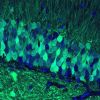
+4 +1Proof It’s Possible to Enhance or Suppress Memories
Boston University neuroscientist Steve Ramirez and collaborators have published a new paper showing memories are pliable if you know which regions of the brain’s hippocampus to stimulate, which could someday enable personalized treatment for people with PTSD, depression and anxiety.
-
 +10 +1
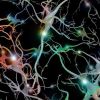
An AI designed art that controlled monkeys’ brain cells
New artwork created by artificial intelligence does weird things to the primate brain. When shown to macaques, AI-generated images purposefully caused nerve cells in the monkeys’ brains to fire more than pictures of real-world objects. The AI could also design patterns that activated specific neurons while suppressing others, researchers report in the May 3 Science.
-
 +15 +1
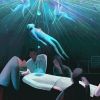
Life — after life: Does consciousness continue after our brain dies?
How can people brought back from death after cardiac arrest report having experienced lucid and vivid memories and recollections without a functioning brain? The study of near-death experiences is …
-
 +12 +1
Do Microdoses of LSD Change Your Mind?
You’ve probably heard about microdosing, the “productivity hack” popular among Silicon Valley engineers and business leaders. Microdosers take regular small doses of LSD or magic mushrooms. At these doses, they don’t experience mind-bending, hallucinatory trips, but they say they get a jolt in creativity and focus that can elevate work performance, help relationships, and generally improve a stressful and demanding daily life. If its proponents are to be believed, microdosing offers the cure for an era dominated by digital distractions and existential anxiety—a cup of coffee with a little Tony Robbins stirred in.
-
 +33 +1
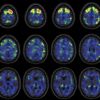
Toward CTE Diagnosis in Living People
A Boston University researcher says we are one step closer to diagnosing CTE in living people. CTE researchers have discovered that an experimental PET scan on living people is able to detect abnormal brain tissue—called tau protein—in patterns similar to those found in the brains of deceased people diagnosed with CTE after death.
-
 +13 +1
Train your brain, change your brain
“We knew that the brain has an amazing ability to adapt itself, but we were not sure that we could observe these changes so quickly. Understanding of how we can impact on brain wiring and functioning is the key to treat neurological disorders”, says Theo Marins, a biomedical scientist from IDOR and the Ph.D. responsible for the study.
-
 +20 +1
Stanford team develops brain-rejuvenating antibodies that let old mice think like youngsters
In a stunning piece of research, Stanford neuroscientists have hunted down a single gene that encodes a protein responsible for age-related cognitive losses, targeted it with special blocking antibodies, and shown in mice that these antibodies can rejuvenate old brains to work as well as young ones.
-
 +28 +1
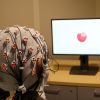
Brain zaps boost memory in people over 60, study finds
The treatment is aimed at “working memory,” the ability to hold information in mind for a matter of seconds. It’s crucial for things like taking medications, paying bills, buying groceries or planning.
-
 +43 +1
The Brain Needs Animal Fat
Why humans can't thrive on plants alone.
-
 +36 +1
The Adult Brain Does Grow New Neurons After All, Study Says
Study points toward lifelong neuron formation in the human brain’s hippocampus, with implications for memory and disease
-
 +16 +1
What Causes Hallucinations? The Brain May Be OverInterpreting a Lack of Info
Mental illness affects millions of Americans. Many people with bipolar disorder, depression, and schizophrenia suffer hallucinations, the perception of something that is not present. From phantom smells to hearing voices and seeing things that are not there, hallucinations can take many forms and stem from many causes. It’s not just mental illness, either. Strokes, migraines and inner ear diseases can also lead to hallucinations. And obviously, psychedelic drugs do as well.
-
 +16 +1
Women’s brains appear three years younger than men’s
Time wears differently on women’s and men’s brains. While the brain tends to shrink with age, men’s diminish faster than women’s. The brain’s metabolism slows as people grow older, and this, too, may differ between men and women. A new study from Washington University School of Medicine in St. Louis finds that women’s brains appear to be about three years younger than men’s of the same chronological age, metabolically speaking.
-
 +35 +1
Women's Pain Is Different From Men's—the Drugs Could Be Too
Men and women can’t feel each other’s pain. Literally. We have different biological pathways for chronic pain, which means pain-relieving drugs that work for one sex might fail in the other half of the population. So why don’t we have pain medicines designed just for men or women? The reason is simple: Because no one has looked for them. Drug development begins with studies on rats and mice, and until three years ago, almost all that research used only male animals. As a result, women in particular may be left with unnecessary pain—but men might be too.
Submit a link
Start a discussion