





















-
 +25 +1
Chance discovery links inflammatory bowel disease with common bacterial gut toxin
New research has uncovered a surprise link between a common bacterial toxin found in the gut and inflammatory bowel disease (IBD).
-
 +24 +1
It's food safety lore, but does the 5-second rule really work?
So how long does it take for microorganisms from your kitchen floor to attach themselves to that slice of pizza you dropped? Perhaps you're asking yourself the wrong question.
-
 +4 +1
+4 +1The incredibly frustrating reason there’s no Lyme disease vaccine
Lyme has quickly become one of the most common infectious diseases in America, with many as 300,000 people infected every year. And public health officials fear the bacterial infection, which jumps from ticks to humans, will only spread farther and faster as climate change makes more parts of the US habitable for ticks. Lyme can be treated with antibiotics. And there are many ways to prevent tick bites. But there’s no vaccine available if you want extra protection against the disease (unless you’re a dog).
-
 +3 +1
+3 +1Can microbes manipulate our minds?
Researchers at the University of Oxford have proposed an evolutionary framework to understand why microbes living in the gut affect the brain and behaviour, published in Nature Reviews Microbiology.
-
 +20 +1
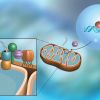
Biologists Discover Pathway That Protects Mitochondria
MIT biologists have discovered the first cellular response targeted at helping mitochondria when their protein import goes wrong.
-
 +18 +1
The Microbiologist Sniffing Out the World's Perfect Cheese
Rachel Dutton's studies of bacteria may have a huge impact on dairy as we know it.
-
 +25 +1
Hot-air dryers suck in nasty bathroom bacteria and shoot them at your hands
Air filters can help, but healthcare and research centers may want to stick with towels.
-
 +14 +1
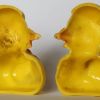
Rubber ducks may be haven for nasty germs
Scientists have the dirt on the rubber ducky: Those cute yellow bath-time toys are — as some parents have long suspected — a haven for nasty bugs. Swiss and American researchers counted the microbes swimming inside the toys and say the murky liquid released when ducks were squeezed contained "potentially pathogenic bacteria" in four out of the five toys studied.
-
 +16 +1
The Purpose of Diarrhoea Is Way More Complicated And Important Than We'd Like
For centuries, scientists have been confounded by one of the messiest aspects of the human experience - diarrhoea, and why exactly we have to endure it.
-
 +6 +1
+6 +1How to Prevent Gut Inflammation
If you think about it, there has to be a way for our good bacteria to signal to our immune system that they’re the good guys. There is. And that signal is butyrate. Researchers found that butyrate suppresses the inflammatory reaction and tells our immune system to stand down
-
 +18 +1
New Species of Tardigrade Discovered in Japanese Parking Lot
Say hello to Macrobiotus shonaicus, a completely new species of tardigrade—those incredibly resilient microscopic wee beasties that likely have what it takes to survive the apocalypse.
-
 +18 +1
Microbes found in one of Earth’s most hostile places, giving hope for life on Mars
A hardy community of bacteria lives in Chile’s Atacama Desert—one of the driest and most inhospitable places on Earth—where it can survive a decade without water, new research confirms. The work should put to rest the doubts of many scientists, who had suggested that previous evidence of microscopic life in this remote region came from transient microbes. And because the soils in this location closely resemble those on Mars, these desert dwellers may give hope to those seeking life on the Red Planet’s similarly hostile surface.
-
 +25 +1
How Dirt Could Save Humanity From an Infectious Apocalypse
Nobody scours Central Park looking for drugs quite the way Sean Brady does. On a sweltering Thursday, he hops out of a yellow cab, crosses Fifth Avenue, and scurries up a dirt path. Around us, the penetrating churn of a helicopter and the honk of car horns filter through the trees. Brady, a fast-talking chemist in his late 40s who sports a graying buzz cut and rimless glasses, has a wry, self-deprecating humor that belies the single-minded determination of his quest. He walks along restlessly. Near the lake, we head up a rock slope and into a secluded area. Brady bends over and picks up a pinch of dusty soil.
-
 +23 +1
Does vinegar really kill household germs?
Plenty of people swear by vinegar, but can it actually kill nasty household bugs?
-
 +15 +2
Supercharged antibiotics could defeat superbugs
An old drug boosted by University of Queensland researchers has been released as a new antibiotic that could terminate some of the world’s deadliest superbugs. The supercharge technique, directed by Dr. Mark Blaskovich and Professor Matt Cooper from UQ’s Institute for Molecular Bioscience (IMB), possibly could regenerate other antibiotics. Antibiotic-resistant bacteria, superbugs, trigger 700,000 deaths globally every year, and a UK government review has foretold this number could rise to 10 million by 2050.
-
 +7 +2
+7 +2How bacteria turbocharged their motors
Using detailed 3D images, researchers have shown how bacteria have evolved molecular motors of different powers to optimise their swimming. The discovery, by a team from Imperial College London, provides insights into evolution at the molecular scale. Bacteria use molecular motors just tens of nanometres wide to spin a tail (or ‘flagellum’) that pushes them through their habitat. Like human-made motors, the structure of these nanoscale machines determines their power and the bacteria’s swimming ability.
-
 +21 +1
Did Russians Find Alien Life Clinging to the International Space Station?
A surprising number of people believe we already have proof aliens exist. But it’s very rare when that segment of the population overlaps with the segment that’s actually been to outer space. And yet, on Monday, Anton Shkaplerov, a Russian cosmonaut who has already spent two stints aboard the International Space Station and is gearing up for a third mission to launch on Dec. 18, told Russian state media that scientists have found living bacteria sitting on the exterior of the Russian segment of the ISS. He claims the bacteria is not from Earth—it’s extraterrestrial in origin.
-
 +33 +1
Poo Pills Really Are Becoming Our Answer to Dangerous Superbug Infections
Since the internet first heard about poo transplants, perceptions of this procedure have changed from everyone freaking out to a growing appreciation of gut microbiota and its complexities.
-
 +21 +1
Cosmonaut says space station bacteria 'come from outer space'
The bacteria turned up after swabbing of the space station's exterior. The question is, how did they get there?
-
 +14 +1
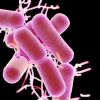
Why your vaginal microbiome is important
The vagina is host to a dynamic ecosystem that plays a key role in keeping women healthy.
Submit a link
Start a discussion