





















-
 +2 +1
+2 +1No need to cut beef to tackle climate crisis, say farmers
Farming can become climate neutral by 2040 without cutting beef production or converting substantial areas of farmland into forest, according to a plan published by the National Farmers’ Union.
-
 +7 +1
+7 +1Why Giving Up Meat Won't Have Much of an Effect on Climate Change
The idea that giving up meat could help prevent climate change is gaining traction in American media. "Want to Save the Planet? Go Vegan Study Says," a Newsweek headline last year. The study, published in Science, found that "moving from current diets to a diet that excludes animal products has transformative potential," including the reduction of greenhouse gas emissions from food production by half.
-
 +3 +1
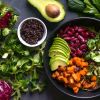
+3 +1Vegetarians might have higher risk of stroke than meat eaters, study says
Non-meat diets have soared in popularity with many people ditching beef, pork and chicken in pursuit of health and environmental benefits and concerns about animal welfare. However, a new study suggests that vegetarians and vegans may be at a higher risk of stroke than their meat-eating counterparts -- although those who don't eat meat have a lower chance of coronary heart disease, according to the new paper, published in the medical journal the BMJ on Wednesday.
-
 +22 +1
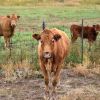
Big Beef Says Eating More Meat Can Save the Planet. That's Bullshit.
North American ranchers and lobbyists are pushing back against a United Nations’ report pointing the finger at the global North’s huge appetite for meat and dairy for fueling climate change. But science shows that raising cows sustainably, with a low or carbon-neutral footprint, is the exception, not the rule.
-
 +3 +1
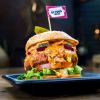
+3 +1Meatless burgers vs. beef: How Beyond Meat’s environmental impact stacks up
We’ve all heard about the benefits of plant-based meat alternatives: reduced cholesterol, less impact on the land, animal-friendly, etc. But in terms of its reportedly environmentally friendly practices, how exactly does it measure up to traditional meat? Beyond Meat–makers of non-GMO meat-free burgers, sausages, and chicken strips–discovered it’s quite substantial.
-
 +3 +1
+3 +1How Eating Less Meat Could Help Protect the Planet From Climate Change
More people switching to plant-based diets could help to halt climate change
-
 +30 +1
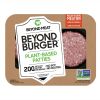
Beyond Meat upgrades its burger with better marbling and complete protein
Starting this week, Beyond Meat is selling a new “meatier” version of its Beyond Burger that the company says is a source of complete protein and both looks and tastes more like real meat. The new burger uses a combination of coconut oil and cocoa to imitate the look and taste of “marbling,” the white, fatty specks you get in meat that contribute to its rich flavor. The burger also new uses apple extract so that it browns more as it’s cooking.
-
 +11 +1
The rise of meatless meat, explained
2019 has been an incredible year for a niche industry: alternative meats. First, Impossible Foods, a leading creator of plant-based meatlike burgers, announced the Impossible Burger 2.0, an improved recipe over previous meat substitutes that tastes, well, a lot meatier. In April, Burger King announced the launch of the Impossible Whopper, Qdoba said it would make Impossible Meat bowls and tacos available at all of its US locations, and Del Taco announced it would offer Beyond Meat’s beef alternative.
-
 +18 +1
Impossible Foods’ meatless burgers have made it a $2 billion company
Impossible Foods, the alternative meat company that makes the Impossible Burger, announced today that it has raised an additional $300 million to take plant-based meat mainstream. The new round of funding was first reported by Reuters. It’s a big fundraising haul, one that reflects the intense investor demand right now for alternatives to conventional meat. The new round of funding values the company at $2 billion, insiders told Reuters.
-
 +22 +1
Boise restaurant goes vegan after owner sees graphic, ‘heartbreaking’ animal-rights film
It was past midnight when Maria Bahruth suddenly decided something that could make or break her small Downtown Boise restaurant. The High Note Cafe’s owner had gotten 15 minutes into watching “Dominion,” a graphic animal-rights documentary available on YouTube. Bahruth, who calls the 2018 Australian film “heartbreaking,” suddenly found herself baring her soul on the restaurant’s Facebook page.
-
 +23 +1
Every Burger King in the country will have meatless Whoppers by the end of the year
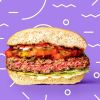
If you’ve been hankering to try one of the cutting-edge meatless burgers people are talking about but haven’t been able to get your hands on one yet, you’re in luck: Burger King’s Impossible Whopper — a patty made with 0 percent meat — will soon be available nationwide. It’s been barely a month since the fast-food chain announced it was giving the new Impossible Whopper a trial run in 59 restaurants in the St. Louis area. Already, the results are so promising that Burger King now plans to make the product available in all its 7,200 branches across the US by the end of this year.
-
 +26 +1
Why plant protein is better for you than animal protein
It’d be great if a burger-a-day diet was healthy. Don’t get me wrong—it’s not the worst. You’ve got protein in there and hopefully some veggies on top (and on the side) , and even some fiber from the roll (you used whole grain, right?). Unfortunately, study after study shows that meat as a protein source just isn’t that healthy. It’s far better to get that necessary protein from plants. But why?
-
 +22 +1
These Giant, Keto Cheese-Stuffed Meatballs Can Be Cooked in Your Instant Pot
Spaghetti and meatballs on the keto diet is a real thing!
-
 +32 +1
UK scientists growing 'bacon' in labs
Researchers have grown animal cells on blades of grass - could a slaughter-free bacon supply be feasible?
-
 +7 +1
+7 +1Here’s how the footprint of the plant-based Impossible Burger compares to beef
The newest version of the Impossible Burger–the plant-based meat that uses food science to replicate the taste and feel of beef–has a carbon footprint 89% smaller than a burger made from a cow. A new analysis found that the burger also uses 87% less water than beef, uses 96% less land, and cuts water contamination by 92%.
-
 +4 +1
+4 +1'We Can't Go On Eating Meat Like We Have' Says David Attenborough
The broadcaster, who was interviewed for the upcoming issue of Radio Times magazine said people need to be responsible when it comes to trying to keep the planet healthy.
-
 +4 +1
+4 +1Will We Ever Stop Eating Animal Meat?
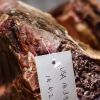
There are two big truths about eating meat from animals. First, animal flesh imposes a high moral and ecological price for a tender medallion of food. Factory farming incurs the torturous treatment of millions of chickens, cows, and pigs each year. This constitutes a rolling moral catastrophe. What’s more, one-sixth of the world’s greenhouse gas emissions are directly attributable to raising livestock, and the figure is rising as more countries enter the global middle class. For most Americans, cutting meat out of their diets would reduce global warming more than giving up driving.
-
 +15 +1
Meat Giant Kerry Group Planning 'Significant Drive' Into Plant-Based Sector
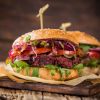
Major meat company the Kerry Group has revealed it is planning to enter the plant-based market, to capitalize on the growing flexitarian sector. It is the latest in the number of major meat brands which has acknowledged the significant number of people opting for meat-free meals - whether they are vegan or not.
-
 +4 +1
+4 +16.5 Million Canadians Are Ditching Meat
A total of approximately 6.5 million Canadians (20 percent of the population) are actively reducing, or completely eliminating, their consumption of meat, according to a study conducted by Dalhousie University and the University of Guelph. The researchers were interested in discovering how Canadians were responding to the 2019 Canada Food Guide—which de-emphasizes the consumption of meat and dairy, instead recommending that Canadians focus on plant-based sources of protein.
-
 +31 +1
Is the world ready for lab-grown meat?
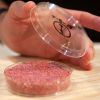
Do people want to eat lab-grown meat? A new study, for which I was a peer-reviewer, is the first to rigorously assess consumer interest in plant-based and “clean meat” (also known as lab-grown or cultured meat) in the US, India and China. The study found “high levels of acceptance” in all three countries and “significantly higher acceptance” in India and China, where 86% and 93% respectively reported being at least “somewhat likely” to purchase clean meat.
Submit a link
Start a discussion