





















-
 +13 +4
Lightning as a trigger: MIT Thinks That Life On Earth Is Born In A Pond
According to MIT researchers, life would have appeared in a small pond. According to the new study, the pond was an environment conducive to the birth of the first forms of life on Earth. The cradle of life would thus be a body of water having a depth of only ten to one hundred centimeters. This situation would have made it capable of containing high concentrations of nitrogen, the main ingredient of life.
-
 +21 +3
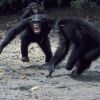
How Humans Tamed Themselves to Become More Peaceful
In "The Goodness Paradox," a Harvard anthropologist explains how we evolved to become less violent while retaining our capacity for warlike behavior.
-
 +12 +1
Earliest life may have arisen in ponds, not oceans
Primitive ponds may have provided a suitable environment for brewing up Earth’s first life forms, more so than oceans, a new MIT study finds. Researchers report that shallow bodies of water, on the order of 10 centimeters deep, could have held high concentrations of what many scientists believe to be a key ingredient for jump-starting life on Earth: nitrogen.
-
 +4 +1
+4 +1New species of ancient human discovered in the Philippines
Dubbed Homo luzonensis, the species is one of the most important finds that will be out in the coming years, one scientist predicts.
-
 +15 +3
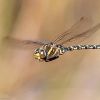
Female dragonflies fake their own deaths to avoid males harassing them for sex
In order to avoid males of the species bothering them for sex, female dragonflies fake their own deaths, falling from the sky and lying motionless on the ground until the suitor goes away. A study by Rassim Khelifa, a zoologist from the University of Zurich is the first time scientists have seen odonates feign death as a tactic to avoid mating, and a rare instance of animals faking their own deaths for this purpose. Odonates is the order of carnivorous insects that includes dragonflies and damselflies.
-
 +14 +3
Sea otters' tool use leaves behind distinctive archaeological evidence
An international team of researchers has analyzed the use by sea otters of large, shoreline rocks as “anvils” to break open shells, as well as the resulting shell middens. The researchers used ecological and archaeological approaches to identify patterns that are characteristic of sea otter use of such locations. By looking at evidence of past anvil stone use, scientists could better understand sea otter habitat use.
-
 +13 +1
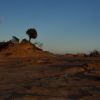
'A big jump': People might have lived in Australia twice as long as we thought
Extensive archaeological research in southern Victoria has again raised the prospect that people have lived in Australia for 120,000 years – twice as long as the broadly accepted period of human continental habitation. The research, with its contentious potential implications for Indigenous habitation of the continent that came to be Australia, has been presented to the Royal Society of Victoria by a group of academics including Jim Bowler...
-
 +17 +4
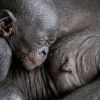
Scientists Still Stumped By The Evolution of Human Breasts
“How about breasts?” The question came from a jock-y guy in one of my graduate school classes on human evolution. Far from offensive, the query was appropriate and astute. My classmates and I nodded approval, and the professor added it to a growing list on the board. We were brainstorming features that distinguish our species, Homo sapiens, from other primates. That list includes human peculiarities like big brains, upright walking, language, furless bodies … and permanently enlarged breasts after puberty.
-
 +16 +5
Evolution made humans less aggressive
New research shows that Homo Sapiens is a domesticated form of our species. And that’s the result of the invention of capital punishment. But how could our low aggressiveness evolve from repeated acts of violence?
-
 +7 +2
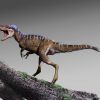
+7 +2A New Species of Tiny Tyrannosaur Helps Explain the Rise of T. rex
Scientists have discovered a new species of tiny tyrannosaur that lived some 95 million years ago in what’s now Utah. The find helps fill a frustrating gap in the fossil record at a critical time when tyrannosaurs were evolving from small, speedy hunters, into the bone-crushing apex predators we know so well. The new dinosaur has been dubbed Moros intrepidus, and its name means “harbinger of doom.” The creature, known only from a leg bone and some various teeth, weighed under 200 pounds as a fully-grown adult. It was a specialist predator and scientists say it was fast enough to easily run down prey while avoiding other meat-eaters.
-
 +12 +1
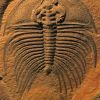
Life quickly finds a way: the surprisingly swift end to evolution's big bang
Modern animals took over our planet much more quickly than previously thought. This has both welcome and disturbing implications for the future of life on our rapidly changing planet
-
 +15 +3
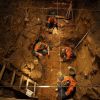
Ancient-human species mingled in Siberia’s hottest property for 300,000 years
Neanderthals and Denisovans might have lived side by side for tens of thousands of years, scientists report in two papers in Nature1,2. The long-awaited studies are based on the analysis of bones, artefacts and sediments from Denisova Cave in southern Siberia, which is dotted with ancient-human remains. They provide the first detailed history of the site’s 300,000-year occupation by different groups of ancient humans.
-
 +20 +1
Genetic Mutations In Our Bodies Might Be Less Random Than We Thought, Scientists Say
When it comes to evolution in humans, there are two main things making it happen, at least on the genetic level: The recombination of genes that happens when our parents’ chromosomes pair up and the random mutations that inevitably result. A new high-resolution map of the human genome is providing scientists with their most detailed look yet at the dual roles those processes play in creating each person’s unique genome. It’s also revealing that mutations in some places are more likely than others, indicating, the researchers say, that they might not be as random as we think.
-
 +3 +1
+3 +1Human evolution’s ties to tectonics
In this age of worldwide climatic deterioration, many authors have documented what we are doing to our planet. Lewis Dartnell turns the tables in his book Origins. He asks how Earth has affected us, through our long evolution to big brains, small jaws and scrawny bodies that somehow cooperate with each other enough to make us the planet’s dominant eukaryotic species. All this began, Dartnell argues, with the tectonic processes that created the East African Rift — the area that today runs from Somalia and Ethiopia down to the coast of Mozambique.
-
 +17 +3
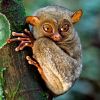
Animals with 'night vision goggles'
Could you survive in pitch-black conditions? Meet the animals that not only survive but thrive. By Jonathan Amos.
-
 +2 +1
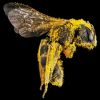
+2 +1Hive Mentalities
Bees evolved from wasp ancestors around 100 million years ago. Their shift to a vegetarian diet had a profound effect on the evolution of flowering plants. By Tim Flannery.
-
 +16 +7
Why the chicken is a symbol of our times
With around 23 billion chickens on the planet at any one time, the bird is a symbol of our times, say scientists.
-
 +18 +5
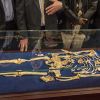
Exclusive: Controversial skeleton may be a new species of early human
More than twenty years after it was first discovered, an analysis of a remarkable skeleton discovered in South Africa has finally been published – and the specimen suggests we may need to add a new species to the family tree of early human ancestors. The analysis also found evidence that the species was evolving to become better at striding on two legs, helping us to understand when our lineage first became bipedal. The specimen, nicknamed “Little Foot”, is a type of Australopithecus, the group of hominins to which the famous fossil “Lucy” belonged.
-
 +12 +3
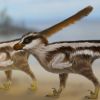
Tiny raptor tracks lead to big discovery
Tracks made by dinosaurs the size of sparrows have been discovered in South Korea by an international team of palaeontologists. University of Queensland researcher Dr Anthony Romilio was part of the team which described the tracks, which were originally found by Professor Kyung Soo Kim from Chinju National University of Education, South Korea.
-
 +16 +5
Evolutionary biologists uncover new branch on Tree of Life in rare discovery published in Nature
Scientists at Dalhousie Universityhave discovered a new branch on the ‘Tree of Life’ that no one knew existed. Their findings were published today in the journal Nature and will be critical to better understanding the evolutionary history of life on earth. “This discovery literally redraws our branch of the ‘Tree of Life’ at one of its deepest points,” explains Alastair Simpson, the lead author of the study and biology professor at Dalhousie. “It opens a new door to understanding the evolution of complex cells—and their ancient origins—back well before animals and plants emerged on Earth.”
Submit a link
Start a discussion