




















-
 +12 +1
Neandertals may have had a lower threshold for pain
Pain is mediated through specialized nerve cells that are activated when potentially harmful things affect various parts of our bodies. These nerve cells have a special ion channel that has a key role in starting the electrical impulse that signals pain and is sent to the brain. According to a new study by researchers at the Max Planck Institute for Evolutionary Anthropology in Germany and the Karolinska Institutet in Sweden people who inherited the Neandertal variant of this ion channel experience more pain.
-
 +5 +1
+5 +1The human brain: not just large but finely shaped
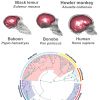
Large brains have long differentiated humans and primates from other mammals and there is a clear evidence that brain mass increased through time. Now a new study by the University of New England, in collaboration with Italian and American institutes, has shown that the evolution of higher cognitive capacity is not only due to having a larger brain but also due to the brain having the "right" shape.
-
 +5 +1
+5 +1DNA Linked to Covid-19 Was Inherited From Neanderthals, Study Finds
A stretch of DNA linked to Covid-19 was passed down from Neanderthals 60,000 years ago, according to a new study. Scientists don’t yet know why this particular segment increases the risk of severe illness from the coronavirus. But the new findings, which were posted online on Friday and have not yet been published in a scientific journal, show how some clues to modern health stem from ancient history.
-
 +2 +1
+2 +1Why Birds Can Fly Over Mount Everest
A story for my granddaughter about oxygen, evolution, and our planet’s fate. By Walter Murch
-
 +16 +4
Not all twins are identical and that's been an evolutionary puzzle, until now
While identical twins are seen more as an accidental splitting of a single egg, there could be a good reason mothers produce non-identical twins from two separate eggs.
-
 +11 +3
If we were created ‘in God’s image,' the divine must be messed up
In Human Errors, Lents “demonstrated that the human body can’t possibly be considered the product of an intelligent designer. Rather, its flaws tell the story of evolution,” reviewer Harriet Hall asserts in a Skeptical Inquirer magazine review of the nonfiction book (“Evolution’s Flaws Are in Us”).
-
 +13 +1
The World's Population By Eye Color Percentages
Human eye color is determined by two factors - the pigmentation of the iris and the way the iris scatters the light passing through it. Genes dictate how much melanin will be present in the eye. The more the melanin, the darker the eye. However, it might seem that in some individuals, their eye color tends to change depending on the amount of light present. This is because of the double layer of iris present in the eye.
-
 +14 +3
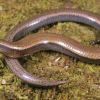
An extraordinary feat pulled off by a lizard could suggest the species is going through a rare evolutionary transition
For most of the animal kingdom, babies are born in one of two ways: their parent either lays eggs or gives birth to live offspring. Recently, a three-toed skink (Saiphos equalis) pulled off an extraordinary feat: It laid three eggs and delivered another baby through live birth in the same pregnancy. That suggests that the lizard species is in a rare transitional form between egg-laying and live-bearing animals, according to a study published in Molecular Ecology last month.
-
 +16 +5
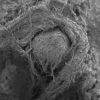
This is the oldest known string. It was made by a Neandertal
In a new twist on Neandertals’ Stone Age accomplishments, our close evolutionary relatives wound bark fibers into strings that could have been used to make clothes, rope, nets and other practical but perishable items, a new study suggests. A fragment of a string made from three bark fibers was found attached to a stone tool at a French Neandertal site. That tool was embedded in sediment dating from 52,000 to 41,000 years ago, say paleoanthropologist Bruce Hardy of Kenyon College in Gambier, Ohio, and colleagues.
-
 +14 +3
Early humans in Africa may have interbred with a mysterious, extinct species – new research
One of the more startling discoveries arising from genomic sequencing of ancient hominin DNA is the realisation that all humans outside Africa have traces of DNA in their genomes that do not belong to our own species.
-
 +2 +1
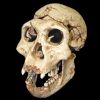
+2 +1The earliest known hominid interbreeding occurred 700,000 years ago
Ancestors of Neandertals and Denisovans left Africa for Eurasia around 700,000 years ago and then interbred with a Homo population that had exited Africa long before, according to a new genetic study. The finding reveals the oldest known case of interbreeding among members of the genus that includes people today, Homo sapiens.
-
 +3 +1
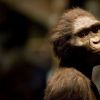
+3 +1Great apes probably smarter than early human Australopithecus species
Early human relatives may not have been as smart as the great apes of today, casting into doubt previous theory, a new study suggests. Despite having a similar-sized brain to gorillas, chimps and orangutans, scientists believe Australopithecus had a lower rate of blood flow to their brain.
-
 +4 +1
+4 +1The Clues That Neanderthals Didn't Know How to Make Fire
In the 1981 movie Quest for Fire, a group of Neanderthals struggles to keep a small ember burning while moving across a cold, bleak landscape. The meaning is clear: If the ember goes out, they will lose their ability to cook, stay warm, protect themselves from wolves—in short, to survive. The film also makes it obvious that these Neanderthals do not know how to make fire.
-
 +4 +1
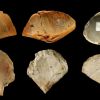
+4 +1Neandertals dove and harvested clamshells for tools near Italy’s shores
Often typecast as spear-wielding mammoth killers, some Neandertals were beachcombers and surf divers, researchers say. At Moscerini Cave, located on Italy’s western coast, Neandertals collected clamshells on the beach and retrieved others from the Mediterranean Sea, say archaeologist Paola Villa of the University of Colorado Boulder Museum of Natural History and her colleagues. Our close, now extinct evolutionary relatives waded or dove into shallow waters to collect shells that they sharpened into scraping or cutting tools, the researchers report January 15 in PLOS ONE.
-
 +19 +5
Homosexuality may have evolved for social, not sexual reasons
Scientists don't ask how some people evolved to be tall. In the same way, asking how homosexuality evolved is the wrong question. We need to ask how human sexuality evolved in all its forms.
-
 +4 +1
+4 +1Ancient sex between different human species influences modern-day health
It's just as well we Homo sapiens got some Neanderthal and Denisovan genes into our DNA.
-
 +18 +3
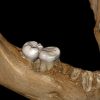
A 160,000-year-old jaw from a human ancestor was found in a Tibetan cave. It might explain why Tibetans are able to live at high altitudes today.
Scientists found a 160,000-year-old jawbone from a human ancestor in a Tibetan cave. It might explain why Tibetans today can live at high altitudes.
-
 +2 +1
+2 +1‘Humans were not centre stage’: how ancient cave art puts us in our place
In 1940, four teenage boys stumbled, almost literally, from German-occupied France into the Paleolithic age. As the story goes – and there are many versions of it – they had been taking a walk in the woods near the town of Montignac when the dog accompanying them suddenly disappeared.
-
 +11 +3
Human Ancestors May Have Evolved the Physical Ability to Speak More Than 25 Million Years Ago
Speech is part of what makes us uniquely human, but what if our ancestors had the ability to speak millions of years before Homo sapiens even existed?
-
 +4 +1
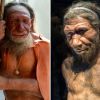
+4 +1Humans learned to smile 'to get sex' in prehistoric times, study claims
SMILES were developed by ancient humans as a way to attract less-aggressive mates, according to a new study. A team of scientists is claiming that the kindness humans can show via facial expression…
Submit a link
Start a discussion