





















-
 +24 +3
Scientists Discover Spooky Influence On Baby Name Choices
Baby names go in and out of style, but have you ever wondered why we prefer certain names over others? Believe it or not, the explanation may lie in part with the way the keys are arranged on our comp...
-
 +25 +2
Fast, faster, fastest: a history of supercomputers from the CDC 6600 to Fugaku
How fast is fast? Taking a trip with supercomputers from 1964 until today.
-
 +31 +3
New RISC-V CPU claims recordbreaking performance per watt
Micro Magic's new CPU offers decent performance with record-breaking efficiency.
-
 +19 +6
Lack of Sleep Could Be a Problem for AIs
One of the distinguishing features of machines is that they don’t need to sleep, unlike humans and any other creature with a central nervous system. Someday though, your toaster might need a nap from time to time, as may your car, fridge and anything else that is revolutionized with the advent of practical artificial intelligence technologies.
-
 +26 +4
Qualcomm’s new flagship SoC is the Snapdragon 888
This week Qualcomm announced its flagship smartphone SoC for 2021, the "Snapdragon 888." The TL;DR is that Qualcomm's 2021 chip is a 5nm SoC with an ARM Cortex-X1 core and Qualcomm's first flagship SoC with an on-board 5G modem, dumping the mandatory two-chip 5G solution that Qualcomm forced on the industry earlier this year with the Snapdragon 865. Compared to the Snapdragon 865, Qualcomm is promising performance improvements of 25 percent from the CPU, 35 percent from the GPU, and 35 percent from the ISP.
-
 +19 +3
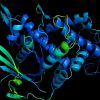
DeepMind's A.I. can now predict protein structures to within an atom's width of accuracy. Here's why that's a very big deal.
Researchers have made a major breakthrough using artificial intelligence that could revolutionize the hunt for new medicines. The scientists have created A.I. software that uses a protein’s DNA sequence to predict its three-dimensional structure to within an atom’s width of accuracy.
-
 +27 +2
DeepMind AI cracks 50-year-old problem of protein folding
Having risen to fame on its superhuman performance at playing games, the artificial intelligence group DeepMind has cracked a serious scientific problem that has stumped researchers for half a century. With its latest AI program, AlphaFold, the company and research laboratory showed it can predict how proteins fold into 3D shapes, a fiendishly complex process that is fundamental to understanding the biological machinery of life.
-
 +22 +1
MacBook Air M1 review: Windows laptops are so screwed
There’s been a fair amount of hype and skepticism following the MacBook virtual event earlier this month when Apple announced a new MacBook Air, 13-inch MacBook Pro, and Mac Mini with its own M1 chip. The new chips and laptops begin Apple’s two-year transition away from Intel processors to in-house designed silicon that's based on ARM chips. But are these new Macs really better than Intel-powered ones?
-
 +19 +2
The Trillion-Transistor Chip That Just Left a Supercomputer in the Dust
Researchers pitted the biggest computer chip in the world against a supercomputer to simulate combustion—and the megachip won the race by a mile.
-
 +28 +3
Core Slack, Discord technology Electron now supports Apple Silicon
The Electron framework that lets web developers more easily develop cross-platform apps has now been updated to work on the new Apple Silicon M1 Macs. Developers of software such as Slack and Discord, who use Electron to create Mac version, can now update their apps to run on Apple Silicon. The latest release of the Electron frameworks includes a new version that has been optimized for the M1 processor.
-
 +30 +6
World's biggest computing chip is '10,000 times faster' than a GPU, maker claims
Cerebras Systems has today confirmed that its CS-1 computing system has achieved a new performance milestone, delivering speeds far beyond what existing CPUs and GPUs are able to achieve. The CS-1, which is based on Cerebras’ WSE processor – the world’s largest computer chip, can now claim to be the “fastest AI computer in existence.”
-
 +24 +5
With Its Own Chips, Apple Aims to Define the Future of PCs
APPLE HAS LONG been the lone wolf of the personal computer industry in maintaining its own operating system instead of licensing Microsoft’s Windows as rivals do. Tuesday it struck out further from the pack by launching its first laptops and desktops built on processors designed wholly in house.
-
 +36 +4
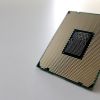
Arm has launched a CPU monster that will get Intel and AMD very worried
Designed to power the next-gen always-on portables
-
 +19 +4
World-first research allows people with paralysis to control computers with their thoughts
Australian researchers have developed a technology which allows people with upper-limb paralysis to text, email and perform online tasks using their thoughts and eye movements.
-
 +13 +4
Scientists Just Achieved Room Temperature Superconductivity for the First Time
Superconductivity could be the key to groundbreaking new technologies in energy, computing, and transportation, but so far it only occurs in materials chilled close to absolute zero. Now researchers have created the first ever room–temperature superconductor.
-
 +24 +3
Computer Scientists Break Traveling Salesperson Record
When Nathan Klein started graduate school two years ago, his advisers proposed a modest plan: to work together on one of the most famous, long-standing problems in theoretical computer science. Even if they didn’t manage to solve it, they figured, Klein would learn a lot in the process. He went along with the idea. “I didn’t know to be intimidated,” he said. “I was just a first-year grad student — I don’t know what’s going on.”
-
 +15 +2
Is your SSD failing? Microsoft is testing a Windows 10 feature that will tell you
Microsoft's Windows 10 Insider Build 20226 will alert you if your SSD is about to fail, and also allows you to manage multiple Your Phone phones.
-
 +26 +5
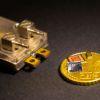
A New System for Cooling Down Computers Could Revolutionize the Pace of Innovation
In 1965, Gordon Moore, a co-founder of Intel, forecast that computing would increase in power and decrease in price exponentially. For decades what later became known as Moore’s Law proved true, as microchip processing power roughly doubled and costs dropped every couple of years. But as power increased exponentially, so did the heat produced by packing billions of transistors atop a chip the size of a fingernail.
-
 +25 +3
Scientists use big data to sway elections and predict riots — welcome to the 1960s
A cold-war-era corporation targeted voters and presaged many of today’s big-data controversies.
-
 +30 +6
The Right to Repair could help address a critical shortage in school computers
In many places across the United States, school has begun, with much of that schooling actually remote learning. We’ve found out we have a big problem: There are not enough computers for every student stuck at home because of the COVID-19 pandemic. According to an AP investigation, America is some 5 million laptops short of what we need.
Submit a link
Start a discussion