



















-
 +21 +1
The human brain would rather look at nature than city streets
There is a scientific reason that humans feel better walking through the woods than strolling down a city street, according to a new publication from UO physicist Richard Taylor and an interdisciplinary team of collaborators. The group examined the question: “What happens in your brain when you walk down the street?” and they concluded that urban environments are not pleasing to the human brain.
-
 +15 +1
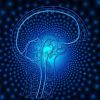
Study uncovers some electrophysiological processes associated with the Dunning–Kruger effect
Psychological research has consistently found that the least competent individuals tend to overestimate their competence, while highly competent individuals tend to underestimate their competence. Now, new research published in the European Journal of Neuroscience indicates that this metacognitive phenomenon — known as the Dunning-Kruger effect — applies to episodic memory and is associated with particular electrophysiological processes.
-
 +18 +1
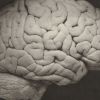
UK study shows COVID-19 can cause brain shrinkage
COVID-19 can cause the brain to shrink, reduce grey matter in the regions that control emotion and memory, and damage areas that control the sense of smell, an Oxford University study has found. The scientists said that the effects were even seen in people who had not been hospitalised with COVID, and whether the impact could be partially reversed or if they would persist in the long term needed further investigation.
-
 +4 +1
+4 +1Social working memory abnormalities may be a neurocognitive mechanism underlying poorer social connection in PTSD
Research published in the journal Depression & Anxiety provides evidence that neurocognitive abnormalities are related to difficulties in social connection among people with posttraumatic stress disorder. The findings suggest that those with PTSD are more likely to struggle with managing multiple pieces of social information.
-
 +14 +1
Brains of cosmonauts get ‘rewired’ to adapt to long-term space missions, study finds
Our brain can change and adapt in structure and function throughout our lives. As human exploration of space reaches new horizons, understanding the effects of spaceflight on human brains is crucial. Previous research has shown that spaceflight has the potential to alter both the shape and function of an adult brain.
-
 +26 +1
Do our lives flash before our eyes when we die? A new study thinks so
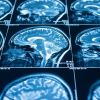
Scientists unintentionally recorded the brain activity of a dying 87 year-old man providing an insight into what happens to our brain when we die. The elderly man was admitted to hospital after a fall and developed epilepsy. Dr Raul Vicente of the University of Tartu, Estonia and his colleagues used continuous electroencephalography (EEG) to detect the seizures and treat the patient.
-
 +18 +1
First-ever recording of dying human brain reveals dreaming-like activity
“My whole life flashed before my eyes” is a phrase we often hear regarding near-death experiences – and there just might be some truth to it. Scientists have recorded the activity of a dying human brain for the first time ever, revealing brain wave patterns related to processes like dreaming and memory recall.
-
 +17 +1
Does VR give you motion sickness? Try chewing some gum
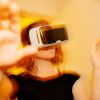
VR headsets are becoming commonplace not only in entertainment and pilot training, but in clinical settings — in helping people to overcome phobias, for example, or to distract burns patients while their dressings are changed. Unfortunately, there’s a common side effect: visually induced motion sickness (VIMS), sometimes also known as “cybersickness”. This limits the use of VR, or means that people have to spend extended periods feeling nauseous while they adapt to it. But according to new research in Experimental Brain Research there’s a very simple way to tackle this problem: chewing flavoured gum.
-
 +25 +1
Brain implant translates thought to text
“No need for keystrokes or voices. I created this tweet just by thinking it,” tweeted Philip O’Keefe, a 62-year-old Australian with ALS. In a technology first, O’Keefe used a computer chip in his brain to send the first “direct-thought tweet.”
-
 +23 +1
Is Musk’s brain implant company moving closer to human trials?
Elon Musk’s brain implant company Neuralink is now hiring a clinical trial director, an indication that the company’s longstanding goal of implanting chips in human brains is coming closer.
-
 +20 +1
What Is Consciousness?
Consciousness can be applied to the senses or feelings, it is to feel love, cold, savor your favorite dish or suffer the loss of a loved one. Consciousness is any possible experience. It is feeling love, cold, savoring your favorite dish or suffering the loss of a loved one. The word feel can be linked to the senses or feelings. However, when we refer to consciousness, the subjective experience or conscious experience occurs when we feel anything, regardless of its nature. If someone has been under the effects of general anesthesia, they know what the total absence of consciousness is.
-
 +11 +1
Brain Imaging Predicts Incidence of PTSD
Until now, why posttraumatic stress disorder (PTSD) develops in some and not others following a physical and/ or psychological trauma has remained unknown. Now, however, researchers from the University of California have identified regions in the brain that, depending on their volume, predict an increased risk of developing PTSD three months after brain injury.
-
 +4 +1
+4 +1Disembodied Human Brain Cells Are Learning Pong Faster Than AI
Researchers have placed networks of neurons into dishes, placed them into what amounts to a simple version of The Matrix, and found they can learn Pong faster than an AI. As reported by New Scientist, researchers at Cortical Labs explained that they've grown groups of human neurons into organoid mini-brains (a process also being used to attach Neanderthal brain cells to crab robots) and placed on micro-electrode interfaces. Those interfaces pulse with electricity, used to effectively convince the mini-brains that they are the paddles inside a game of single-player Pong.
-
 +27 +1
A paralysed man with a brain chip is able to tweet just by thinking
A paralysed man has made the first “direct-thought tweet” after having a computer chip implanted in his brain. Philip O-Keefe, a 62-year-old Australian who suffers from amyotrophic lateral sclerosis (ALS), composed and posted the tweet using only his thoughts via a brain computer interface developed by neurotech startup Synchron. “No need for keystrokes or voices. I created this tweet just by thinking it,” stated the tweet, which was posted to the account of Synchron CEO Thomas Oxley.
-
 +15 +1
Dietitian Reveals the Food to Eat for a Sharper Mind
Eat this for a brain boost. If it doesn't, we urge you to reconsider. According to Vanessa Rissetto, MS, RD, CDN, co-founder of Culina Health, a proper omega-3 fatty acid diet can help us recall information while we're learning it. Salmon, mackerel, trout, herring, and sardines are all high in EPA and DHA, two forms of omega-3 fatty acids.
-
 +3 +1
+3 +1How Observing Your Ego Can Improve Your Social Functionality
We all have egos, whether we choose to acknowledge it or not. And we assess and judge people we feel have more inflated egos than others. The “ego” is the part of the human personality that defines one’s “self.”
-
 +8 +1
+8 +1We Read Emotions Based on How the Eye Sees
We use others’ eyes – whether they’re widened or narrowed – to infer emotional states, and the inferences we make align with the optical function of those expressions, according to new research published in Psychological Science, a journal of the Association for Psychological Science. The research reveals, for example, that people consistently associate narrowed eyes – which can enhance visual discrimination – with discrimination-related emotions including disgust and suspicion.
-
 +11 +1
Alzheimer's cure breakthrough as jab could restore patients' memories
According to British and German researchers, the pioneering therapy has the potential to revolutionise treatment.
-
 +18 +1
Can lucid dreaming help us understand consciousness?
The ability to control our dreams is a skill that more of us are seeking to acquire for sheer pleasure. But if taken seriously, scientists believe it could unlock new secrets of the mind.
-
 +25 +1
Israeli scientists tweak brains to cause illness, gaining psychosomatic insights
Scientists in Israel say they have observed exactly how the brain can make the body sick — and believe tweaks in the behavior of gray matter could stop inflammation in the bowel, colon and elsewhere.
Submit a link
Start a discussion