



















-
 +12 +1
A ‘Pacemaker for the Brain’: No Treatment Helped Her Depression — Until This
It’s the first study of individualized brain stimulation to treat severe depression. Sarah’s case raises the possibility the method may help people who don’t respond to other therapies.
-
 +15 +1
Physical Signs That Depression Isn't Just a Mental Illness
Depression is a painful experience. While we frequently associate depression with emotional pain such as sadness, sobbing, and hopelessness, research suggests that it can also appear as physical discomfort. While we don't generally associate depression with physical pain, certain cultures do - particularly those where openly discussing mental health is considered taboo.
-
 +12 +1
Do screens really hurt kids? Not much, and they may have some benefits
Screen time may not be as harmful as previously suspected for school-aged children and may have some important benefits, according to one of the largest studies to date exlporing how screens impact youth.
-
 +9 +1
+9 +1Research Snapshot: True behavior of the ‘pleasure molecule’ will reshape how we treat psychiatric diseases and addiction
Pioneering research shows that dopamine levels increase in response to stressful stimuli, and not just pleasurable ones, potentially rewriting facts about the “feel-good” hormone—a critical mediator of many psychiatric diseases. This discovery is cause to rethink treatment for psychiatric disease and addiction.
-
 +16 +1
LSD Induced Changes May Explain How Brain Generates Behavior
A team of researchers from the Baylor College of Medicine have found that Lysergic acid diethylamide, more commonly known as LSD, causes changes in the brain that may offer insight into how the brain actually directs behavior.
-
 +4 +1
+4 +1If You Can’t Stand People Fidgeting, You May Have Misokinesia
In 2014, Todd Handy was having dinner with a new girlfriend when she interrupted the meal with a confession. "I don't want you to feel attacked," he remembered her saying. She explained that Handy had a fidgeting habit, and she found it very stressful to watch and be around. "Of course, I was concerned as a partner,” said Handy, a professor of psychology at the University of British Columbia. “But as a visual neuroscientist and somebody who studies visual attention, it really piqued my interest. I thought, 'Hey, what's going on here? This is a very interesting phenomenon.'”
-
 +20 +1
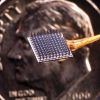
Brain-computer interface creates text on screen by decoding brain signals associated with handwriting
Using a brain-computer interface, a clinical trial participant was able to create text on a computer at a rate of 90 characters per minute just by thinking about the movements involved in writing by hand.
-
 +21 +1
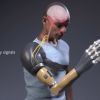
Futuristic bionic arm helps amputees feel the sensation of touch and movement
Connecting the bionic limb directly connected to the brain allows for delivery of precise sensations tied to natural movements. Dreaming of a future where Luke Skywalker's replacement hand is more than a sci-fi fantasy, scientists have designed a "bionic arm" that enlists help from tiny robots to re-create the vital sensations forfeited when one loses an upper limb. The bots do that by safely vibrating muscles at the amputation site.
-
 +4 +1
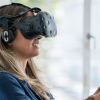
+4 +1People with social anxiety disorder show improved symptoms and changes in brain activity following virtual reality therapy
In an experiment published in JMIR Mental Health, people with social anxiety disorder showed reduced social anxiety and less negative rumination following a virtual reality based exposure therapy. Moreover, this reduction in symptoms was associated with changes in brain activity when participants judged whether positive words were self-relevant.
-
 +25 +1
Conspiracy Theories Are More “Entertaining” Than The Truth — And This Helps Explain Why People Believe Them
Almost half the world’s 2.2 billion children are already at “extremely high risk” from the impacts of the climate crisis and pollution, according to a report from Unicef. The UN agency’s head called the situation “unimaginably dire”. Nearly every child around the world was at risk from at least one of these impacts today, including heatwaves, floods, cyclones, disease, drought, and air pollution, the report said. But 1 billion children live in 33 countries facing three or four impacts simultaneously. The countries include India, Nigeria and the Philippines, and much of sub-Saharan Africa.
-
 +16 +1
Reversing Age-Related Memory Loss in Mice
Scientists at Cambridge and Leeds have successfully reversed age-related memory loss in mice and say their discovery could lead to the development of treatments to prevent memory loss in people as they age. In a study published today in Molecular Psychiatry, the team show that changes in the extracellular matrix of the brain - 'scaffolding' around nerve cells - lead to loss of memory with ageing, but that it is possible to reverse these using genetic treatments.
-
 +23 +1
Synthetic brain cells that store 'memories' are possible, new model reveals
Scientists have created key parts of synthetic brain cells that can hold cellular "memories" for milliseconds. The achievement could one day lead to computers that work like the human brain. These parts, which were used to model an artificial brain cell, use charged particles called ions to produce an electrical signal, in the same way that information gets transferred between neurons in your brain.
-
 +16 +1
Brains Might Sync As People Interact — and That Could Upend Consciousness Research
People synchronize in various ways when we interact with one another. We subconsciously match our footsteps when we walk. During conversations, we mirror each other's postures and gestures.
-
 +3 +1
+3 +1Can consciousness be explained by quantum physics? My research takes us a step closer to finding out
One of the most important open questions in science is how our consciousness is established. In the 1990s, long before winning the 2020 Nobel Prize in Physics for his prediction of black holes, physicist Roger Penrose teamed up with anaesthesiologist Stuart Hameroff to propose an ambitious answer.
-
 +11 +1
Paralyzed man’s brain waves turned into sentences on computer in medical first
In a medical first, researchers harnessed the brainwaves of a paralyzed man unable to speak and turned what he intended to say into sentences on a computer screen. It will take years of additional research but the study, reported Wednesday, marks an important step toward one day restoring more natural communication for people who can’t talk because of injury or illness.
-
 +21 +1
Ultrasounds Could Restore Human Memory and Reverse Dementia
Bouncing ultrasound waves around inside your skull sounds ill-advised, but it might provide a way to boost the effectiveness of other treatments in Alzheimer's patients, according to a recent study published in the journal Alzheimer's Research & Therapy.
-
 +20 +1
A New Brain Implant Automatically Detects and Kills Pain in Real Time
Chronic pain is like a horror movie monster that sneaks up on you. It’s unpredictable, lingers silently, and when it strikes it’s often too late to tame. More diabolically, our best weapon against it—pain medication—can increase pain intensity over time. And as the opioid epidemic sadly shows, even pain medication is a double-edged sword.
-
 +17 +1
Researchers build first modular quantum brain sensor, record signal
A team of scientists at the University of Sussex have for the first time built a modular quantum brain scanner, and used it to record a brain signal. This is the first time a brain signal has been detected using a modular quantum brain sensor anywhere in the world. It's a major milestone for all researchers working on quantum brain imaging technology because modular sensors can be scaled up, like Lego bricks.
-
 +11 +1
Understanding ourselves
Have you ever made a decision and wondered why you made it? Or wondered where your morality comes from? Renowned philosopher of mind and founder of Neurophilosophy Patricia Churchland takes us on a journey into the brain, the nature and data of morality and the origins of nonconscious decision-making.
-
 +18 +2
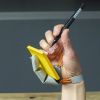
Robotic ‘Third Thumb’ use can alter brain representation of the hand
The team trained people to use a robotic extra thumb and found they could effectively carry out dextrous tasks, like building a tower of blocks, with one hand (now with two thumbs). The researchers report in the journal Science Robotics that participants trained to use the thumb also increasingly felt like it was a part of their body.
Submit a link
Start a discussion