




















-
 +2 +1
+2 +1Immune discovery 'may treat all cancer'
Research is at an early stage but scientists said it had huge potential for destroying cancers.
-
 +19 +6
What antlers can teach us about cancer and regrowing limbs
“Deer antlers [are] using essentially a controlled form of bone cancer growth,” says Edward Davis, an evolutionary paleobiologist
-
 +3 +1
+3 +1US cancer death rate sees largest-ever single-year drop, report says
The cancer death rate in the United States continues to decline for the 26th year in a row, with the largest ever single-year drop of 2.2% in overall cancer deaths from 2016 to 2017, according to a new report.
-
 +17 +4
Fewer people are dying from cancer, thanks largely to advances in lung cancer treatment
Cancer death rates have declined steadily over the past several decades, falling by nearly a third since the early 1990s, according to a report published Wednesday by the American Cancer Society. From 1991 to 2017, overall cancer deaths dropped by 29 percent, estimated at nearly 3 million avoided deaths.
-
 +32 +3
U.S. cancer death rate drops by largest annual margin ever, report says
The drop was largely credited to a decline in lung cancer deaths due to advances in treatments, among other factors, the American Cancer Society said.
-
 +19 +5
Artificial Intelligence Identifies Previously Unknown Features Associated with Cancer Recurrence
December 27, 2019 — Artificial intelligence (AI) technology developed by the RIKEN Center for Advanced Intelligence Project (AIP) in Japan has successfully found features in pathology images from human cancer patients, without annotation, that could be understood by human doctors.
-
 +21 +5
Unlicensed medical 'cures' are flourishing in closed Facebook groups, where cancer treatments — and even surgery — are sold beyond the reach of the law
In a phone call to the self-described cancer researcher Amanda Jewell, a British woman who calls herself "Mary" describes how she is struggling to cope. "My mother, she has stage three breast cancer. It's spread to her right. It's spread to her lymph nodes and they're giving her chemotherapy. It's so distressing," she says.
-
 +12 +3
Half of people surviving 'untreatable cancer'
An "extraordinary transformation" is how doctors describe therapies for advanced melanoma.
-
 +16 +4
Skin cancer: Half of people surviving advanced melanoma
More than half of patients can now survive a deadly skin cancer that was considered untreatable just a decade ago, say UK doctors. Ten years ago only one-in-20 patients would live for five years after being diagnosed with late-stage melanoma. Most would die in months. But drugs to harness the body's immune system mean 52% now live for at least five years, a clinical trial shows.
-
 +17 +4
Light-activated metal catalyst destroys cancer cells’ vital energy source
A space-age metal that formed part of the asteroid that destroyed the dinosaurs could provide a new method of treating cancer tumours selectively using light.
-
 +21 +4
This Device Can Recommend the Best Cancer Treatment — Using Just a Patient's Breath
The newest cancer sniffer might not be as cute as a sharp-nosed canine, but it could give doctors a new way to determine the best treatment for patients using just the melange of compounds in their breath. The eNose can detect with 85 percent accuracy if a person will respond to immunotherapy, say researchers in a paper published today in Annals of Oncology. That could make it an alternative to current methods of determining which cancer treatment is best suited to different patients.
-
 +4 +2
+4 +2Thousands of Years Ago, a Dog Gave Rise to an Immortal Entity
The story of CTVT—a contagious cancer that spreads from dog to dog—gets weirder all the time.
-
 +13 +4
Electromagnetic fields may hinder spread of breast cancer cells
Electromagnetic fields might help prevent some breast cancers from spreading to other parts of the body, new research has found. The study showed that low intensity electromagnetic fields hindered the mobility of specific breast cancer cells by preventing the formation of long, thin extensions at the edge of a migrating cancer cell. The research was done on cells in a lab, and the concept hasn’t yet been tested in animals or humans. The study was published today in the journal Communications Biology.
-
 +25 +8
How Scientists Built a ‘Living Drug’ to Beat Cancer
Researchers didn’t know if it would work, but they had little to lose when they tried a new drug—a living cell reprogrammed to recognize and kill leukemia—on a dying 6-year-old.
-
 +10 +1
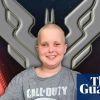
How a video game community filled my nephew's final days with joy
My teenage nephew’s life was short and difficult, but the players and developers of Elite Dangerous came together to bring unexpected happiness to his last moments.
-
 +23 +7
Living drug has cancer 'on the run'
NHS patients with lymphoma have for the first time been given a pioneering treatment that genetically reprogrammes their immune system to fight cancer. Mike Simpson, 62, from Durham, says his cancer is now "on the run". The therapy, called CAR-T, is a "living drug" that is tailor-made for each patient using their body's own cells
-
 +4 +1
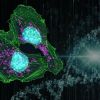
+4 +1Drug makes tumors more susceptible to chemo
Compound that knocks out a DNA repair pathway enhances cisplatin treatment and helps prevent drug-resistance.
-
 +32 +1
'Forever chemicals' found in seafood, meats and chocolate cake, FDA says
Nearly half the meat and fish tested had at least double the advisory level for PFAS, chemicals linked to cancer and liver problems
-
 +8 +1
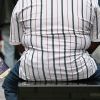
+8 +1Obesity set to cause 100 cancers a day by end of next decade, NHS warns
The UK’s obesity crisis is set to trigger a massive rise in weight related cancers with 360,000 people expected to be diagnosed with the disease by 2030, the head of the NHS in England has said. Drastic action is needed now if the UK, already the most obese nation in western Europe, is to avoid a weight-related crisis on the scale as is being experienced in the US, Simon Stevens, said.
-
 +4 +1
+4 +1Here's How Many US Cancer Cases Are Tied to Unhealthy Diets
More than 80,000 cancer cases diagnosed each year in the U.S. may be tied to an unhealthy diet, according to a new study. The study researchers used a mathematical model to estimate the number of U.S. cancer cases tied to suboptimal intake of seven dietary components known to be related to cancer risk. These included diets low in whole grains, dairy, fruits and vegetables; and diets high in processed meats, red meats and sugar-sweetened beverages.
Submit a link
Start a discussion