




















-
 +13 +4
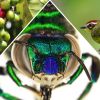
The secret to better coffee? The birds and the bees
A groundbreaking new study finds that coffee beans are bigger and more plentiful when birds and bees team up to protect and pollinate coffee plants.
-
 +21 +6
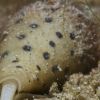
Cone snail venom is incredibly toxic — it might also be a surprising treatment for human pain
In a new study, researchers discovered one clade of cone snail uses a venom that contains a peptide resembling somatostatin, which could treat cancer and other human ailments.
-
 +3 +1
+3 +1Methane-eating bacteria convert greenhouse gas to fuel
Methanotrophic bacteria consume 30 million metric tons of methane per year and have captivated researchers for their natural ability to convert the potent greenhouse gas into usable fuel. Yet we know very little about how the complex reaction occurs, limiting our ability to use the double benefit to our advantage.
-
 +3 +1
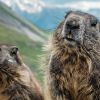
+3 +1Marmots may hold the secret to longevity
This disparity gets at the difference between one’s chronological age — how old they are in years — and their biological age, which is how their body has aged naturally and in response to its environment. The two can diverge in ways that are either blessings or curses. Hence why those who grow up under extreme stress or in polluted environments may look much older than they actually are.
-
 +15 +3
A New Study Has Identified a Dominant Force Driving Evolution on Earth Today
Mounting evidence suggests humans are now a major driving force of evolution on Earth. From selective breeding to environmental modifications, we're altering so much of our world that we're not only now driving the climate, but the direction of life
-
 +17 +5
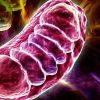
The 'Powerhouse of The Cell' Could Be Secretly Helping Mammal Eyes Process Light
For you to read this article, the eyes have to perform quite the task – light enters the cornea and travels through the pupil and lens to the retina at the back, where light-sensitive cells such as cones and rods then pass things on to the brain vi
-
 +28 +6
Paleontology ‘a hotbed of unethical practices rooted in colonialism’, say scientists
The study of fossils and prehistoric species is exploitative of local communities, says international team
-
 +11 +2
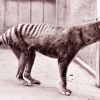
Australian Scientists Plan to Resurrect the Extinct Tasmanian Tiger
The Tasmanian tiger, or thylacine, is one of Australia's most iconic species. Even though it has been extinct since 1936, the slender, striped marsupial maintains its place in Australian mythology because of a constant string of supposed sightings that has captivated the public and the media. Just last year, one group claimed to have spotted the "Tassie tiger" padding through Australia's forests. The claims were never verified.
-
 +14 +3
Which Immune Cell Are You?
Take this personality quiz to find out which immune cell you’re most like.
-
 +15 +3
Fish Have 'Talked' For 155 Million Years, And Now You Can Hear Their 'Voices'
All manner of croaks, chirps, and deep trombone moans permeate Earth's waters, just like the cacophony of sounds that fill its forest air. For example, reefs are surprisingly noisy places, and many of the noisemakers are fish.
-
 +7 +1
+7 +1Scientists Discover How To Halt and Control Cellular Death Process – Previously Thought To Be Irreversible
A study published by researchers at the University of Illinois Chicago describes a new method for analyzing pyroptosis — the process of cell death that is usually caused by infections and results in excess inflammation in the body — and shows that process, long thought to be irreversible once initiated, can in fact be halted and controlled.
-
 +20 +4
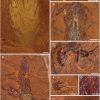
Mind-Blowing New Fossil Site Found in The 'Dead' Heart of Australia
The arid heart of Australia may not easily support life now, but once, many aeons ago, it was lush and teeming. What is now arid desert and dry shrub- and grasslands was once thick with dense forests, alive with life.
-
 +15 +4
Tropical Fish Shoals Disrupted by Ocean Acidification and Warming
Researchers from the University of Adelaide have found that the way fish interact in groups is being upset by ocean acidification and global warming.
-
 +23 +4
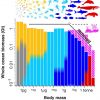
Humans Have Broken One of The Natural Power Laws Governing Earth's Oceans
Just as with planetary or molecular systems, mathematical laws can be found that accurately describe and allow for predictions in chaotically dynamic ecosystems too – at least, if we zoom out enough.
-
 +19 +3
We need to have a conversation about wombats
This comic is about a lot of things, but mostly it is about butts.
-
 +24 +3
Viruses are both the villains and heroes of life as we know it
Viruses have gotten a bad rap for the many illnesses and pandemics they’ve caused. But viruses are also genetic innovators – and possibly the pioneers of using DNA as the genetic blueprint of life.
-
 +16 +1
Anatomy texts should show sex as a spectrum to include intersex people
Around two in every 100 people have sex characteristics between the male-female binary definitions. Training for doctors and other health workers needs to reflect this.
-
 +4 +1
+4 +1Using statistical methods to model the fine-tuning of molecular machines and systems
Fine-tuning has received much attention in physics, and it states that the fundamental constants of physics are finely tuned to precise values for a r…
-
 +21 +3
Street lighting has detrimental impacts on local insect populations
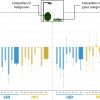
Reported declines in insect populations have sparked global concern, with artificial light at night (ALAN) identified as a potential contributing factor. Despite strong evidence that lighting disrupts a range of insect behaviors, the empirical evidence that ALAN diminishes wild insect abundance is limited. Using a matched-pairs design, we found that street lighting strongly reduced moth caterpillar abundance compared with unlit sites (47% reduction in hedgerows and 33% reduction in grass margins) and affected caterpillar development. A separate experiment in habitats with no history of lighting revealed that ALAN disrupted the feeding...
-
 +14 +1
480 million-year-old fossil spores from Western Australia record how ancient plants spread to land
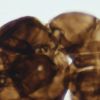
When plants started growing on land, they changed the world. Ancient fossil spores hint at how and when they did it.
Submit a link
Start a discussion