




















-
 +13 +1
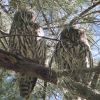
On the hunt for the barking owl with sound recorders, head torches and a thermal camera
Candice Larkin is trying to track down the elusive barking owl, whose calls are often confused with the woofs of a dog, and even the screams of a human.
-
 +15 +3
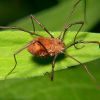
Scientists tweak daddy long legs genes to create daddy short legs
To some they're charming, to others they're creepy. But regardless of your feelings about the daddy long legs spider, odds are good you've seen the ubiquitous arachnid cruising up a wall or over its silky web somewhere. (And no, it's most certainly not capable of killing you.)
-
 +18 +3
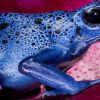
These Toxic Critters Have Evolved a Surprising Way to Avoid Poisoning Themselves
Slathering yourself in deadly poison is a great way to discourage predators from trifling with you and your cousins. There is, however, one massive flaw in this genius plan – it involves slathering yourself in deadly poison.
-
 +15 +2
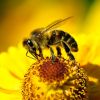
Caffeine-boosted bees more efficiently home in on target flowers
A new study has found caffeine can be used to help bees locate specific flowers. The research suggests the drug enhances bee memory and makes them more efficient at homing in on certain targeted flowers.
-
 +4 +1
+4 +1DNA study finds less than 2 percent of the human genome is "human"
A study looks at an ancestral recombination graph of the genomes of modern humans, Neanderthals, and Denisovans to map how much of our genome is shared.
-
 +22 +5
AI breakthrough will 'transform' biology
Artificial intelligence has been used to predict the structures of almost every protein made by the human body. Proteins are essential building blocks of living organisms; every cell we have in us is packed with them. Understanding protein structures is critical for advancing medicine, but until now, only a fraction of these have been worked out.
-
 +16 +3
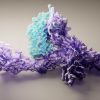
Advanced New Artificial Intelligence Software Can Compute Protein Structures in 10 Minutes
Accurate protein structure prediction now accessible to all. Scientists have waited months for access to highly accurate protein structure prediction since DeepMind presented remarkable progress in this area at the 2020 Critical Assessment of Structure Prediction, or CASP14, conference. The wait
-
 +16 +4
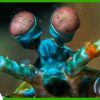
Seeing Like Mantis Shrimp to Spot Cancer
-
 +18 +2
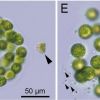
Scientists Discover The First Known Algae Species With Three Distinct Sexes
Although we might think of ourselves as far removed from blobby green algae, we're not really that different.
-
 +20 +3
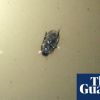
Beetle that can walk upside down under water surface filmed in Australia in world first
Researcher accidentally spots tiny insect walking on the underside of the water surface as if it were a pane of glass
-
 +4 +1
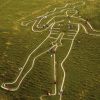
+4 +1Tiny Snails Help Solve a Giant Mystery
Archaeologists may finally know the age and true identity of the “Rude Man,” also known as the Cerne Abbas Giant, one of dozens of geoglyphs etched into the British countryside.
-
 +3 +1
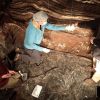
+3 +1Ancient Siberian cave hosted Neanderthals, Denisovans, and modern humans—possibly at the same time
DNA from ancient soil reveals the history of the cave that cracked open the field of human evolution
-
 +20 +1
This Rare Finger-Like Fungus Is Hanging on For Its Life on a Small Australian Island
An exceptionally rare and critically endangered fungus, known as the tea-tree fingers, is rapidly losing its grip on the Australian mainland.
-
 +19 +3
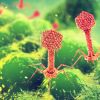
We found more than 54,000 viruses in people's poo — and 92% were previously unknown to science
You could say there are a 'crapload' of viruses in the human gut. Luckily, most of these do not attack our cells, but instead feed on bacteria.
-
 +30 +1
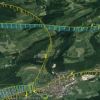
A Key Property of Life Has Been Detected From High Altitude For The First Time
Hold up your hands in front of your face. For most people, they will be mirrored copies of each other: You can hold them palm-to-palm and they will match up, but you cannot superimpose them.
-
 +17 +2
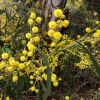
Wattle is an Aussie icon. So why did scientists end up in a fight over its scientific name?
The first wattles of the season are about to burst into fluffy pom-poms of resplendent gold and pale cream. But in the early 2000s, these plants were in the centre of one of the world's biggest botanical controversies.
-
 +15 +4
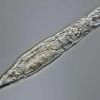
24,000-year-old organisms found frozen in Siberia can still reproduce
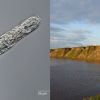
A microscopic worm-like creature, labelled an “evolutionary scandal” by biologists for having thrived for millions of years without having sex, has now been shown to persist for at least 24,000 years in Siberian permafrost and then reproduce, researchers have found.
-
 +18 +2
Scientists Revive Tiny Animals Frozen for 24,000 Years In Arctic Permafrost
The tiny multicellular microbes sprang back to life and produced offspring after 24,000 years.
-
 +12 +1
1 Billion-Year-Old Fossil Could Be The Oldest Multicellular Animal on Record
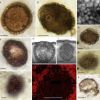
A teeny tiny fossil found in the Scottish Highlands could be a missing link in the evolutionary history of animals.
-
 +14 +3
Humans have ‘untapped’ ability to regenerate body parts, scientists say
When humans sustain an injury like a cut our first instinct is to ensure it doesn’t get infected. We make sure it’s clean and as it heals, a scar takes its place. Scars are part of life, or at least that’s what we’ve been led to believe, and it’s the human body’s way of forming a barrier between the wound and the dirty outside world. But what if scars weren’t as helpful as well all think? What if scars are actually preventing an even more incredible form of healing? What if humans could actually regenerate body parts?
Submit a link
Start a discussion