





















-
 +4 +1
+4 +1Bumblebees Are Disappearing Because Of Extreme Heat
Extreme temperatures are driving a dramatic decline in bumblebees across North America and Europe, according to a new study, in yet another way climate change is putting ecosystems at risk. Researchers looked at half a million records showing where bumblebees have been found since 1901, across 66 different species. They found that in places where bumblebees have lived in North America, you're about half as likely to see one today.
-
 +4 +1
+4 +1Gray wolves, once nearly extinct, could be coming back to Colorado
The gray wolf, once numbering in the tens of thousands throughout North America, have faced public vilification and extermination programs that drove it to near extinction in the US. Now Colorado will vote on whether to reintroduce them into the wild after an 80-year absence, thanks to an effort that has cattle ranchers outraged but which conservationists say could restore an ecosystem that has long suffered without the apex predator.
-
 +4 +1
+4 +1Ancient sex between different human species influences modern-day health
It's just as well we Homo sapiens got some Neanderthal and Denisovan genes into our DNA.
-
 +2 +1
+2 +1The tree of life may have only two major branches once again
Eukaryotes are the category of organisms that include us. We have our DNA partitioned into a nucleus instead of just hanging out loose with other cellular components.
-
 +13 +1
Double trouble as feral horse numbers gallop past 25,000 in the Australian Alps
Rapid action is needed to reduce feral horse numbers before they cause more damage to native species.
-
 +19 +1
Oceans running out of oxygen say scientists
Climate change and nutrient pollution are driving the oxygen from our oceans, and threatening many species of fish. That's the conclusion of the biggest study of its kind, undertaken by conservation group IUCN. While nutrient run-off has been known for decades, researchers say that climate change is making the lack of oxygen worse. Around 700 ocean sites are now suffering from low oxygen, compared with 45 in the 1960s.
-
 +20 +1
“Exceedingly rare” plant species face increased chances of extinction
According to new research nearly 40 percent of global land plant species can be categorized as very rare, and these species are most at risk of extinction as climate and land use continues to change.
-
 +15 +1
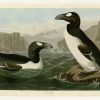
Humans May Be Solely to Blame for the Great Auk’s Extinction
The great auk, a large, flightless bird with a black back and a white belly, once lived across the North Atlantic—from Scandinavia to the eastern coast of Canada. Since prehistoric times, humans hunted these great animals, which could reach two-and-a-half feet in height, for their meat and eggs. But around the early 16th century, when European seaman discovered the large auk populations of Newfoundland, the killing of the birds reached rapacious levels.
-
 +15 +1
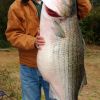
Striped bass were once extinct in the St. Lawrence. Now they're back
With federally backed efforts to restore the St. Lawrence River taking effect, stripers — a popular trophy fish — are making a resurgence. Now Quebec and a provincial fishing organization are asking Ottawa to reassess the fish's endangered status.
-
 +17 +1
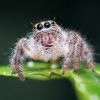
Scientists Demand 'Paradigm Shift' After Study Shows 'Frightening' Decline of Insects and Spiders
"A decline on that scale over a period of just 10 years came as a complete surprise to us," said one researcher, "but fits the picture presented in a growing number of studies."
-
 +16 +1
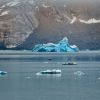
As the Arctic heats up, what’s in store for its food webs?
The view from Kongsfjorden, Svalbard, is endless snow-covered mountains and glassy, frigid water. You need to travel roughly 400 miles west from the remote Norwegian archipelago to reach the northeast coast of Greenland.
-
 +4 +1
+4 +1Dinosaur mass extinction event ‘disrupted world's oceans for millions of years’
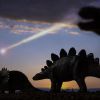
The mass extinction event that killed the dinosaurs led to the world’s oceans being disrupted for millions of years, according to new research. Scientists who examined fossil records spanning 13 million years found that global species of plankton at the base of the ocean ecosystem were disrupted for 2 million years after a massive asteroid strike on Earth.
-
 +21 +1
Three billion North American birds have vanished since 1970, surveys show
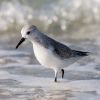
North America's birds are disappearing from the skies at a rate that's shocking even to ornithologists. Since the 1970s, the continent has lost 3 billion birds, nearly 30% of the total, and even common birds such as sparrows and blackbirds are in decline, U.S. and Canadian researchers report this week online in Science. "It's staggering," says first author Ken Rosenberg, a conservation scientist at the Cornell University Laboratory of Ornithology.
-
 +3 +1
+3 +1Birds Are Vanishing From North America
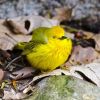
The number of birds in the United States and Canada has declined by 3 billion, or 29 percent, over the past half-century, scientists find.
-
 +4 +1
+4 +1Should the Clearly Extinct Woolly Mammoth Be Reclassified as Endangered?
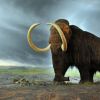
IF YOU SHAVED THE WOOLINESS from a woolly mammoth, from trunk to tail, it would still be easy to see its relationship to its extant cousins, the elephants. There’s the overall size and shape, and the prominent head ridge and of course the trunk, and also the tusks—though those actually help distinguish a mammoth from an elephant, since they’re so massive and audaciously curved. But ivory is ivory, and both pachyderms’ tusks sell for a pretty penny, though only mammoth ivory is legal in many markets.
-
 +14 +1
Trump administration faces suit for failure to protect endangered species
The Trump administration is facing a lawsuit for failing to protect 23 endangered species found in Micronesia. The Center for Biological Diversity filed a notice of intent to sue the Trump administration for failing to protect endangered species in the Northern Mariana Islands, Guam, the Republic of Palau and the Federated States of Micronesia. The wildlife involved includes 14 plants and nine animals, a release from the nonprofit stated.
-
 +14 +1
What if we paid countries to protect biodiversity?
Researchers from Sweden, Germany, Brazil and the U.S. have developed a financial mechanism to support the protection of the world's natural heritage. In a recent study, they developed three different design options for an intergovernmental biodiversity financing mechanism. Asking what would happen if money was given to countries for providing protected areas, they simulated where the money would flow, what type of incentives this would create—and how these incentives would align with international conservation goals.
-
 +12 +1
Manta rays like hanging out with their mates
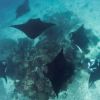
A five-year study in Indonesian waters has confirmed that wild-roaming reef manta rays (Manta alfredi) form selective bonds with other rays, providing evidence of structured social relationships. Dwarfing humans who are lucky enough to swim near them, mantas are the largest rays in the ocean, with two recognised species – the reef manta and the giant manta (Manta birostris).
-
 +3 +1
+3 +1'Days or months left' for porpoise species Vaquita as it nears extinction
The Vaquita species was only discovered in 1958, but within a few decades numbers have hit critical levels.
-
 +21 +1
Many Animals Can’t Adapt to Climate Change Fast Enough
Climate change has thrown our beautifully balanced planet into chaos. As oceans and forests transform and ecosystems go into shock, perhaps a million species teeter on the edge of extinction. But there may still be hope for these organisms. Some will change their behaviors in response to soaring global temperatures; they might, say, reproduce earlier in the year, when it’s cooler. Others may even evolve to cope—perhaps by shrinking, because smaller frames lose heat more quickly.
Submit a link
Start a discussion