



















-
 +4 +1
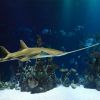
+4 +1Sawfish populations halved as nations fail to enforce conservation laws
Sawfish have lost 59% of their historical distribution and are heading toward complete extinction due to overfishing, a new study says, posing a threat to ocean biodiversity and indicating that policies worldwide to protect the world's largest ray are not being enforced.
-
 +21 +1
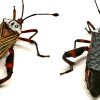
Watch: 'Bug fight club' clarifies evolution of natural weapons
Scientists decked out bugs with body armor and watched them face off in wrestling matches. The experiments highlight the evolution of natural weapons.
-
 +11 +1
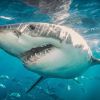
Extinction: 'Time is running out' to save sharks and rays
Scientists say sharks and rays are disappearing from the world's oceans at an "alarming" rate. The number of sharks found in the open oceans has plunged by 71% over half a century, mainly due to over-fishing, according to a new study. Three-quarters of the species studied are now threated with extinction.
-
 +14 +1
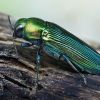
Death by 1,000 cuts: Are major insect losses imperiling life on Earth?
Chances are, the works of the world’s insects touch your lips every day. The coffee or tea you savor, both are insect pollinated. Apples, oranges, cabbages, cashews, cherries, carrots, broccoli, watermelon, garlic, cinnamon, basil, sunflower seeds, almonds, canola oil — all are insect pollinated. Honey, dyes, even some vaccines require insects to come to fruition.
-
 +10 +1
Chinese flower has evolved to be less visible to pickers
For thousands of years, the dainty Fritillaria delavayi has grown slowly on the rocky slopes of the Hengduan mountains in China, producing a bright green flower after its fifth year. But the conspicuous small plant has one deadly enemy: people, who harvest the flower for traditional Chinese medicine.
-
 +3 +1
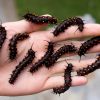
+3 +1How one man repopulated a rare butterfly species in his backyard
The California pipevine swallowtail butterfly is a wonder to behold. It begins its life as a tiny red egg, hatches into an enormous orange-speckled caterpillar, and then — after a gestation period of up to two years — emerges as an iridescent blue beauty. Brimming with oceanic tones, the creature’s wings are considered by collectors to be some of the most magnificent in North America.
-
 +15 +1
Prioritizing where to restore Earth’s ecosystems
Targets for ecosystem restoration are usually specified in terms of the total area to be restored. A global analysis reveals that the benefits and costs of achieving such targets depend greatly on where this restoration occurs.
-
 +14 +1
Humans Wiped Out Two-Thirds of the World’s Wildlife in 50 Years
Two major reports released this month paint a grim portrait of the future for our planet’s wildlife. First, the Living Planet Report from the World Wildlife Fund (WWF), published last week, found that in half a century, human activity has decimated global wildlife populations by an average of 68 percent.
-
 +24 +1
Quarter of UK’s mammals at risk of extinction
One quarter of the UK’s native mammals are classified as being at “imminent risk of extinction” and conservationists are calling for urgent action to save them, as the first official Red List for British mammals has been published.
-
 +3 +1
+3 +1The ‘lungs of the Earth’ are really its heart: an Indigenous cure to save the Amazon
A dying rainforest will release huge amounts of carbon dioxide into the atmosphere, but the Piaraçu Manifesto taps ancestral wisdom to preserve traditional lands.
-
 +4 +1
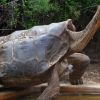
+4 +1With His Species-Saving Mission Complete, Diego the Tortoise Returns Home
When the giant Galapagos tortoise faced extinction, Diego answered the call.
-
 +4 +1
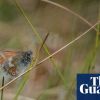
+4 +1Large heath butterflies return to Manchester after 150 years
Large heath butterflies are returning to peatlands in greater Manchester 150 years after they went locally extinct. The acidic peat bogs and mosslands around Manchester and Liverpool were home to the country’s biggest colonies of large heath butterflies – known as the “Manchester argus” – but numbers plummeted as land was drained for agricultural land and peat extraction.
-
 +20 +1
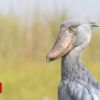
'Billions of years of evolutionary history' under threat
Scientists say more than 50 billion years of cumulative evolutionary history could be lost as humans push wildlife to the brink. "Weird and wonderful" animals unlike anything else on Earth are sliding silently toward extinction, they say. And regions home to the greatest amounts of unique biodiversity are facing unprecedented human pressures. They include the Caribbean, Western Ghats of India and large parts of Southeast Asia.
-
 +2 +1
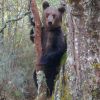
+2 +1First brown bear for 150 years seen in national park in northern Spain
A brown bear has been spotted traversing a rugged and sparsely populated area of north-west Spain for the first time in 150 years thanks to a set of camera traps and a bit of luck. Images of the animal were captured on cameras set up by a crew shooting the film Montaña ou Morte (Mountain or Death) in the Invernadeiro national park in Galicia’s Ourense province.
-
 +16 +1
New briefing paper warns Biodiversity Strategy is test of EU understanding of nature's role in successful Green Deal
As the coronavirus crisis continues to take a terrible toll on lives and livelihoods worldwide, the University of Cambridge Institute for Sustainability Leadership (CISL) has warned the EU's forthcoming Biodiversity Strategy will be an early test of whether Europe is taking nature, including biodiversity, seriously in its economic thinking.
-
 +14 +1
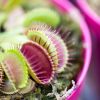
Cultivating Biodiversity at the Royal Botanic Gardens, Kew
Many plant species are in danger of extinction. But scientists at the UK’s Royal Botanic Gardens at Kew are working with industry to find real-world solutions.
-
 +16 +1
Saving ocean life within a human generation is 'largely achievable' say scientists
A “substantial” recovery of life in the oceans could be achieved by 2050 if major threats such as climate change are dealt with, a study has said. The oceans are important sources of food, water and clean energy and key for tackling global warming as they store heat and carbon, but many marine species, habitats and ecosystems have suffered catastrophic declines.
-
 +3 +1
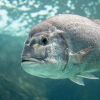
+3 +1Warming oceans are causing marine life to shift towards the poles
Climate change is dramatically changing the abundance of marine life around the world. As oceans warm, populations of species that can adapt to elevated local temperatures have increased nearer to the poles, while those that live closer to the equator are shrinking in size.
-
 +22 +1
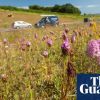
On the verge: a quiet roadside revolution is boosting wildflowers
In 2014, Giles Nicholson was battling the growing year from hell. A mild winter followed by a warm, wet spring had turbocharged a ferocious mass of cow parsley, nettles and dense grass along the hundreds of miles of road his team maintains for Dorset council. Austerity meant there was barely enough money to pay for repeated cuttings to hold back the matted swards. Complaints poured in about messy roadsides.
-
 +4 +1
+4 +1The world's largest privately owned giant sequoia forest is now protected
A conservation group has closed a $15.65 million deal to buy the largest privately owned giant sequoia grove left on Earth, an ancient forest with hundreds of the endangered redwood trees, which can live for 3,000 years and rise nearly as tall as the Statue of Liberty. Due to its size, health and age diversity — with sequoias ranging from seedlings to Methuselahs — this grove represents "the most consequential giant sequoia conservation project of our lifetime," according to the group's president.
Submit a link
Start a discussion