





















-
 +29 +1
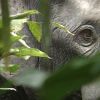
Elephant Extinction Will Raise Carbon Dioxide Levels in Atmosphere
One of the last remaining megaherbivores, forest elephants shape their environment by serving as seed dispersers and forest bulldozers as they eat over a hundred species of fruit, trample bushes, knock over trees and create trails and clearings. Their ecological impact also affects tree populations and carbon levels in the forest, researchers report, with significant implications for climate and conservation policies.
-
 +31 +1
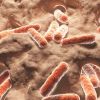
New research uncovers compelling link between gut bacteria, obesity and the immune system
An impressive new study from scientists at the University of Utah has described how an impaired immune system can alter the composition of the gut microbiome resulting in metabolic disease and obesity. Demonstrated in mouse experiments, the research suggests certain species of gut bacteria can prevent the gut from absorbing fat, pointing to exciting potential future anti-obesity therapies.
-
 +36 +1
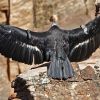
Once Nearly Dead As The Dodo, California Condor Comeback Reaches 1,000 Chicks
In the 1980s, there were fewer than two dozen California Condors left. Today, more than 500 exist in the world, thanks to the efforts of conservationists.
-
 +13 +1
A Genetic Ghost Hunt: What Ancient Humans Live On In Our DNA?
When the Neanderthal genome was first sequenced in 2010 and compared with ours, scientists noticed that genes from Homo neanderthalensis also showed up in our own DNA. The conclusion was inescapable: Our ancestors mated and reproduced with another lineage of now-extinct humans who live on today in our genes.
-
 +3 +1
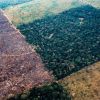
+3 +1Business as Usual Threatens Thousands of Amazon Tree Species
Climate change and deforestation could also severely fragment much of the forest by 2050, a new model projects
-
 +13 +1
Socialism or Extinction
A new report says that human action is driving one million plant and animal species to extinction. But it’s not just any human action: it’s the choices of a tiny minority of wealthy and powerful people.
-
 +3 +1
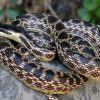
+3 +1New snake species in Europe named after a long-forgotten Iron Age kingdom
An international team of scientists identified the snake and its range, which includes Turkey, Azerbaijan, Armenia, Georgia, Iraq, Iran, and Russia including a small region extending into the corner of Europe. Based on the genetic and morphological data, the researchers were able to say that the Blotched Rat Snake (Elaphe sauromates) is actually comprised of two different species and includes a cryptic species that has been named after the old kingdom of Urartu.
-
 +35 +1
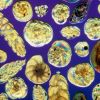
Climate change profoundly alters plankton populations
New research using sediment cores suggests human-driven climate change is having a significant impact on the composition of the world’s marine plankton. A German study, published in the journal Nature, reveals that modern communities of foraminifera, a type of hard-shelled plankton, differ markedly from those from the pre-industrial era, which began just 170 years ago.
-
 +2 +1
+2 +1A Chain of Species Destruction at Yellowstone
Recreational fishing is a pastime in which people have come to expect the fish they want in the places they happen to want them. That is, they want their fish stocked and ready to catch, even in places those fish never originally lived. This practice can seem harmless, or even beneficial. But the introduction of one “beneficial” species in Yellowstone National Park suggests how rejiggering the natural world for human convenience can cause ecological disaster for almost everything else.
-
 +16 +1
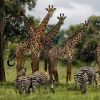
Extinction looming over 1 million species of plants and animals, UN report says
Nature is in more trouble now than at any other time in human history, with extinction looming over one million species of plants and animals, scientists said Monday in the UN's first comprehensive report on biodiversity.
-
 +24 +1
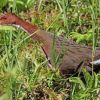
An extinct bird species has evolved back into existence, study says
A previously extinct species of bird has re-evolved back into existence, according to a new study. The Aldabra rail first went extinct around 136,000 years ago. Now, it's reclaimed its home island. According to a study published Wednesday in the Zoological Journal of the Linnean Society, a peer-reviewed scientific journal, sediments from the Aldabra Atoll in the Indian Ocean show that the island has been completely submerged multiple times, wiping out all species inhabiting it.
-
 +6 +1
+6 +1Scientists warn a million species at risk of extinction
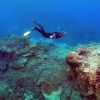
One million animal and plant species are at imminent risk of extinction due to humankind’s relentless pursuit of economic growth, scientists said on Monday in a landmark report on the devastating impact of modern civilization on the natural world.
-
 +27 +1
Civilization Is Accelerating Extinction and Altering the Natural World at a Pace ‘Unprecedented in Human History’
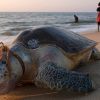
A dire United Nations report, based on thousands of scientific studies, paints an urgent picture of biodiversity loss and finds that climate change is amplifying the danger to humanity.
-
 +13 +1
How One Man Singlehandedly Repopulated a Rare Butterfly Species in His Backyard
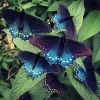
Long gone from their home in San Francisco, the California pipevine swallowtail is back thanks to one man transforming his yard into a habitat for them. The iridescent blue wings of the California pipevine swallowtail are considered by collectors to be among the most magnificent in North America.
-
 +33 +1
Earth could take 10 million years to recover from mass extinction caused by humans
Scientists investigating the possible effects of climate change have predicted it would take 10 million years for the diversity of species on our planet to recover after a mass extinction event. The authors of the paper published in the journal Nature Ecology and Evolution wanted to calculate how long it takes for the Earth to return to former levels of biodiversity following a mass extinction event. “Humanity is undeniably causing elevated rates of biodiversity loss through climate change, habitat destruction, invasive species introduction, and so on,” the authors warned in their study.
-
 +4 +1
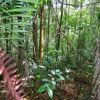
+4 +1Regrowing tropical forests recover fast in tree species richness, but slow in species composition
Tropical forests that regrow on abandoned agricultural land contain within a few decennia already most of the species of the original old-growth forest. Within 20 years the species richness is already 80% of that of old-growth forests. Their species composition, however, is totally different. Tree species are different, as well as their abundances, a team of around 80 researchers writes in Science Advances.
-
 +23 +1
A New Species of Ancient Human Was Uncovered in the DNA of Living Papuans
In 1864, our understanding of what it means to be human changed when Neanderthals were identified as a distinct species of hominin. At the time, it was immensely scandalous to presume Homo sapiens weren’t uniquely human; now it’s obvious that we are one of many. On Thursday, scientists report in Cell that it may be time to add another member to our list of ancient kin.
-
 +14 +1
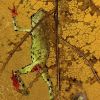
Skin-eating fungus is mighty species slayer
A frog-killing fungus is responsible for the decline of more species than any other pathogen on record, a global analysis has found. The study, published on 28 March in Science1, reveals that chytrid fungi have caused the decline of at least 501 amphibian species worldwide from 1965 to 2015, including 90 that have become extinct. Other well-known pathogens such as the bat disease white-nose syndrome or West Nile virus, which kills birds, have affected just a fraction of the number of species. Chytrid fungi’s impact on biodiversity is comparable to those of the most destructive invasive species, such as cats and rodents, says the study.
-
 +15 +1
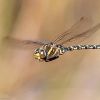
Female dragonflies fake their own deaths to avoid males harassing them for sex
In order to avoid males of the species bothering them for sex, female dragonflies fake their own deaths, falling from the sky and lying motionless on the ground until the suitor goes away. A study by Rassim Khelifa, a zoologist from the University of Zurich is the first time scientists have seen odonates feign death as a tactic to avoid mating, and a rare instance of animals faking their own deaths for this purpose. Odonates is the order of carnivorous insects that includes dragonflies and damselflies.
-
 +13 +1
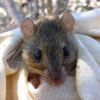
Climate change is now sending animals extinct
Climate change is now officially sending animals extinct. The Bramble Cay melomys, a rodent found on a tiny island off Australia's far north coast and the only mammal native to the Great Barrier Reef, was this week added to a list of animals declared extinct by the Australian government. According to scientists, the mammal extinction is the first of its kind to be caused by human-induced climate change.
Submit a link
Start a discussion