



















-
 +28 +1
The Stress of Making the Right Choice
A recent study published in the Journal of Personality & Social Psychology looked at the potential distress caused by decision-making. What they found was making decisions only seems to be distressing when you’re overly concerned with making the right one. It’s a matter of the decision-making style that a person is predisposed to.
-
 +28 +1
Smoking cigarettes linked to negative personality changes
Summary: Using the Big Five model of personality traits, researchers found smokers were more likely to experience an increase in neuroticism over time.
-
 +27 +1
Can Neurodiversity Defeat Doublethink?
Masha Gessen suggests there was a connection between Asperger’s and social activism in the Soviet era.
-
 +8 +1
+8 +1How people want to feel determines whether others can influence their emotions, Stanford psychologists find
New Stanford research on emotions shows that people’s motivations are a driving factor behind how much they allow others to influence their feelings, such as anger.
-
 +28 +1
How your looks shape your personality
We tend to think of our looks as separate from who we are. But it turns out that physical traits like height or attractiveness may shape our personalities, behaviours, even politics.
-
 +3 +1
+3 +1Where Do Morals Come From?
We all have a sense of right and wrong, but where does it come from? Primatologist Frans de Waal's new theory on the origin of morality turns traditional approaches on their heads.
-
 +21 +1
Can AI Nudge Us to Make Better Choices?
The behavioral revolution in economics was triggered by a simple, haunting question: what if people don’t act rationally? This same question now vexes the technology field. In the online world, once expected to be a place of ready information and easy collaboration, lies and hate can spread faster than truth and kindness. Corporate systems, too, elicit irrational behavior. For example, when predicting sales, employees often hide bad deals and selectively report the good ones.
-
 +22 +1
Women who microdose mushrooms: 'It makes me enjoy playing with the kids'
Rosie has just returned from the school run. She drops a bag of groceries on to her kitchen table, and reaches for a clear plastic cup, covered by a white hanky and sealed with a hairband. Inside is a grey powder; her finely ground homegrown magic mushrooms. “I’ll take a very small dose, every three or four days,” she says, weighing out a thumbnail of powder on digital jewellery scales, purchased for their precision. “People take well over a gram recreationally.
-
 +2 +1
+2 +1The city you live in has a personality of its own – and it may be influencing your self-esteem
New research suggests that you may need to look at an unusual factor when considering a move to a new city – its personality. A study published in Psychological Science in 2016 found small but statistically significant links between your self-esteem and the personalities of the people living in the same city as you. The researchers decided to compare the Big 5 personality traits (openness, agreeableness, conscientiousness, extraversion, and emotional stability) of individuals to the Big 5 personality traits that were most prevalent in a particular city.
-
 +18 +1
Could Your Immune System Be Making You Impulsive?
You can have £10 today or £12 next week. Which do you go for? Being able to forego a reward now in favour of gaining something better later is known to be important in determining all kinds of desirable outcomes in life, including greater educational attainment, social functioning and health.
-
 +12 +1
Do Microdoses of LSD Change Your Mind?
You’ve probably heard about microdosing, the “productivity hack” popular among Silicon Valley engineers and business leaders. Microdosers take regular small doses of LSD or magic mushrooms. At these doses, they don’t experience mind-bending, hallucinatory trips, but they say they get a jolt in creativity and focus that can elevate work performance, help relationships, and generally improve a stressful and demanding daily life. If its proponents are to be believed, microdosing offers the cure for an era dominated by digital distractions and existential anxiety—a cup of coffee with a little Tony Robbins stirred in.
-
 +9 +1
+9 +1Why Do People (Not) Cheat in Relationships?
New research examines why some people cheat while others remain faithful. Infidelity is more common than the better angels of our nature would like us to think. While infidelity statistics vary across cultures and time periods, one study reported a 70% infidelity rate among currently dating American couples. According to another study, 33% of French women admitted to infidelity at least once in their lifetime.
-
 +16 +1
People who know more about Congress are more concerned with money in politics, study finds
New research suggests that suspicions about money in politics is related to Americans’ disapproval of their elected lawmakers. According to a new study, which was published in American Politics Research, people who are the most knowledgeable about Congress also tend to be more troubled by the impact of unlimited political spending, which in turn makes them more likely to disapprove of how Congress performs.
-
 +18 +1
The New Science of How to Argue—Constructively
In the early days of the internet, way back in the 1990s, tech utopians envisioned a glittering digital future in which people from very different backgrounds could come together online and, if not reach consensus, at least learn something from one another. In the actual future we inhabit, things didn’t work out this way. The internet, especially social media, looks less like a dinner party and more like a riot. People talk past one another, and the discussion spirals down accordingly.
-
 +3 +1
+3 +1Study suggests why some young adults may be more likely to engage in unsafe sex
Gender, sexual orientation, and the desire to form lasting romantic relationships appear to influence sexual risk-taking among young adults, according to a new research published in the Journal of Sex Research.
-
 +18 +1
People consume more calories when eating with a smartphone, study finds
New research provides some initial evidence that distractions like smartphones could contribute to obesity, according to new research published in Physiology & Behavior. “I have studied mastication and oral physiology for 15 years. I was interested in studying the influence of oral physiology on obesity and its comorbidities,” said study author Luciano Pereira, an associate professor at Federal University of Lavras in Brazil.
-
 +2 +1
+2 +1Your belief system and the world.
No no, I’m not about to start a religious rant or any indoctrination whatsoever. I’m not about to advice you either, what sort of belief system you should have. I’m just going to …
-
 +16 +1
Video game players frequently exposed to graphic content may see world differently
People who frequently play violent video games are more immune to disturbing images than non-players, a UNSW-led study into the phenomenon of emotion-induced blindness has shown. The scientists showed that players were better at disregarding graphic content while viewing a rapid series of images, leaving them better able to see what they were asked to look for than non-players.
-
 +25 +1
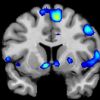
Scientists find religion triggers same area of brain as sex, drugs and love
Religious and spiritual experiences have profound effects on many people around the world. A new study from a team of neuroscientists shows that what they feel is caused by activating the brain's reward circuits that control our ability to feel pleasure. It's the part of the brain associated with sex, drugs, music as well as love.
-
 +16 +1
Research Finds Tipping Point for Large-scale Social Change
When organizations turn a blind eye to sexual harassment in the workplace, how many people need to take a stand before the behavior is no longer seen as normal? According to a new paper published to be published tomorrow in Science (link is external), there is a quantifiable answer: roughly 25% of people need to take a stand before large-scale social change occurs. This idea of a social tipping point applies to standards in the workplace, and any type of movement or initiative.
Submit a link
Start a discussion