





















-
 +18 +1
Why New York Kicked the Country's Second-Biggest Cable Company Out of the State
New York State voted to kick Charter Communications (which operates as Spectrum) out of the state for repeatedly failing to meet the modest conditions affixed to its merger with Time Warner Cable and Bright House Networks. Charter Communications has long been the poster child for broadband industry dysfunction, with some of the worst customer satisfaction ratings of any company in any industry in America.
-
 +15 +1
Comcast installed Wi-Fi gear without approval—and this city is not happy
Comcast recently installed Wi-Fi equipment in public rights of way without permits in the city of Corvallis, Oregon. But instead of settling the matter locally, a cable lobby group that represents Comcast told the Federal Communications Commission that it should override municipal permitting processes such as the one in Corvallis. In doing so, the cable lobby group made "misleading and inaccurate" allegations about what actually happened in the Comcast/Corvallis dispute, according to city officials.
-
 +11 +1
Massachusetts Net Neutrality Law Would Name and Shame Terrible ISPs
Massachusetts is proposing a new bill that would name and shame internet service providers that ignore net neutrality or violate consumer privacy. In the wake of the FCC’s repeal of net neutrality, more than half the states in the union are considering their own, state-level net neutrality rules. Some states are tackling the problem with legislation (California, Oregon, Washington), while others (like Montana) are signing executive orders banning state agencies from doing business with ISPs that behave anti-competitively.
-
 +9 +1
+9 +1The 21st Century Internet Act aims to enshrine net neutrality in law
Congress may soon vote on a new bill that would set net neutrality down as a matter of law rather than a set of rules to be changed every few years by the FCC. The “21st Century Internet Act,” introduced by Rep. Mike Coffman (R-CO), would ban blocking, throttling, paid prioritization, and eliminates all questions of jurisdiction. The bill, announced online and at an event in Washington, DC today, would modify the Communications Act of 1934 (greatly built upon by the 1996 Telecommunications Act) and add a new “Title VIII” full of stipulations specific to internet providers.
-
 +3 +1
+3 +1The inconvenient truth about cancer and mobile phones
We dismiss claims about mobiles being bad for our health – but is that because studies showing a link to cancer have been cast into doubt by the industry? On 28 March this year, the scientific peer review of a landmark United States government study concluded that there is “clear evidence” that radiation from mobile phones causes cancer, specifically, a heart tissue cancer in rats that is too rare to be explained as random occurrence.
-
 +12 +1
Fed up villagers install fast broadband
Villagers who could not download films because of slow broadband speeds take matters into their own hands.
-
 +21 +1
California's Net Neutrality Bill Is Strong Again Because You Spoke Out
After a hearing that stripped California’s gold standard net neutrality bill of much of its protections, California legislators have negotiated new amendments that restore the vast majority of those protections to the bill. The big ISPs and their money did not defeat the voices of the many, many people who want and need a free and open Internet.
-
 +26 +1
Comcast Dealing With Major Outage Nationwide
A major outage is affecting Comcast customers nationwide, including in the Philadelphia market. The outage is affecting Comcast cable, telephone and internet services. Comcast tweeted to customers that they are working to restore services as quickly as possible, but it is not yet known when service will come back.
-
 +9 +1
+9 +1Legislators try to save California’s landmark net neutrality bill
Legislators try to hammer out a deal, as critics fume over cuts made to a bill that supporters had hoped would set the national standard for net neutrality protection.
-
 +9 +1
+9 +1AT&T Trickery Helps Kill California’s Looming Net Neutrality Law
AT&T has managed to derail a looming California net neutrality proposal groups like the EFF had called the “gold standard” for state-level net neutrality laws. More than half the states in the country are now eyeing some form of state-level net neutrality laws after the FCC’s historically-unpopular decision to eliminate federal rules late last year. But Senator Scott Wiener’s SB 822 went even further than the discarded FCC rules by placing...
-
 +1 +1
+1 +1California Lawmakers Combine Net Neutrality Bills to Better Fend Off ISP Greed
California’s two net neutrality bills are poised to become one, offering the state’s 40 million residents comprehensive protection against internet service provider trying to shakedown businesses and subscribers in the wake of the FCC repeal. Lawmakers hope to pass a watertight law by combing two bills that prevent ISPs such as AT&T and Comcast from blocking or slowing down the delivery of online content, and from charging online...
-
 +10 +1
Net Neutrality: A Guide to (and History of) a Contested Idea
This week, news broke that the Federal Communications Commission is considering new rules for how the Internet works. In short: the FCC would allow network owners (your Verizons, Comcasts, etc.) to create Internet "fast lanes" for companies (Disney, The Atlantic) that pay them more. For Internet activists, this directly violated the principle of net neutrality, which has been a hot-button issue in Silicon Valley for a long time.
-
 +16 +1
Washington State Is Now the Only Place in America with Net Neutrality
It’s the dawn of a new era in America, one without any net neutrality protections—unless you happen to live in Washington state. On Monday, the Federal Communications Commission’s repeal of federal net neutrality protections officially went into effect. The end of those rules triggered a new state law in Washington that was passed in March, but would only go into effect once the federal rules changed. The Washington law prohibits telecom providers from blocking content or devices, throttling traffic, or participating in paid prioritization.
-
 +11 +1
AT&T wants to settle with FTC to avoid unlimited data throttling lawsuit
AT&T has given up its years-long quest to cripple the Federal Trade Commission's authority to regulate broadband providers. Just weeks ago, AT&T said it intended to appeal its loss in the case to the US Supreme Court before a deadline of May 29. But today, AT&T informed court officials that it has decided not to file a petition to the Supreme Court and did not ask for a deadline extension.
-
 +3 +1
+3 +1Your ISP finally has to stop lying to you about broadband speeds
You know the drill: you sign up to broadband on the promise of blisteringly fast speeds only to discover the grindingly slow reality. Not any more. Well, sort of. From today, new advertising rules will force internet service providers (ISPs) to be more upfront about exactly how fast your connection should be. Previously, broadband providers could entice people with tantalisingly fast “up to” speeds so long as they were available to at least ten per cent of customers at any time of day.
-
 +8 +1
+8 +1FCC is hurting consumers to help corporations, Mignon Clyburn says on exit
As Mignon Clyburn left the Federal Communications Commission, the longtime telecom regulator worried that the FCC is abandoning its "prime directive" of protecting consumers. "I'm an old Trekkie," Clyburn told Ars in a phone interview, while comparing the FCC's responsibility to the Star Trek fictional universe's Prime Directive. "I go back to my core, my prime directive of putting consumers first." If the FCC doesn't do all it can to bring affordable communications services to everyone in the US, "our mission will not be realized," she said.
-
 +19 +1
FCC Commissioner Says the Agency Is a Shill for ISPs as She Slams the Door on Her Way Out
In an interview just prior to leaving the FCC this month, former Commissioner Mignon Clyburn took aim at the agency where she worked for nearly nine years, saying it has abandoned its mission to safeguard consumers and protect their privacy and speech. Clyburn, a net neutrality proponent who served as interim FCC chief in 2013, equated the FCC’s mission to the Starfleet Prime Directive, saying the agency’s top priority is to ensure “affordable, efficient, and effective” access to communications—a directive it has effectively deserted under the new administration, working instead to advance the causes of “last-mile monopolies.”
-
 +6 +1
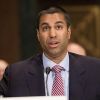
+6 +1AT&T Met With Ajit Pai in Barcelona Shortly After Cohen Payment
Last week, AT&T apologized for for its "serious misjudgment" in hiring US President Donald Trump’s personal attorney Michael Cohen to provide “insights” into how the new administration would handle issues like net neutrality and AT&T’s proposed merger with Time Warner Cable. Ultimately, the $600,000 AT&T paid Cohen for said insights became such a scandal, the company was forced to fire its top policy and lobbying man Bob Quinn, despite the fact that such behavior is arguably routine at the Dallas-based telecom giant.
-
 +11 +1
It's finally happening: Net neutrality rules that sparked intense debate to end next month
The Federal Communications Commission's rules preventing Internet service providers from blocking or slowing legal traffic, or charging for faster delivery of some content, passed with much fanfare in 2015, will be history on June 11. That's two months later than expected but way too soon for supporters of the Obama-era measures, who are suing and pushing for Congressional measures to bring back the so-called net neutrality rules.
-
 +15 +1
AT&T will ask Supreme Court to cripple the FTC’s authority over broadband
AT&T will appeal to the Supreme Court in an attempt to avoid a government lawsuit over its throttling of unlimited data plans. The Federal Trade Commission sued AT&T in October 2014 in US District Court in Northern California, alleging that AT&T promised unlimited data to wireless customers and then throttled their speeds by as much as 90 percent. In response, AT&T argues that the FTC has no jurisdiction over any aspect of AT&T's business because the FTC lacks authority to regulate common carriers.
Submit a link
Start a discussion