





















-
 +4 +1
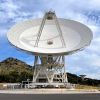
+4 +1NASA adds giant new dish to communicate with deep space missions
There's a powerful new member of NASA's family of giant antennas that enable engineers and scientists on Earth to communicate with the growing number of spacecraft exploring our solar system.
-
 +3 +1
+3 +1The James Webb Space Telescope is working as well as astronomers dreamed it would
A supersharp image of a bright star — released by NASA — shows that the optics seem to be working perfectly on the James Webb Space Telescope. The $10 billion infrared telescope launched in December after decades of development and construction, and it thrilled astronomers when it successfully unfolded itself out in space.
-
 +13 +1
In Change of Strategy, Russian Space Program Begs NASA for Help
The head of Russia’s space program is apparently changing his tune. Dmitry Rogozin, the director general of Russian space agency Roscosmos, appealed to NASA for help in the wake of incredibly restrictive economic sanctions on his home country over the weekend. Strangely, that message comes after weeks of spouting pro-Putin and anti-US propaganda, not to mention belligerent threats about the International Space Station, following the Russian invasion of Ukraine.
-
 +4 +1
+4 +195 Years Ago: Goddard’s First Liquid-Fueled Rocket
Robert H. Goddard (1882-1945) is recognized as the father of American rocketry and as one of the pioneers in the theoretical exploration of space. Goddard dreamt of exploring the Earth’s upper atmosphere and ultimately space using rocket propulsion.
-
 +3 +1
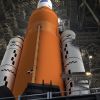
+3 +1NASA’s Mega Moon Rocket Is Ready To Roll: Watch the Artemis I Rollout Trailer
Twin solid rocket boosters that will produce a combined 7.2 million pounds of thrust at liftoff, a towering core stage, and the only human-rated spacecraft in the world capable of deep-space travel – together, NASA’s Space Launch System rocket and Orion spacecraft stand ready to usher in a new chapter of exploration. Now fully assembled at Kennedy Space Center in Florida, SLS and Orion will soon roll to the launch pad.
-
 +2 +1
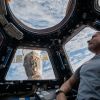
+2 +1NASA astronaut Mark Vande Hei breaks record for longest US spaceflight
When NASA astronaut Mark Vande Hei launched into space 11 months ago, he did not know how long he would be off the planet, let alone that he would be up there long enough to set any records. But when the clock strikes 12:24 p.m. EDT (1624 GMT) today (March 15), Vande Hei will claim the title of the U.S. astronaut with the single longest spaceflight in history. At a mission elapsed time of 340 days, 8 hours and 42 minutes, Vande Hei will surpass the duration logged by NASA astronaut Scott Kelly on March 2, 2013.
-
 +13 +1
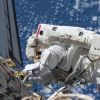
NASA astronauts will conduct spacewalk to provide space station power upgrades
The International Space Station may be set for retirement at the end of the decade, but there's still plenty of life left in the orbiting laboratory. The space station is preparing for more power upgrades as two NASA astronauts conduct the first spacewalk of the year on Tuesday.
-
 +26 +1
Inside NASA's messy plan to return to the moon by 2024
NASA’s Artemis program, which aims to return the first humans to the moon since 1972, is severely over budget and delayed, the space agency’s inspector general warned recently. Speaking during a meeting of the House Committee on Science, Space, and Technology on March 1, NASA Inspector General Paul Martin took issue with the performance of private contractors Boeing and Lockheed Martin, saying that industry contracts favored the companies to the agency’s detriment.
-
 +21 +1
Scientists hail 'the decade of Venus' with 3 new missions on the way
As planetary scientists resumed meeting in person, Venus experts had something special to celebrate. For decades, the Venus community has been crying out for missions: Only one dedicated spacecraft is currently studying our next-door neighbor, and NASA's last robotic Venus visitor ended its mission in 1994. Within just a couple weeks in 2021, however, Venus scientists suddenly had a veritable banquet to look forward to, with NASA and its European counterpart committing to three new missions due to launch in the early 2030s.
-
 +13 +1
7 futuristic space technologies that NASA is exploring
Wait till you see what's on the horizon if you think Martian rovers and helicopters are impressive. NASA has showcased a slew of cutting-edge technology that might be used on future journeys into space. The projects are the most recent additions to the Innovative Advanced Concepts (NIAC) program, which sponsors early-stage research to determine their viability.
-
 +18 +1
Rocket Lab will launch its 1st mission from new pad today. Here's how to watch live
Rocket Lab is ready to launch the first mission from its newly built pad in New Zealand on Monday (Feb. 28), and you can watch the event live. The window for the mission, dubbed "The Owl's Night Continues," opens at 3:35 p.m. EST (2035 GMT) on Monday. You can watch it live here at Space.com, courtesy of Rocket Lab, or directly via the company.
-
 +4 +1
+4 +1NASA successfully retests moon rocket core stage engines after fault
All core stage rocket engines on NASA's moon rocket performed as expected in a recent series of tests that followed a replacement of a faulty control mechanism in one of those engines.
-
 +5 +1
+5 +1Taking Earth with us: Is space exploration "sustainable"?
In the coming decades, space agencies from around the world will be venturing farther out into space than ever before. This includes returning to the Moon (perhaps to stay this time), exploring Mars, and maybe even establishing human settlements on both. Beyond that, there are even proposals for establishing habitats in space that could accommodate millions.
-
 +14 +1
NASA: No current plan for return of space station parts for museums
A recently-released plan for how NASA will dispose of the International Space Station makes no mention of preserving historically-significant components from the orbiting complex. But it is not just an omission from a report: the space agency says it has no current plans to return potential artifacts to Earth.
-
 +12 +1
Starship's advanced design is said to have NASA officials "sh**ting the bed"
Elon Musk recently provided the first big update on SpaceX's Mars-bound rocket, Starship, and its competitors are watching on with "a mix of awe and horror", according to a report from Politico. At his latest Starship presentation, SpaceX CEO Musk highlighted the fact that Starship will be reusable over and over again at a fraction of the cost of previous rockets. It's a development that threatens to leave NASA and other competitors in its wake as it launches to the proverbial stratosphere.
-
 +11 +1
Watch Russia launch a fresh cargo ship to the International Space Station today
A new Russian cargo ship will blast off today (Feb. 14) with tons of supplies and equipment for the Expedition 66 crew of the International Space Station. Here's how you can watch it live.
-
 +3 +1
+3 +1Why Musk’s biggest space gamble is freaking out his competitors
Elon Musk is planning yet again to rocket beyond the status quo. And if he succeeds, the aerospace giants that won the first space race may never catch him in this one. Standing in front of the towering Starship rocket at Space X’s southwest Texas “Starbase” on Thursday night, Musk pledged that his most ambitious spaceship yet will make its first journey in the coming months.
-
 +13 +1
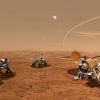
NASA picks Lockheed Martin to build a rocket that will return from Mars
The Perseverance rover is a capable machine, but one thing it can’t do is send rock, sediment and atmospheric samples from Mars back to Earth by itself. NASA hopes to retrieve some of those through its Mars Sample Return Program, and it’s taken another step forward in the project. The agency has chosen Lockheed Martin to build the first rocket to be fired off another planet.
-
 +20 +1
NASA is concerned about SpaceX's new generation of Starlink satellites
NASA has raised concerns about SpaceX's new Starlink satellites, including an increase of the risk of collision in orbit, in a letter to the Federal Communications Commission (FCC). The five-page letter was submitted to the FCC Tuesday (Feb. 8) and was first reported in SpaceNews. The letter, which includes a separate one-page letter from the National Science Foundation, was sent on NASA's behalf by the National Telecommunications and Information Administration.
-
 +17 +1
NASA Details Plan to Retire ISS in 2030 and Deliberately Crash It Into the Pacific Ocean
The end of the International Space Station is finally approaching, with NASA declaring the retirement of the orbital outpost in 2030 and a dramatic deorbiting early in the following year.
Submit a link
Start a discussion