
















-
 +13 +1
International Space Station to Retire in 2031
According to the International Space Station Transition Report provided by NASA to the US Congress last month, the decommissioning of the International Space Station (ISS) is about to happen in 2031. This comes with a plan to deorbit it above an uninhabited part of the Pacific Ocean known as "Point Nemo".
-
 +4 +1
+4 +1Dawn of the Space Lords
THEY CALLED IT A “SPUTNIK MOMENT.” In October, the Financial Times reported that over the summer of 2021, the Chinese government tested a new missile. It was reported to have been fired from a so-called hypersonic glide vehicle that circled the planet at speeds exceeding Mach 5 before landing within twenty-five miles of its target. The strategic implications were overblown, but the Sputnik comparison was apt in that a rival power—a communist one no less—had outperformed the United States in space.
-
 +19 +1
For scientists, relief and joy abound as James Webb Space Telescope completes monthlong journey
NASA can breathe a $10 billion sigh of relief. The agency's James Webb Space Telescope arrived safely at its ultimate destination Monday (Jan. 24), in great health and carrying even more fuel than expected after several deep-space engine burns.
-
 +18 +1
Webb space telescope nearing destination a million miles away
Thirty days outbound from Earth, the James Webb Space Telescope will slip into its parking orbit nearly a million miles away on Monday, an ideal spot to scan the heavens in search of faint infrared light from the first generation of stars and galaxies. But getting there — and successfully deploying a giant sunshade, mirrors and other appendages along the way — was just half the fun.
-
 +12 +1
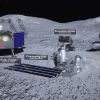
Machine to melt Moon rocks and derive metals may launch in 2024
In recent years, much has been said about mining water ice in shadowed craters at the Moon's South Pole for use as rocket propellant. Enthusiasm for this idea has led NASA to begin planning the first human missions of its Artemis Program to land near the South Pole instead of the mid-latitudes.
-
 +12 +1
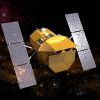
NASA's gamma-ray observatory is in safe mode after a possible wheel failure
NASA's Neil Gehrels Swift Observatory has temporarily stopped its science observations while the mission team investigates an issue. On Tuesday night (Jan. 18), the observatory, a gamma-ray hunting space telescope originally called the Swift Gamma-Ray Burst Explorer, went into safe mode and paused all science work. This maneuver may have been in response to a reaction wheel failure, which the mission team continues to explore.
-
 +4 +1
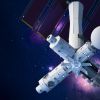
+4 +1New Film Studio Will Be Built in Space by 2024
Space Entertainment Enterprise (S.E.E), the company co-producing Tom Cruise’s upcoming space movie, plan to launch a sports arena and production studio in zero gravity. S.E.E. has unveiled plans to build a space station module that contains a sports and entertainment arena as well as a content studio by December 2024. (An artist’s rendering is pictured above.)
-
 +13 +1
NASA space station officials weigh in on remaining in orbit until 2030
NASA's International Space Station team is eager to stick with the orbiting laboratory until 2030. NASA officials speaking at a virtual meeting held on Tuesday (Jan. 18) spoke about plans to take advantage of an extension to the International Space Station program that NASA Administrator Bill Nelson announced on Dec. 31. The meeting was held by the Human Exploration and Operations Committee of the NASA Advisory Council, a group of independent experts who monitor NASA's activity relating to human spaceflight.
-
 +14 +1
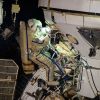
Watch two Russian cosmonauts take a spacewalk outside the International Space Station today
Two Russian cosmonauts are planning to take a spacewalk today (Jan. 19) to ready a new International Space Station module for visiting spacecraft, and you can watch it live. Expedition 66 Cmdr. Anton Shkaplerov and flight engineer Pyotr Dubrov, both of the Russian space agency Roscosmos, will spend the day working together outside the International Space Station. Coverage will start at 6 a.m EST (1130 GMT) and will air live on NASA Television, the NASA app, NASA social media and here at Space.com.
-
 +4 +1
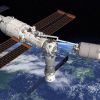
+4 +1On China's new space station, a robotic arm test paves way for future construction
A large robotic arm on China's space station has successfully grasped and maneuvered a cargo spacecraft in a crucial test ahead of upcoming module launches. The 33-foot-long (10 meters) robotic arm on the Tianhe module of China's new Tiangong space station took hold of the Tianzhou 2 supply ship and moved it around 20 degrees, before returning it to the forward port on Tianhe's docking hub.
-
 +23 +1
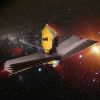
The James Webb Space Telescope is fully deployed. So what's next for the biggest observatory off Earth?
Work for the James Webb Space Telescope is just beginning. On Saturday (Jan. 8), the new observatory, the largest space telescope ever built, successfully unfolded its final primary mirror segment to cap what NASA has billed as one of its most complicated deployments in space ever. The Webb mission team is now turning its attention to directing the telescope to its final destination, while getting key parts of the observatory online for its astronomy work.
-
 +13 +1
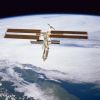
The ISS gets an extension to 2030 to wrap up unfinished business
After originally being funded by Congress until 2024, the International Space Station, which is used for research by NASA and many other agencies, will get an extension until 2030. Last week, NASA announced that the Biden-Harris Administration intends to extend International Space Station (ISS) operations through 2030, extending the US’s previous funding deadline by a few years.
-
 +15 +1
Report finds that US accounts for more than half of global space spending
Nations around the world spent a total of $92 billion on the "space sector" in 2021, the market intelligence firm Euroconsult reports. This represents an 8 percent increase in spending from the year 2020. In the latest edition of the report "Government Space Programs," the consulting firm says that civilian space activities accounted for $53 billion of the spending, and defense activities $39 billion. However the report noted that the proportion of defense spending is increasing.
-
 +22 +1
NASA will test Alexa voice control aboard the Artemis I mission
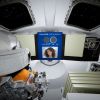
Alexa will be the first voice assistant available beyond Earth. Amazon and Lockheed Martin have revealed NASA will carry Alexa to space aboard the Artemis I mission launching later in 2022. While that flight is uncrewed, the companies are planning a "virtual crew experience" at NASA's Johnson Space Center that will let people in Mission Control (including students and special guests) simulate conversations between the digital helper and astronauts.
-
 +18 +1
2022 preview: A round-up of the year's most exciting space missions
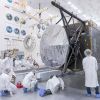
IF ALL goes well, the first major space mission of 2022 will be the launch of the Space Launch System rocket in February. After many budget and schedule overruns, NASA’s colossal rocket is finally set for its first uncrewed flight, which will carry several small satellites into orbits either near or around the moon.
-
 +17 +1
White House directs NASA to extend International Space Station operations through 2030
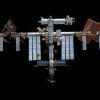
The White House has given NASA a New Year's Eve "go" to continue operations on board the International Space Station through 2030, granting the orbital outpost a six-year life extension.
-
 +4 +1
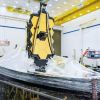
+4 +1James Webb Space Telescope unfurls massive sunshield in major deployment milestone
One of the James Webb Space Telescope's most nail-biting deployment steps is safely in the books. The $10 billion observatory unfurled its huge sunshield on Friday (Dec. 31), carefully unfolding the five-layer structure by sequentially deploying two booms.
-
 +22 +1
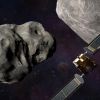
NASA’s asteroid-smashing spacecraft sends back first photo from 2 million miles away
A spacecraft designed to crash into an asteroid 11 million miles from Earth has sent back its first photo from outer space. The Double Asteroid Redirection Test (DART) is currently hurtling through space on an Armageddon-style mission. Its aim is to trial tech that could defend Earth from potentially devastating asteroids in the future.
-
 +17 +1
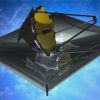
Why NASA’s James Webb Space Telescope Will Never Live As Long As Hubble
Every decision that’s made — in both astronomy and in life — comes with its own set of pros and cons. Setting up an observatory in space is expensive, precarious, and is dependent on a successful launch and deployment: there are multiple single-points-of-failure, and if anything catastrophic goes wrong, the entire mission is all for naught. Yet if you succeed, you can observe as no ground-based observatory can: without interference from the atmosphere, without concern for day-or-night, without being affected by terrestrial light pollution, and over a range of wavelengths that are heavily restricted back on Earth.
-
 +17 +1
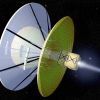
New Calculations Show That an Interstellar Bussard Ramjet Drive Would Need a Magnetic Field Stretching 150 Million Kilometres - Universe Today
A new analysis of the fabled Bussard Ramjet shows that the spacecraft would need an impossibly big magnetic field to achieve interstellar travel.
Submit a link
Start a discussion