





















-
 +17 +2
Toyota sends the world's first hydrogen-powered ship on a six-year voyage
Toyota is sponsoring the world's first autonomous hydrogen-powered ship on a six-year world tour. The specially adapted race boat, Energy Observer, uses solar, wind and wave-generated power – as well as carbon-free hydrogen generated from seawater. The base technology already exists for use on land, where it helps overcome the problem of intermittent power supply from renewables, but this is the first time it's been used at sea to produce hydrogen 'live' during stopovers and navigation.
-
 +8 +2
+8 +2Renewable Energy Is Much Faster To Install & More Scalable Than Nuclear Power
One major advantage renewable energy has over fossil fuels and nuclear power is that it can typically be installed much faster. Nuclear power plants can require 5–15 years to complete and some have taken 20 or more. Constructing a new coal power plant can takes 4 years or more. (Another point about coal plants — if renewable energy costs continue to decline, some new coal power plants may be shut down soon after opening or not opened at all, and almost certainly will not reach their full operational lifespans.
-
 +19 +2
Solar Has Overtaken Gas and Wind as Biggest Source of New U.S. Power
Despite tariffs that President Trump imposed on imported panels, the U.S. installed more solar energy than any other source of electricity in the first quarter.
-
 +22 +2
Billions in U.S. solar projects shelved after Trump panel tariff
President Donald Trump’s tariff on imported solar panels has led U.S. renewable energy companies to cancel or freeze investments of more than $2.5 billion in large installation projects, along with thousands of jobs, the developers told Reuters.
-
 +9 +1
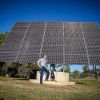
+9 +1Mars goes 100% solar for six Australian factories
Mars Australia is going 100 per cent renewables, and will source all the power for its six Australian factories and two offices from a 200MW solar farm in Victoria. Mars announced on Thursday that it has signed a 20 year power-purchase agreements (PPA) with Total Eren to produce the equivalent of all its electricity needs from the new Kiamal solar farm when it is complete in mind 2019.
-
 +13 +3
10 massive corporations going big on solar power
Sustainable Energy looks at the top 10 corporations in the U.S. by their installed capacity of solar power.
-
 +9 +1
+9 +1Solar To Surpass Wind, Become Fourth Largest Energy Capacity In World
That's the headline from Frost & Sullivan's recent analysis Global Power Industry Outlook, 2018, which posits that solar will surpass wind in global energy capacity starting in 2020. Less than a year ago, solar surpassed nuclear energy to reach fifth place.
-
 +11 +2
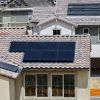
California is the first state to require solar panels on new homes. Here's why Big Brother is on to something
When a state regulatory body decrees that all new homes must have rooftop solar starting in 2020, my temperature rises. Big Brother is intruding too deeply into my personal life, I'm thinking. Shouldn't it be my call alone whether to invest in solar panels, perhaps incentivized by state tax credits or rebates? Should solar buying be simply mandated by a government bureaucracy without even a vote by our elected representatives in the Legislature?
-
 +30 +3
California to become first U.S. state mandating solar on new homes
California is about to become the only state in the nation mandating that virtually every new home have solar panels by 2020.
-
 +8 +1
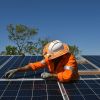
+8 +1Shift to renewables would save Australians $20bn a year – report
A total shift to renewable energy would pay for itself through cost savings within two decades, and ultimately save Australians $20bn a year in combined fuel and power costs, a new report says. The report, released on Thursday morning, outlines a path to powering homes and businesses from renewable sources by 2030. By 2035, 40% of transport could be emissions free, it says.
-
 +21 +3
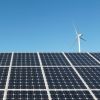
India added more energy capacity from renewables than coal last year
For the first time ever, India has added more production capacity from renewable energy in a year than from conventional sources like coal. Between April 2017 and March 2018, the country added around 11,788 megawatts (MW) of renewable energy capacity. That’s more than double of the 5,400 MW of capacity addition in the thermal and hydro power sectors during the same period. The numbers are in sync with the Narendra Modi government’s plan to promote renewable power, targeting capacity additions of 175,000 MW from renewable sources by 2022.
-
 +4 +1
+4 +1Dubai Adds 200 Megawatts of Solar Power in Renewables Push
Dubai took another step toward completing what it says will be the largest solar park of its kind, inaugurating a 200-megawatt facility with partners Electricite de France SA and Abu Dhabi-based renewables company Masdar. The third and latest phase of Mohammed bin Rashid Al Maktoum Solar Park will help Dubai toward its goal of generating about 10 percent of its electricity from renewables by 2020. The Gulf Arab city-state is already operating the first two phases of the project in the emirate’s desert and has broken ground on a fourth section.
-
 +3 +1
+3 +1Solar power tax incentives fall almost 50% as installations increase 300%
An analysis by the Department of Energy shows electricity generation from solar growing 32% annually since 2000. Meanwhile, the tax benefits claimed for solar fell from just over $2 billion in 2013 to just over $1 billion in 2016. According to a new report by the U.S. Department of Energy’s Energy Information Administration (EIA) The cost to incentivize the massive volumes of solar power being installed in the United States is falling aggressively. In the years for this report, specifically 2013 versus 2016, we saw solar power almost triple in volume deployed, while the cost in tax incentives for those projects fell by almost 50%.
-
 +16 +2
Jeff Bezos explains how his space company will save civilization
It's either space or blanketing the entire surface of the earth with solar panels.
-
 +12 +3
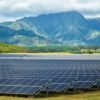
As Hawaii Aims for 100% Renewable Energy, Other States Watching Closely
How to incorporate solar and wind while keeping the electricity grid stable is a key question
-
 +6 +2
+6 +2China almost adds more solar power in three months than the US did all of last year
As US President Donald Trump pushes for “beautiful, clean coal,” China is speeding ahead in boosting renewable energy. China’s National Energy Administration said on Tuesday that in the first quarter of 2018, the country had increased its renewable energy capacity, mostly solar, by 15 gigawatts. That’s the equivalent of building five of America's largest nuclear power plant, the Palo Verde Generating Station, in just three months.
-
 +15 +1
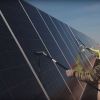
Sea of solar panels turns Mexican desert green
From a distance, it looks like a deep-blue sea has formed in the middle of the Mexican desert. But this is no mirage. It's the largest solar park in Latin America. With 2.3 million solar panels covering the equivalent of 2,200 football fields in the arid northern state of Coahuila, the Villanueva power plant is part of Mexico's push to generate 43 per cent of its electricity from clean sources by 2024.
-
 +16 +2
Research gives new ray of hope for solar fuel
A team of Renewable Energy experts from the University of Exeter has pioneered a new technique to produce hydrogen from sunlight to create a clean, cheap and widely-available fuel.
-
 +19 +3
Egypt will build the World's largest Solar Park
The eastern area of the Sahara Desert has some of the greatest solar power resources – sunlight – on the earth. It’s the second best spot in the world after the Chilean desert highlands. Benban Solar Park targets to reach somewhere between 1.6-2.0GW of solar power by the mid of 2019. Benban Solar Park’s land was originally placed out with 41 unique plots extending from 0.12mi2 to 0.39mi2. The total plot area of the park is roughly 14.4mi2.
-
 +13 +3
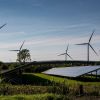
Wind and solar make more electricity than nuclear for first time in UK
Windfarms and solar panels produced more electricity than the UK’s eight nuclear power stations for the first time at the end of last year, official figures show. Britain’s greenhouse gas emissions also continued to fall, dropping 3% in 2017, as coal use fell and the use of renewables climbed. Energy experienced the biggest drop in emissions of any UK sector, of 8%, while pollution from transport and businesses stayed flat.
Submit a link
Start a discussion