



















-
 +33 +1
We Can Colonize the Moon by 2022—and for Less than the Cost of an Aircraft Carrier
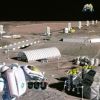
By 2022 (that’s just six years from now), and with $10 billion—which is cheaper than a single US aircraft carrier—the Earth could already set up a small colony on the moon. “The big takeaway is that new technologies, some of which have nothing to do with space—such as self-driving cars and waste-recycling toilets—are going to be incredibly useful in space, and are driving down the cost of a moon base to the point where it might be easy to do,” Chris McKay says in a Popular Science issue.
-
 +21 +1
Scientists have just detected a major change to the Earth’s oceans linked to a warming climate
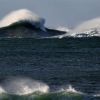
A large research synthesis, published in one of the world’s most influential scientific journals, has detected a decline in the amount of dissolved oxygen in oceans around the world — a long-predicted result of climate change that could have severe consequences for marine organisms if it continues.
-
 +24 +1
Scientists unveil new form of matter: Time crystals
To most people, crystals mean diamond bling, semiprecious gems or perhaps the jagged amethyst or quartz crystals beloved by collectors. To Norman Yao, these inert crystals are the tip of the iceberg. If crystals have an atomic structure that repeats in space, like the carbon lattice of a diamond, why can't crystals also have a structure that repeats in time? That is, a time crystal?
-
 +26 +1
David Attenborough calls for end to ‘cruel’ brain tests on primates
Sir David Attenborough has joined forces with leading scientists and animal welfare experts to call for an end to the use primates in certain types of “cruel” testing by neuroscientists. The leading naturalist and broadcaster said recent breakthroughs in understanding primates’ capacity to feel suffering and pain meant it was time to stop funding some potentially painful or cruel types of experiments.
-
 0 +1
0 +1Nasa just made all its research available online for free
Care to learn more about 400-foot tsunamis on Mars? Now you can, after Nasa announced it is making all its publicly funded research available online for free. Care to learn more about 400-foot tsunamis on Mars? Now you can, after Nasa announced it is making all its publicly funded research available online for free. The space agency has set up a new public web portal called Pubspace, where the public can find Nasa-funded research articles on everything from the chances of life on one of Saturn’s moons to the effects of space station living on the hair follicles of astronauts.
-
 +28 +1
Excitement Builds for the Possibility of Life on Enceladus
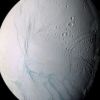
Saturn’s frozen moon Enceladus is a tantalizing world—many scientists are increasingly convinced it may be the best place in our solar system to search for life. NASA’s Cassini spacecraft, currently orbiting Saturn, has made intriguing observations of icy jets spewing from a suspected underground liquid ocean on the mysterious world that might be hospitable to alien life. Cassini’s tour is due to wind down in 2017, and scientists badly want to send a dedicated mission to Enceladus to look for signs of life. In fact, some have already started seriously thinking about exactly how they might do this—including planetary scientist Carolyn Porco...
Submit a link
Start a discussion