


















-
 +16 +1
There Are Now 8,000 Fake Science ‘Journals’ Worldwide, Researchers Say
Researchers from high-profile institutions are falling for these scams.
-
 +13 +1
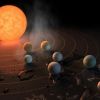
Hubble has discovered signs that Nasa's newly discovered planets could support life
Three potentially habitable Earth-sized planets in another solar system are likely to contain substantial amounts of water, say astronomers. The discovery by the Hubble Space Telescope increases the chances of life evolving on planets orbiting Trappist-1, a dwarf star 40 light years from the sun. Each of the worlds orbits in the star's "habitable zone", the narrow corridor where temperatures are mild enough to permit bodies of surface water such as lakes and oceans.
-
 +12 +1
A psychologist explains the limits of human compassion
Why do we ignore mass atrocities? It has to do with something called "psychic numbing."
-
 +25 +1
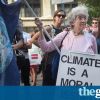
Planet has just 5% chance of reaching Paris climate goal, study says
There is only a 5% chance that the Earth will avoid warming by at least 2C come the end of the century, according to new research that paints a sobering picture of the international effort to stem dangerous climate change.
-
 +17 +1
Sperm counts among western men have halved in last 40 years – study
Sperm counts among men have more than halved in the last 40 years, research suggests, although the drivers behind the decline remain unclear. The latest findings reveal that between 1973 and 2011, the concentration of sperm in the ejaculate of men in western countries has fallen by an average of 1.4% a year, leading to an overall drop of just over 52%.
-
 +9 +1
+9 +1Scientists May Have Just Discovered Enormous Amounts Of Water On The Moon
Scientists have found evidence that the Moon may contain vast amounts of water in its interior, which could be hugely beneficial for future lunar explorers. The research was carried out by scientists from Brown University in Rhode Island and published in Nature Geoscience. They investigated how water appeared to be trapped in volcanic glass across the lunar surface, remnants of the Moon’s volcanism billions of years ago.
-
 +10 +1
France’s response to Trump may make it a climate science hub
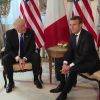
Most world leaders reacted with horror to President Trump's decision to pull out of the Paris climate accords. French President Emmanuel Macron responded with what was largely considered a troll: a short address in which he invites scientists and entrepreneurs to move to France and "make our planet great again." But it turned out to be more than just a troll; France has put research funding on the table and has apparently been drawing lots of interest from scientists.
-
 +17 +1
Scientists Can Now Clone Thousands of Genes in a Single Reaction
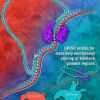
Things are about to speed up dramatically in genetic research, with scientists developing a new technique that can clone thousands of genes in a single reaction. The new technology, called a LASSO probe, could be used to create libraries of proteins from DNA samples, speeding up the search for new drugs by replacing the tedious methods of gene cloning currently used.
-
 +15 +1
German breeders develop ‘open-source’ plant seeds
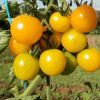
There's open-source software, open-source pharma research, and open-source beer. Now, there are open-source seeds, too. Breeders from Göttingen University in Germany and Dottenfelderhof agricultural school in Bad Vilbel, Germany, have released tomato and wheat varieties under an open-source license. Their move follows similar schemes for sharing plant material in India and the United States, but is the first that provides legal protection for the open-source status of future descendants of plant varieties.
-
 +30 +1
How Whales Became the Biggest Animals on the Planet
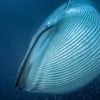
Species like the blue whale became so big only in the past 4.5 million years, a result of changes to the food supply in the oceans, scientists say.
-
 +50 +1
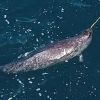
Video Solves Mystery of How Narwhals Use Their Tusks
Drone footage taken in the far northeastern regions of Canada finally sheds light on how narwhals use the massive tusks protruding from their heads.
-
 +1 +1
+1 +1Earth Just Passed 410 Ppm CO2 Levels For The First Time in Human History
On April 18, Earth breached its latest climate change milestone. For the first time in human history, atmospheric carbon dioxide levels were measured at 410 parts per million (ppm). The Keeling Curve, a University of California San Diego, Scripps Institution of Oceanography program, recorded the milestone at Mauna Loa Observatory in Hawaii. This was a sobering moment for scientists, albeit hardly surprising.
-
 +19 +1
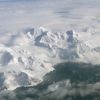
Antarctica's Troublesome 'Hairdryer Winds'
Warm air dropping down Peninsula mountains does not augur well for the Larsen C Ice Shelf's future.
-
 +11 +1
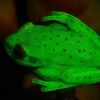
The world’s first glow-in-the-dark frog found in Argentina
Scientists in Argentina have discovered a frog that glows in moonlight and at twilight. Fluorescence in terrestrial environments had previously only been traced to a few species of insects and birds and had never been scientifically reported in any of the world’s 7,000-plus amphibian species. A team of herpetologists made the headline-grabbing discovery in the outskirts of the city of Santa Fe, Argentina, while collecting frogs to research the biochemical cloricia in amphibians.
-
 +27 +1
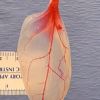
This spinach leaf is actually a tiny, beating human heart
Spinach makes the heart grow fonder.
-
 +8 +1
+8 +1Origins of 'Hobbit' Species Discovered
Scientists have discovered the origins of a short, ancient species nicknamed 'hobbits' due to their small stature, putting to rest several other hotly debated theories about the species.
-
 +31 +1
'Perfect Storm' Threatens Europe's Salamanders
Scientists call for "amphibian arks" to protect wild salamanders in Europe from a deadly infection.
-
 +20 +1
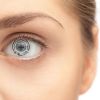
Future contact lenses may measure glucose, detect cancer, monitor drug use
In the future, your contacts lenses may do more than help you see clearly — they may help save your life. Engineers at Oregon State University are working to embed transparent sensors into contact lenses, which could then monitor biomarkers to track drug use, blood glucose levels, or even detect early signs of cancer.
-
 +16 +1
Scientists Who Want To Study Climate Engineering Shun Trump
President Trump issued a sweeping executive order on Tuesday that will begin to undo a slew of government efforts to fight global warming. Among those worrying and watching to see how the executive order plays out are scientists who actually are in favor of exploring bold interventions to artificially cool the climate. Just a year ago, some hoped that the U. S. government would start funding such research and take a leadership role.
-
 +22 +1
We might have received a message from aliens, Harvard professor says
Scientists might have found proof of alien life but misunderstood it, according to a professor at Harvard University. Strange radio waves that have been reaching Earth might actually be leakage from a huge, light-powered ship deep in space. Fast radio bursts (FRB), which have perplexed scientists since they were discovered in 2007, could be evidence of advanced alien technology, according to Avi Loeb of the Harvard-Smithsonian Centre for Astrophysics.
Submit a link
Start a discussion