



















-
 +19 +1
Our reality could be a "hologram" created by quantum physics
Ever since Einstein posited that space and time were inextricably linked, scientists have wondered where the cosmic web called spacetime comes from. Now, ongoing research in quantum physics may finally arrive at an explanation: A bizarre phenomenon called quantum entanglement could be the underlying basis for the four dimensions of space and time in which we all live, according to a deep dive by Knowable Magazine. In fact, in a mind-boggling twist, our reality could be a “hologram” of this quantum state.
-
 +27 +1
The Case Against Quantum Computing
The proposed strategy relies on manipulating with high precision an unimaginably huge number of variables. By Mikhail Dyakonov. (Nov. 15, 2018)
-
 +23 +1
The Einstein Lecture: The Quantum Computing Revolution
-
 +8 +1
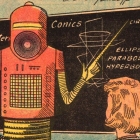
+8 +1A Quantum Origin for Spacetime
Rod Serling knew all about dimensions. His Twilight Zone was a dimension of imagination, a dimension of sight and sound and mind, a dimension as vast as space and timeless as infinity. It was all very clear except for the space and time part, the dimensions of real life. Serling never explained them.
-
 +29 +1
Quantum breakthrough could lead to 'super-powered' hard disk drives
While the world’s focused on the latest Avenger’s flick, an international team of scientists have potentially unlocked the super powers of another familiar Marvel character: Magneto. Researchers from the Argonne National Laboratory, Oakland University in Michigan, and Fudan University in China have discovered a quantum-level exploit that has the potential to give engineers greater control over the magnetic properties of certain metals.
-
 +23 +1
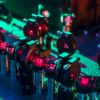
This Quantum Computer Can See the Future — All 16 of Them
When Mile Gu boots up his new computer, he can see the future. At least, 16 possible versions of it — all at the same time. Gu, an assistant professor of physics at Nanyang Technological University in Singapore, works in quantum computing. This branch of science uses the weird laws that govern the universe's smallest particles to help computers calculate more efficiently.
-
 +26 +1
Scientists build a machine to generate quantum superposition of possible futures
In the 2018 movie Avengers: Infinity War, a scene featured Dr. Strange looking into 14 million possible futures to search for a single timeline in which the heroes would be victorious. Perhaps he would have had an easier time with help from a quantum computer. A team of researchers from Nanyang Technological University, Singapore (NTU Singapore) and Griffith University in Australia have constructed a prototype quantum device that can generate all possible futures in a simultaneous quantum superposition.
-
 +10 +1
In a new quantum simulator, light behaves like a magnet
Physicists at EPFL propose a new “quantum simulator”: a laser-based device that can be used to study a wide range of quantum systems. Studying it, the researchers have found that photons can behave like magnetic dipoles at temperatures close to absolute zero, following the laws of quantum mechanics. The simple simulator can be used to better understand the properties of complex materials under such extreme conditions.
-
 +9 +1
+9 +1Schrödinger’s kittens: New thought experiment breaks quantum theory
A twist on the famous Schrödinger’s cat thought experiment could undermine quantum physics – or provide a path to a deeper understanding of how the world works
-
 +15 +1
We did a breakthrough 'speed test' in quantum tunnelling, and here's why that's exciting
Things get weird at the quantum level and now we know they can happen really fast when a particle pushes through an almost insurmountable barrier.
-
 +19 +1
D-Wave 2000Q hands-on: Steep learning curve for quantum computing
Reconceptualizing a problem is the hard part, but the end is rewarding.
-
 +17 +1
Google Builds Circuit to Solve One of Quantum Computing’s Biggest Problems
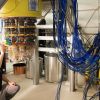
One of the big limiters to today’s quantum computing systems is that while their superconducting qubits live in a cryogenic enclosure at less than 1 kelvin, all the control and readout circuits must be at room temperature. For today’s sub-100-qubit systems, there’s enough space for specialized RF cabling to come in and out of the enclosure. But to scale up to the million-qubit systems needed to do really cool stuff, there just won’t be enough room.
-
 +2 +1
+2 +1UC Riverside physicists create exotic electron liquid
By bombarding an ultrathin semiconductor sandwich with powerful laser pulses, physicists at the University of California, Riverside, have created the first “electron liquid” at room temperature. The achievement opens a pathway for development of the first practical and efficient devices to generate and detect light at terahertz wavelengths — between infrared light and microwaves. Such devices could be used in applications as diverse as communications in outer space, cancer detection, and scanning for concealed weapons.
-
 +15 +1
Video games are unlocking the mysteries of the quantum world
Quantum games could be the first area to achieve quantum advantage. In Helsinki, developers are getting set for another round of experiments. “When it comes to quantum programming, people think, ‘Whoa, it's some weird, magical thing done by weird magical people’. And then I say, ‘Well, I made battleships on a quantum computer’.” James Wootton is excited. He always gets excited when it comes to quantum computing or game design...
-
 +24 +1
Scientists tap into open-access quantum computer to tease out quantum secrets
The rules of quantum mechanics describe how atoms and molecules act very differently from the world around us. Scientists have made progress toward teasing out these rules—essential for finding ways to make new molecules and better technology—but some are so complex that they evade experimental verification. With the advent of open-access quantum computers, scientists at the University of Chicago saw an opportunity to do a very unusual experiment to test some of these quantum principles.
-
 +15 +1
Quantum computing as a field is obvious bullshit
Sort of like making artificial life out of silicon, controlled nuclear fusion power or Bussard ramjets is “just an engineering problem.” By Scott Locklin.
-
 +12 +1
Physicists measure how long graphene qubits hover in "alive/dead" superposition
Practical quantum computers may be another step closer to reality, thanks again to graphene. The bits of information in quantum computers (qubits) can exist in two states at once, and now researchers have managed to record just how long that superposition state can last in a qubit made of graphene.
-
 +32 +1
Two Qubits Could Be Better Than One In Quantum Computing
Scientists have combined two types of qubit on a single device, potentially overcoming some of the barriers to practical quantum computing. Quantum computing has been on the horizon for a number of years, but there’s more than one problem in making the idea scalable and practical. While the resulting machine could handle maths problems far larger than the greatest modern supercomputer, right now, researchers are struggling to produce a machine that can come up with any coherent answers at all.
-
 +16 +1
David vs. Goliath: What a tiny electron can tell us about the structure of the universe
What is the shape of an electron? If you recall pictures from your high school science books, the answer seems quite clear: an electron is a small ball of negative charge that is smaller than an atom. This, however, is quite far from the truth.
-
 +21 +1
President Trump has signed a $1.2 billon law to boost US quantum tech
The new National Quantum Initiative Act will give America a national masterplan for advancing quantum technologies. The news: The US president just signed into law a bill that commits the government to providing $1.2 billion to fund activities promoting quantum information science over an initial five-year period. The new law, which was signed just as a partial US government shutdown began, will provide a significant boost to research, and to efforts to develop a future quantum workforce in the country.
Submit a link
Start a discussion