
















-
 +11 +3
Schmitt with Flag and Earth Above
Geologist-Astronaut Harrison Schmitt, Apollo 17 Lunar Module pilot, is photographed next to the American Flag during extravehicular activity (EVA) of NASA's final lunar landing mission in the Apollo series. The photo was taken at the Taurus-Littrow landing site. The highest part of the flag appears to point toward our planet earth in the distant background.
-
 +36 +8
2018 National Geographic Photo Contest
See the breathtaking 2018 National Geographic Photo Contest winners.
-
 +13 +4
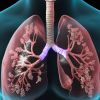
Hosptial Patient Coughs Up Bronchiole Shaped Blood Clot
A near-perfect cast of a right bronchial tree coughed up by a patient experiencing internal bleeding related to anticoagulants administered during treatment of heart failure.
-
 +16 +5
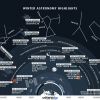
Highlights of the North Winter Sky
What can you see in the night sky this season? The featured graphic gives a few highlights for Earth's northern hemisphere. Viewed as a clock face centered at the bottom, early (northern) winter sky events fan out toward the left, while late winter events are projected toward the right. Objects relatively close to Earth are illustrated, in general, as nearer to the cartoon figure with the telescope at the bottom center -- although almost everything pictured can be seen without a telescope. As happens during any season, constellations appear the same year to year, and, as usual, the Geminids meteor shower will peak in mid-December.
-
 +20 +5
Words on the street: graffiti of the Paris protests – in pictures
As the cleanup operation continues across across the French capital after violent demonstrations against rising taxes and the high cost of living, the messages left behind reveal some of the motives and emotions behind the unrest
-
 +16 +3
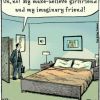
Yeah, imagine that.
-
 +24 +7
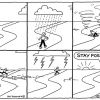
Stay Positive
Building anything or getting anywhere isn’t always going to be easy. Keep moving. Stay positive.
-
 +24 +3
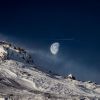
Gibbous Moon beyond Swedish Mountain
This is a gibbous Moon. More Earthlings are familiar with a full moon, when the entire face of Luna is lit by the Sun, and a crescent moon, when only a sliver of the Moon's face is lit. When more than half of the Moon is illuminated, though, but still short of full illumination, the phase is called gibbous. Rarely seen in television and movies, gibbous moons are quite common in the actual night sky.
-
 +34 +8
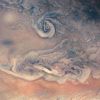
Swirls and Colors on Jupiter from Juno
What creates the colors in Jupiter's clouds? No one is sure. The thick atmosphere of Jupiter is mostly hydrogen and helium, elements which are colorless at the low temperatures of the Jovian cloud tops. Which trace elements provide the colors remains a topic of research, although small amounts of ammonium hydrosulfide are one leading candidate. What is clear from the featured color-enhanced image -- and many similar images -- is that lighter clouds are typically higher up than darker ones. Pictured, light clouds swirl around reddish regions toward the lower right, while they appear to cover over some darker domains on the upper right.
-
 +19 +4
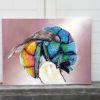
Reflection-refraction by Martinus
Acrylics on canvas - 80 * 60 cm
-
 +18 +3
Inside Colombia’s beloved candy factory.
For nearly 50 years, Bon Bon Bums have been produced in the Colombina factory in La Paila, north of Cali. At the start, 20 workers were responsible for the production of four million lollipops per month. Today, in that same factory, 200 workers produce more than 40 times as many.
-
 +14 +5
Flickr says free account limit won’t impact Creative Commons images uploaded before November 1
Flickr's new 1,000-photo limit for free accounts will include Creative Commons images, but those uploaded before November 1 won't be deleted.
-
 +19 +3
Would it load to 100?
-
 +17 +1
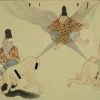
Hilariously crude Japanese ‘fart battle scrolls’ from the Edo period
Well blow me down! These fantastical, bizarre, hilarious scrolls date from the Edo period in Japan, which spanned the years 1603–1868 for those too lazy to Wikipedia it (I know because I Wikipedia’d it). Authorship for them is unknown, which leads me to believe that they were a very refined form of bathroom graffiti, like those beautiful Japanese ceramic figurines that used to appear in Playboy under the heading “Ribald Art” or something that would reveal the figure’s naughty lady parts if you turned it upside down.
-
 +9 +1
+9 +1When art criticizes life
You know shit will hit the fan when paintings start to respond to your actions.
-
 +23 +4
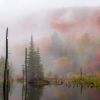
Smuggler's Notch
I arrived early in the morning to the walkway by Smuggler's Notch to find the whole area engulfed by a void of fog. I was exploring around and shooting some reflections of the trees in a nearby pond when I suddenly noticed the fog was slowly receding, revealing the amazingly colorful foliage on the hills. It was a pretty magical start to my week-long photography stay-cation in Vermont.
-
 +14 +5
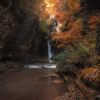
Watkins Glen
This is in the Finger Lakes region of upstate New York, taken a little over a week ago. I highly recommend visiting this place in the fall as it is one of my favorite places in the US northeast. FYI - I am not actually off trail here, my camera is resting on a railing. Photo by Matthew Macpherson.
-
 +36 +5
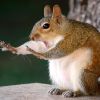
2018 Comedy Wildlife Photography Awards, and they’re hilarious
There are plenty of great wildlife photographers who take awe-inspiring and interesting shots. But when these animals do funny things and take silly poses: it adds a whole new level to wildlife photography. The Comedy Wildlife Photography Awards is centered on the photos of animals that are sure to improve your day.
-
 +25 +3
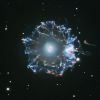
Halo of the Cat's Eye
Not a Falcon 9 rocket launch after sunset, the Cat's Eye Nebula (NGC 6543) is one of the best known planetary nebulae in the sky. Its haunting symmetries are seen in the very central region of this composited picture, processed to reveal an enormous but extremely faint halo of gaseous material, over three light-years across. Made with data from ground- and space-based telescopes it shows the extended emission which surrounds the brighter, familiar planetary nebula. Planetary nebulae have long been appreciated as a final phase in the life of a sun-like star. But only more recently have some planetaries been found to have halos like this one.
-
 +23 +2
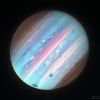
Jupiter in Ultraviolet from Hubble
Jupiter looks a bit different in ultraviolet light. To better interpret Jupiter's cloud motions and to help NASA's robotic Juno spacecraft understand the planetary context of the small fields that it sees, the Hubble Space Telescope is being directed to regularly image the entire Jovian giant. The colors of Jupiter being monitored go beyond the normal human visual range to include both ultraviolet and infrared light.
Submit a link
Start a discussion