



















-
 +16 +1
Funky mirror turns electric field into a magnetic field with missing pole
The mirror image of a frozen electric charge becomes a magnetic monopole.
-
 +22 +1
A Mirror Image of Our Universe May Have Existed Before the Big Bang
Like a mountain looming over a calm lake, it seems the universe may once have had a perfect mirror image. That's the conclusion a team of Canadian scientists reached after extrapolating the laws of the universe both before and after the Big Bang. Physicists have a pretty good idea of the structure of the universe just a couple of seconds after the Big Bang, moving forward to today. In many ways, fundamental physics then worked as it does today.
-
 +24 +1
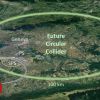
Cern plans for even larger hadron collider
Cern has published its ideas for a £20bn successor to the Large Hadron Collider, given the working name of Future Circular Collider (FCC). The Geneva based particle physics research centre is proposing an accelerator that is almost four times longer and ten times more powerful. The aim is to have the FCC hunting for new sub-atomic particles by 2050. Critics say that the money could be better spent on other research areas such as combating climate change.
-
 +16 +1
David vs. Goliath: What a tiny electron can tell us about the structure of the universe
What is the shape of an electron? If you recall pictures from your high school science books, the answer seems quite clear: an electron is a small ball of negative charge that is smaller than an atom. This, however, is quite far from the truth.
-
 +3 +1
+3 +1MIT invents method to shrink objects to nanoscale
Some say bigger is better, but researchers at the Massachusetts Institute of Technology will tell you that when it comes to tech, smaller things are far more impressive. This month, MIT researchers announced they invented a way to shrink objects to nanoscale -- smaller than what you can see with a microscope -- using a laser. That means they can take any simple structure and reduce it to one 1,000th of its original size.
-
 +5 +1
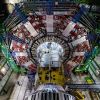
+5 +1The Large Hadron Collider is shutting down for 2 years
The world’s most powerful particle accelerator has gone quiet. Particles took their last spin around the Large Hadron Collider on December 3 before scientists shut the machine down for two years of upgrades. Located at the particle physics laboratory CERN in Geneva, the accelerator has smashed together approximately 16 million billion protons since 2015, when it reached its current energy of 13 trillion electron volts. Planned improvements before the machine restarts in 2021 will bring the energy up to 14 trillion electron volts — the energy it was originally designed to reach.
-
 +31 +1
Plans Revealed for Enormous Particle Collider in China
Scientists this week released a conceptual design report for a next-generation particle accelerator in China, which would serve as a “Higgs boson factory,” as its proponents have called it.
-
 +16 +1
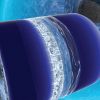
Physicists Discover How an Exotic Form of Ice Grows at Over 1,000 Miles Per Hour
Physicists detail how “Ice VII” forms for the first time and what this means for life elsewhere in the galaxy.
-
 +13 +1
A Bose-Einstein condensate has been produced in space for the first time
An international team of researchers has successfully produced a Bose-Einstein condensate (BEC) in space for the first time. In their paper published in the journal Nature, the group describes creating a small experimental device that was carried on a rocket into space and the experiments that were conducted during its freefall.
-
 +16 +1
Bizarre Particles Keep Flying Out of Antarctica's Ice, and They Might Shatter Modern Physics
There's something mysterious coming up from the frozen ground in Antarctica, and it could break physics as we know it. Physicists don't know what it is exactly. But they do know it's some sort of cosmic ray — a high-energy particle that's blasted its way through space, into the Earth, and back out again. But the particles physicists know about — the collection of particles that make up what scientists call the Standard Model (SM) of particle physics — shouldn't be able to do that.
-
 +40 +1
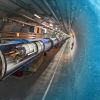
CERN Scientists Say The LHC Has Confirmed Two New Particles, And Possibly Discovered a Third
The Large Hadron Collider is at it again, showing us new wonders in the world of particle physics. Scientists working on the Large Hadron Collider beauty (LHCb) collaboration have observed two new particles that have never been seen before - and seen
-
 +20 +1
Bizarre Particles Keep Flying Out of Antarctica's Ice, and They Might Shatter Modern Physics
There's something out there that physicists have never seen before, and it's coming up from the bottom of the Earth. Scientists think it's a brand-new particle.
-
 +13 +1
New nanoparticle superstructures made from pyramid-shaped building blocks
In research that may help bridge the divide between the nano and the macro, Brown University chemists have used pyramid-shaped nanoparticles to create what might be the most complex macroscale superstructure ever assembled.
-
 +10 +1
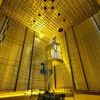
Early tests pave the way for a giant neutrino detector
An enormous future particle detector is now within closer reach. The first data from a prototype experiment hint that scientists may have what it takes to build the planned neutrino detector. Known as the Deep Underground Neutrino Experiment, or DUNE, the experiment will use 70,000 metric tons of liquefied argon to study the secrets of these neutrinos — bizarre, nearly massless particles that may help reveal why matter is common in the universe but antimatter is rare. DUNE will eventually detect the tracks of charged particles, including electrons and their heavier cousins, muons, that are produced when neutrinos interact.
-
 +4 +1
+4 +1Quantum entanglement loophole quashed by quasar light
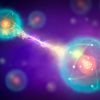
With the help of two extremely bright quasars located more than 7 billion light-years away, researchers recently bolstered the case for quantum entanglement — a phenomenon Einstein described as "spooky action at a distance" — by eliminating one classical alternative: The freedom-of-choice loophole.
-
 +17 +1
We May Soon Know How a Crucial Einstein Principle Works in The Quantum Realm
The puzzle of how Einstein's equivalence principle plays out in the quantum realm has vexed physicists for decades. Now two researchers may have finally figured out the key that will allow us to solve this mystery.
-
 +17 +1
The Peculiar Math That Could Underlie the Laws of Nature
New findings are fueling an old suspicion that fundamental particles and forces spring from strange eight-part numbers called “octonions.”
-
 +17 +1
Meet the Woman Who Rocked Particle Physics—Three Times
Sau Lan Wu spent decades working to establish the Standard Model of particle physics. Now she’s searching for what lies beyond it. By Joshua Roebke.
-
 +13 +1
How a particle accelerator helped recover tarnished 19th century images
With the aid of a particle accelerator, scientists are bringing back ghosts from the past, revealing portraits hidden underneath the tarnished surface of two roughly 150-year-old silver photographic plates. Researchers used an accelerator called a synchrotron to produce strong, but nondamaging beams of X-rays to scan the damaged photographs, called daguerreotypes, and map their chemical composition.
-
 +5 +1
+5 +1A high-energy neutrino has been traced to its galactic birthplace
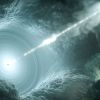
A zippy little particle has been traced back to its cosmic stomping grounds, a flaring galaxy 4 billion light-years away, for the first time solving a cosmic whodunit. Scientists have long puzzled over the sources of high-energy particles from space, which batter the Earth at energies that can outstrip the world’s most advanced particle accelerators. Now, physicists have identified the source of an energetic, lightweight particle called a neutrino. The intergalactic voyager came from a type of bright galaxy called a blazar located in the direction of the constellation Orion, scientists report online July 12 in Science.
Submit a link
Start a discussion