



















-
 +4 +1
+4 +1If this type of dark matter existed, people would be dying of unexplained ‘gunshot’ wounds
Dark matter, the mysterious substance that makes up most of the mass of the universe, has proved notoriously hard to detect. But scientists have now proposed a surprising new sensor: human flesh. The idea boils down to this: If a certain type of dark matter particle existed, it would occasionally kill people, passing through them like a bullet. Because no one has died from unexplained gunshotlike wounds, this type of dark matter does not exist, according to a new study.
-
 +31 +1
Quantum physicists create fastest two-qubit gate in silicon — here's why that's exciting
Australian researchers have developed a new building block for a quantum computer, bringing the technology a tantalising step closer.
-
 +27 +1
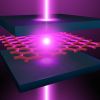
Physicists have created "mind-bending" negative mass particles
Physicists have designed the first device to create particles with charged negative mass. The breakthrough could lead to an entirely new way to generate laser light using only a tiny amount of energy.
-
 +3 +1
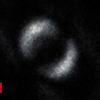
+3 +1First image of Einstein's 'spooky' particle action
Scientists have captured the first ever image of a phenomenon which Albert Einstein once described as "spooky action at a distance". The photo shows a strong form of quantum entanglement, where two particles interact and share their physical states for an instant. It occurs no matter how great the distance between the particles is.
-
 +18 +1
If You Thought Quantum Mechanics Was Weird, You Need to Check Out Entangled Time
Up to today, most experiments have tested entanglement over spatial gaps. The assumption is that the 'nonlocal' part of quantum nonlocality refers to the entanglement of properties across space. But what if entanglement also occurs across time? Is there such a thing as temporal nonlocality? The answer, as it turns out, is yes.
-
 +37 +1
Scientists combine light and matter to make particles with new behaviors
Every type of atom in the universe has a unique fingerprint: It only absorbs or emits light at the particular energies that match the allowed orbits of its electrons. That fingerprint enables scientists to identify an atom wherever it is found. A hydrogen atom in outer space absorbs light at the same energies as one on Earth.
-
 +30 +1
Quantum physics experiment shows Heisenberg was right about uncertainty, in a certain sense
Heisenberg's famous Uncertainty Principle is put to the test to see if things really are uncertain in the quantum world.
-
 +5 +1
+5 +1A New Candidate for Dark Matter and a Way to Detect It
Two theoretical physicists at the University of California, Davis, have a new candidate for dark matter, and a possible way to detect it. They presented their work June 6 at the Planck 2019 conference in Granada, Spain, and it has been submitted for publication. Dark matter is thought to make up just over a quarter of our universe, with most of the rest being even-more mysterious dark energy. It cannot be seen directly, but dark matter’s presence can be detected because its gravity determines the shape of distant galaxies and other objects.
-
 +14 +1
CERN ditches Microsoft
The European Organization for Nuclear Research, better known as CERN, and also known as home of the Large Hadron Collider, has announced plans to migrate away from Microsoft products and on to open-source solutions where possible. Why? Increases in Microsoft license fees. Microsoft recently revoked the organisations status as an academic institution, instead pricing access to its services on users. This bumps the cost of various software licenses 10x, which is just too much for CERN's budget.
-
 +22 +1
In a first, scientists took the temperature of a sonic black hole
A lab-made black hole that traps sound, not light, emits radiation at a certain temperature, as Stephen Hawking first predicted.
-
 +18 +1
Murray Gell-Mann, Nobel Prize-winning physicist who named quarks, dies at 89
Murray Gell-Mann, the Nobel-winning physicist who brought order to the universe by helping discover and classify subatomic particles, has died. He was 89. Gell-Mann died on Friday at his home in Santa Fe, New Mexico. His death was confirmed by the Santa Fe Institute, where he held the title of distinguished fellow, and the California Institute of Technology, where he taught for decades. The cause was not disclosed.
-
 +16 +1
Dark Matter Gets a Reprieve in New Analysis
A strange glow coming from the Milky Way’s center was thought to be due to ordinary pulsars. But a new look at a years-old study shows that dark matter might still be responsible.
-
 +2 +1
+2 +1Scientists use LHC to hunt dark matter siblings
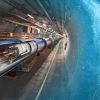
Dark matter has long frustrated researchers. It seems to make up most of our universe, yet it barely interacts with that universe. And despite a plethora of active experiments hunting for dark matter, so far they’ve all turned up empty. That has some researchers turning to the next best thing: other dark particles. Our world of normal matter has lots of different particles, so perhaps there’s a whole dark world of particles as well. To be clear, no one’s found these either, and there’s even less proof for their existence.
-
 +18 +1
Scientists invent way to trap mysterious ‘dark world’ particle at Large Hadron Collider
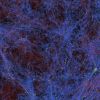
Now that they’ve identified the Higgs boson, scientists at the Large Hadron Collider have set their sights on an even more elusive target. All around us is dark matter and dark energy—the invisible stuff that binds the galaxy together, but which no one has been able to directly detect. “We know for sure there’s a dark world, and there’s more energy in it than there is in ours,” said LianTao Wang, a University of Chicago professor of physics who studies how to find signals in large particle accelerators like the LHC.
-
 +3 +1
+3 +1The Mystery of Antimatter
At the beginning of time, just moments after the Big Bang, numerous particles came into existence; at the same time, an almost equal number of antiparticles appeared. These subatomic exotics are nearly identical to their ordinary particle kin, but differ in some key ways. When matter and antimatter meet, the two annihilate one another, which means that the dawn of the universe included a spectacular microscopic fireworks display.
-
 +3 +1
+3 +1Supercooled water in “snowball chamber” might be able to find dark matter
Like many people, physicist Matthew Szydagis has been amused by all those YouTube videos showing people banging on a bottle filled with water, causing it to quickly freeze in response to the blow. The trick is to supercool the water beforehand—that is, cool it below the freezing point without the water actually freezing. (Yes, it's possible.) But when he saw the same phenomenon depicted in Disney's 2013 animated film Frozen, he realized he might be able to exploit the effect to hunt for dark matter, that most elusive of substances.
-
 +41 +1
Why Physicists Tried to Put a Ferret in a Particle Accelerator
Felicia had a job to do.
-
 +9 +1
+9 +1Schrödinger’s kittens: New thought experiment breaks quantum theory
A twist on the famous Schrödinger’s cat thought experiment could undermine quantum physics – or provide a path to a deeper understanding of how the world works
-
 +15 +1
We did a breakthrough 'speed test' in quantum tunnelling, and here's why that's exciting
Things get weird at the quantum level and now we know they can happen really fast when a particle pushes through an almost insurmountable barrier.
-
 +11 +1
Boy, 12, said to have created nuclear reaction in playroom lab
Hobbyists say Jackson Oswalt of Tennessee is youngest person to achieve fusion
Submit a link
Start a discussion