



















-
 +3 +1
+3 +1For The First Time, Physicists Have Controlled The Interaction of Time Crystals
The existence of time crystals - a particularly fascinating state of matter - was only confirmed a few short years ago, but physicists have already made a pretty major breakthrough: they have induced and observed an interaction between two time crystals.
-
 +19 +1
Black silicon photodetector hits record-breaking 132% efficiency
Researchers at Aalto University have developed a photovoltaic device that has an external quantum efficiency of 132 percent. This impossible-sounding feat was achieved using nanostructured black silicon, and could represent a major breakthrough for solar cells and other photodetectors. If a hypothetical photovoltaic device has an external quantum efficiency of 100 percent, that means that every photon of light that strikes it generates one electron, which exits through the circuit and is harvested as electricity.
-
 +13 +1
The universe might have a fundamental clock that ticks very, very fast
A theoretical study could help physicists searching for a theory of quantum gravity.
-
 +14 +1
Scientists propose a novel method for controlling fusion reactions
Scientists have found a novel way to prevent pesky magnetic bubbles in plasma from interfering with fusion reactions—delivering a potential way to improve the performance of fusion energy devices. And it comes from managing radio frequency (RF) waves to stabilize the magnetic bubbles, which can expand and create disruptions that can limit the performance of ITER, the international facility under construction in France to demonstrate the feasibility of fusion power.
-
 +12 +1
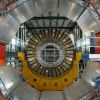
The World Doesn’t Need a New Gigantic Particle Collider
It would cost many billions of dollars, the potential rewards are unclear—and the money could be better spent researching threats such as climate change and emerging viruses
-
 +2 +1
+2 +1A dark matter experiment's unexpected result may signal new particles
An excess of events spotted in the XENON1T experiment could be signs of solar axions or weird, new properties of neutrinos, but not dark matter itself.
-
 +18 +1
Physicists exploit a quantum rule to create a new kind of crystal
Cold atoms can form crystals as a result of the Pauli exclusion principle.
-
 +9 +1
+9 +1Cosmic rays may have left indelible imprint on early life, Stanford physicist says
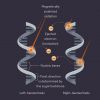
Before there were animals, bacteria or even DNA on Earth, self-replicating molecules were slowly evolving their way from simple matter to life beneath a constant shower of energetic particles from space. In a new paper, a Stanford professor and a former post-doctoral scholar speculate that this interaction between ancient proto-organisms and cosmic rays may be responsible for a crucial structural preference, called chirality, in biological molecules. If their idea is correct, it suggests that all life throughout the universe could share the same chiral preference.
-
 +4 +1
+4 +1Physicists Just Built The First Working Prototype Of A 'Quantum Radar'
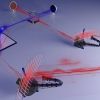
Quantum entanglement – that strange but potentially hugely useful quantum phenomenon where two particles are inextricably linked across space and time – could play a major role in future radar technology.
-
 +21 +1
Biggest cosmic mystery 'step closer' to solution
Stars, galaxies, planets, pretty much everything that makes up our everyday lives owes its existence to a cosmic quirk. The nature of this quirk, which allowed matter to dominate the Universe at the expense of antimatter, remains a mystery. Now, results from an experiment in Japan could help researchers solve the puzzle - one of the biggest in science.
-
 +21 +1
Something Weird Just Happened That We Can't Really Explain With Existing Physics
Scientists have proposed a new kind of subatomic particle to explain another particle’s mysterious disintegration. The kaon, a special case of meson particle, is made of one quark and one antiquark. All are part of the overall family called hadrons. When kaon particles decay, a very rare few undergo a change that has baffled scientists. Can it be explained by existing physics at all?
-
 +20 +1
A New Experiment Hopes to Solve Quantum Mechanics' Biggest Mystery
Physicists will try to observe quantum properties of superposition—existing in two states at once—on a larger object than ever before.
-
 +13 +1
New boson appears in nuclear decay, breaks standard model
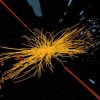
Weird electron-positrons from decaying beryllium and helium hint at new boson.
-
 +24 +1
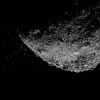
No One Knows Why Rocks Are Exploding From Asteroid Bennu
For the last year, NASA’s OSIRIS-REx spacecraft has been circling a large asteroid named Bennu that regularly passes uncomfortably close to Earth. The spacecraft has been painstakingly mapping the asteroid’s rocky surface using a suite of cameras and other instruments that will help it determine where to land next year. Once NASA selects a final landing site, OSIRIS-REx will kiss Bennu just long enough to scoop up a sample to bring back to Earth in 2023.
-
 +13 +1
Is This What Quantum Mechanics Looks Like?
-
 +17 +1
Heating by Cooling: Resolving a Fusion Paradox
The field of magnetic fusion research has mysteries to spare. How to confine turbulent plasma fuel in a donut-shaped vacuum chamber, making it hot and dense enough for fusion to take place, has generated questions — and answers — for decades.
-
 +13 +1
Physicists Detect Strange Electron Pairs Acting as a Brand New State of Matter
Under the right circumstances, individual electrons can form partnerships that allow them to zip effortlessly through special materials called superconductors - letting them conduct electrical current without resistance.
-
 +13 +1
A Strange New Higgs Particle May Have Stolen the Antimatter from Our Universe
Why our universe is swirling with more matter than its bizarre counterpart antimatter is one of the most perplexing puzzles of modern physics.
-
 +4 +1
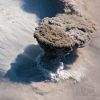
+4 +1This sulfur-spewing Russian volcano is turning sunsets purple
Sunrise and sunset chasers discovered something odd this summer: In rural Colorado and the rest of the Northern Hemisphere, Earth’s daily light shows were turning purple. Now, weather balloons probing the stratosphere have traced the mysterious purple light to a volcanic eruption in Russia.
-
 +17 +1
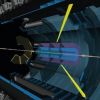
Light can scatter from light, CERN physicists confirm
ATLAS collaboration uses neural network to make discovery-level measurement of photon–photon interactions
Submit a link
Start a discussion