





















-
 +18 +1
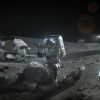
NASA still targeting moon's south pole for 2024 crew landing
NASA is definitely targeting the moon's south pole for a crewed landing in 2024 — but that timeline will be difficult to achieve if Congress doesn't open its purse strings, and fast, agency chief Jim Bridenstine said. During a presentation with NASA's Lunar Exploration Analysis Group last Monday (Sept. 14), Bridenstine seemed to suggest that the agency is open to a more equatorial site for the 2024 touchdown, a key milestone in NASA's Artemis program of crewed lunar exploration.
-
 +13 +1
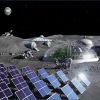
Mining on Moon: NASA in Market for Lunar Rocks, to Pay up to $25,000 for Each Sample
Are you interested in mining on the Moon? The National Aeronautics and Space Administration (NASA) will pay you anywhere between $15,000 to $25,000 for lunar rocks, the agency has announced. However, this is definitely not for individuals who possess Moon rocks bought from an auction or even eBay. NASA through this proposal wants to attract companies to explore commercial mining on the Moon. Thus, it expects only commercial entities to go to the Moon and collect lunar rocks by 2024.
-
 +18 +1
Could a Dragon spacecraft fly humans to the Moon? It’s complicated
On a recent Sunday afternoon, a black-and-white spacecraft raced through the atmosphere, ionizing molecules, and creating a plasma inferno. Amidst this fireball, two astronauts sheltered within the small haven of Dragonship Endeavour, as its carbon-based heat shield crisped and flaked away.
-
 +4 +1
+4 +1How the Apollo missions transformed our understanding of the Moon’s origin
Where did the Moon come from? The origin of our cosmic neighbor is a fundamental question in planetary science. From Galileo’s first telescopic observations of the Moon to humans walking on its surface, our understanding of its origins has come a long way—yet it is far from complete.
-
 +3 +1
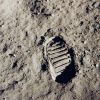
+3 +1Space Digest – The Apollo Moon landings
In what is considered to be the biggest technological leap of all time, NASA successfully landed twelve astronauts on the Moon between 1969 to 1972. Naturally, there is a lot of Apollo content on the web, including an extensive set of NASA documents. Since all of it can get pretty overwhelming, I’ve compiled a curated list of Apollo content for you to enjoy.
-
 +2 +1
+2 +1Our Moon could escape Earth’s orbit and become a "ploonet"
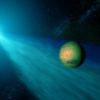
Our Moon might not always be the dedicated companion to Earth that it is now. An international team of researchers has proposed a hypothetical new type of world it calls a “ploonet”: a former moon that escaped its host planet’s orbit and began circling its host star instead. The team thinks ploonets could explain several unusual astronomical phenomena — and that our own Moon could one day join their ranks.
-
 +14 +1
The History and Future of Telescopes on the Moon
For generations, astronomers have dreamed of building telescopes on the lunar farside. And that dream may soon be a reality.
-
 +14 +1
Astronauts may be able to make cement using their own pee
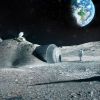
Future astronauts could make lunar buildings out of moon dust and pee. That’s the suggestion of chemist Anna-Lena Kjøniksen and her colleagues, who made a cement from urea — a major component of urine — and faux lunar soil. When humans take up long-term residence on other planets or the moon, they will need to pack light, in part because shipping materials from Earth is expensive. NASA has estimated that every pound of material sent into orbit around the Earth costs around $10,000.
-
 +4 +1
+4 +1NASA considers installing a giant radio telescope on the Moon crater
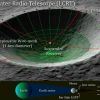
The Diaphragm Global Radio Telescope (FAST), with a 500-meter diameter in Guizhou, China, was tested in 2016 after its 5-year construction phase and was launched earlier this year. Giant radio telescope, which is said to contribute to studies on life research in space, “China’s eye in the sky” It is called.
-
 +1 +1
+1 +1What is the effect of a full moon (purnima) on the human body and animals?
Purnima or full moon day have great effects on humans and animals. Read more to understand the impact and significance of Purnima vrat in detail.
-
 +18 +1
If the moon were only one pixel
A tediously accurate map of the solar system.
-
 +23 +1
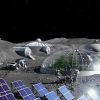
Making air from Moon dust: Scientists create a prototype oxygen plant
Scientists have created a prototype "lunar oxygen plant" by testing a method for extracting oxygen from imitation Moon rocks that could be invaluable for lunar settlements.
-
 +3 +1
+3 +1Marketing the Moon: How PR made the lunar landing a cultural moment
NASA's bold choices to open the Apollo Program for the world to see made the Moon landing humanity's first truly viral moment. But it could have instead ended in humiliation.
-
 +3 +1
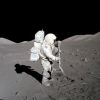
+3 +1The nitty gritty of Moon soil
US scientists have started making a very detailed analysis of Moon rocks and soil – atom by atom. They say that not only allows them to find things that might otherwise be missed, it also ensures they make good use of a limited supply of precious raw material that hasn’t been replenished since Apollo 17 returned to Earth in 1972.
-
 +17 +1
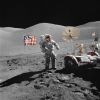
A Moon Landing In 2024? NASA Says It'll Happen, Others Say: No Way
NASA is at a critical juncture in its push to get people back to the moon by 2024, with key decisions expected within weeks. This effort to meet an ambitious deadline set by the Trump administration last year faces widespread skepticism in the aerospace community, even as the new head of human spaceflight at NASA insists that it can succeed.
-
 +16 +1
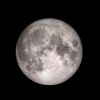
This Marvelous Machine Splits Moon Dust Into Oxygen and Metal
Like the settlers of old, space explorers will live off the land. But if self-sufficiency on Earth is difficult, it’s orders of magnitude more challenging in space, where there are no trees to build shelter, no plants and animals to eat, no water to drink, and no breathable air.
-
 +21 +1
NASA wants to grow a Moon base out of mushrooms
"Right now, traditional habitat designs for Mars are like a turtle — carrying our homes with us on our backs — a reliable plan, but with huge energy costs."
-
 +14 +1
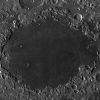
Big volcanic bump unlike anything seen before found on the moon
Scientists scouring the lunar surface for clues to past impact rates found a bonus feature that has geologists "thoroughly confused."
-
 +23 +1
How brightly the moon glows is a mystery, but maybe not for long
The best estimates for the moon’s brightness are still somewhat unsure. A new experiment is trying to fix that.
-
 +2 +1
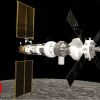
+2 +1Europe keen to demonstrate Moon ambitions
The European Space Agency (Esa) will show its commitment to the new wave of lunar exploration when member-state research ministers meet in Seville, Spain, next week. The politicians are expected to commit hundreds of millions of euros to fund technologies that will support the US-led Artemis project to return humans to the Moon.
Submit a link
Start a discussion