





















-
 +3 +1
+3 +1Reef-Building Corals Transmit Epigenetic Adaptations to Their Offspring That Can Combat the Effects of Global Warming
For the first time, a team of marine biology and environmental genomics researchers at NYU Abu Dhabi (NYUAD) and King Abdullah University of Science and Technology (KAUST) have demonstrated that epigenetic modifications in reef-building corals can be transmitted from parents to their offspring. This discovery, reported in a new study in the journal Nature Climate Change, not only enhances the biological understanding of corals, it also opens up new approaches to stem the loss of this foundation species of marine ecosystems.
-
 +1 +1
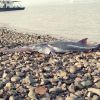
+1 +1Chinese paddlefish, one of world's largest fish, declared extinct
The Chinese paddlefish and its close relatives have been around for at least 200 million years. The species, reaching up to 23 feet in length, survived unimaginable changes and upheavals, such as the mass extinction that killed the dinosaurs and marine reptiles like plesiosaurs that it swam alongside. In its time, flowering plants evolved, and came to populate the shores of its ancestral home, the Yangtze River, in modern-day China.
-
 +23 +1
Thousands of 'penis fish' appear on California beach
Fat innkeeper worms typically burrow under the sand but recent storms have swept away layers, leaving them exposed.
-
 +4 +1
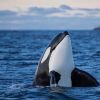
+4 +1Great White Sharks Are Completely Terrified of Orcas
A new study shows the apex predators will flee their hunting grounds and won't return for up to a year when killer whales pass by
-
 +19 +1
Oceans running out of oxygen say scientists
Climate change and nutrient pollution are driving the oxygen from our oceans, and threatening many species of fish. That's the conclusion of the biggest study of its kind, undertaken by conservation group IUCN. While nutrient run-off has been known for decades, researchers say that climate change is making the lack of oxygen worse. Around 700 ocean sites are now suffering from low oxygen, compared with 45 in the 1960s.
-
 +13 +1
The Blood Pipe Is Still Spewing Blood After Nearly Two Years
Newly-obtained footage shows the underwater fish farm pipe in British Columbia is still churning out virus-infected blood and guts.
-
 +4 +1
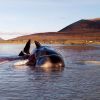
+4 +1Sperm whale found dead with 220 pounds of trash in its stomach
A young sperm whale that died after becoming stranded on a Scottish island last week had a ball of debris weighing roughly 100 kilograms (220 pounds) in its stomach, according to an organization that carried out a postmortem on the animal. The juvenile male whale died Thursday on Seilebost beach on the Isle of Harris in the Outer Hebrides, according to Dan Parry, the administrator of a Facebook page that aims to keep nearby Luskentyre beach free of trash.
-
 +18 +1
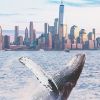
NYC’s Whale Population is Making a Comeback - Here’s Why.
The once struggling New York Harbor whale population is now rebounding with water clean-up initiatives and these faithful citizen scientists’ efforts.
-
 +18 +1
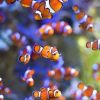
Losing Nemo: Clownfish 'cannot adapt to climate change' due to their specific mating habits, scientists say
The star of Pixar's blockbuster "Finding Nemo" may be about to vanish again - this time for good - as its peculiar mating habits put it at risk from climate change, scientists said on Tuesday. They observed the vibrantly coloured clownfish - which live in anemones - for more than 10 years around Kimbe Island off eastern Papua New Guinea.
-
 +23 +1
For the First Time, Scientists Record the Slow Beat of a Blue Whale's Heart
The largest heart on earth — a 400-pound blood-pumping machine — beats about 13 times a minute. That’s according to scientists' first recordings of the heart of a blue whale. The research team documented the rhythms thanks to a few suction cups that kept a heart rate monitor attached to a whale swimming and diving around California's Monterey Bay.
-
 +14 +1
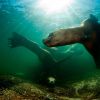
Deadly virus spreads among marine mammals as Arctic ice melts
When sea otters in Alaska were diagnosed with phocine distemper virus (PDV) in 2004, scientists were confused. The pathogen in the Morbillivirus genus that contains viruses like measles had then only…
-
 +16 +1
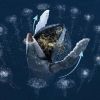
Humpback whales use their flippers to swat salmon into their mouths
Humpback whales use their flippers to create a barrier that traps gathered prey, which they can then usher towards their mouths by swatting the water. Using aerial photography and filming, researchers were able to capture this foraging strategy for the first time.
-
 +14 +1
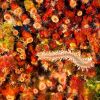
Some corals ‘killed’ by climate change are now returning to life
Reef-building corals can make unexpected recoveries from climate change-induced destruction. It turns out that some corals only look dead when exposed to unusually warm water. Instead, the coral’s polyps shrink and retreat into their hard skeleton, making the reef appear dead, before recolonising the skeleton when conditions are better. It is a survival strategy never seen before in today’s corals – but it may not help the corals as the climate continues to change.
-
 +16 +1
Red Tide That Plagued Florida for 15 Months Is Back
The red tide that plagued Florida for 15 months — killing marine life and causing respiratory problems for humans — is back, The Associated Press reported Saturday.
-
 +15 +1
Fish experience pain with ‘striking similarity’ to mammals - University of Liverpool News
A new University of Liverpool study has concluded that the anglers’ myth ‘that fish don’t feel pain’ can be dispelled: fish do indeed feel pain, with a similarity to that experienced by mammals including humans.
-
 +17 +1
Whale populations in New York Harbor are booming—here's why
“There’s a spout!” naturalist Celia Ackerman calls excitedly to the captain. “Behind the green buoy!” It’s half an hour into a whale-watching cruise aboard the 95-foot American Princess, and we’re not in Hawaii or Alaska—we’re in New York Harbor, within sight of Coney Island and the Brooklyn shoreline.
-
 +3 +1
+3 +1The tiny but mighty Olympia oyster regains a foothold in Washington waters
With a substantial boost from fans of their historical, ecological — and culinary — contributions, the West Coast’s only native oyster is staging a powerful comeback.
-
 +20 +1
Antarctica scientists find bizarre creature 3,500m under ice: ‘Like nothing seen before'
ANTARCTICA scientists made a stunning discovery 3,500 metres below the ice, leading one to state they had "never seen anything like this before," a documentary revealed.
-
 +2 +1
+2 +1World's fastest shark added to list of vulnerable species to regulate trade
A record number of countries have voted to protect the world’s fastest shark from extinction in a move welcomed by conservationists as a “wake up call” for fishing nations who have ignored the endangered species’ decline.
-
 +17 +1
Cuba drastically reforms fishing laws to protect coral reef, sharks and rays
Cuba has introduced sweeping reforms of its fishing laws in a move seen as smoothing the way for possible collaboration with the US on protecting their shared ocean, despite Donald Trump’s policy of reversing a thaw in relations.
Submit a link
Start a discussion