

















-
 +19 +1
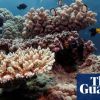
Unsustainable fishing worsens threats to Great Barrier Reef
Under-regulated fishing along the Great Barrier Reef is putting the world’s biggest coral reef system at further risk as it deals with repeated mass bleaching events, the Australia government’s marine park authority has found. Conservationists and recreational fishing groups have told Guardian Australia the Queensland government’s rollout of major fisheries reforms, designed to tackle the issues along the reef, has stalled.
-
 +16 +1
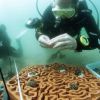
Hong Kong's terracotta tile army marches to the rescue for coral
In 2018, a super-typhoon destroyed 80% of the corals in Hoi Ha Wan bay off the Sai Kung peninsula in Hong Kong. In the city’s strongest storm since records began, winds reached 155mph (250km/h) and battered the reefs, leaving behind mostly scattered debris and broken coral skeletons. A few coral species survived, but these will likely take decades to regrow to their former state.
-
 +10 +1
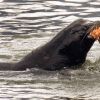
US allows killing sea lions eating at-risk Northwest salmon
U.S. authorities on Friday gave wildlife managers in Washington, Oregon and Idaho permission to start killing hundreds of sea lions in the Columbia River basin in hopes of helping struggling salmon and steelhead trout.
-
 +11 +1
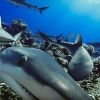
Grey reef sharks form long-term friendships, study reveals
Grey reef sharks work together and form social groups that can last for years, according to a study. Scientists who monitored a shark population off the remote Palmyra Atoll, to the south of Hawaii in the Pacific Ocean, noticed the predators formed tangled webs of social bonds.
-
 +4 +1
+4 +1Rare blue lobster sent to Ohio zoo after discovery at seafood restaurant
A rare blue lobster escaped the fate that awaited it after the Ohio restaurant it was discovered at sent it off to a zoo instead of a boiling pot in its kitchen. The curious crustacean was delivered to a Red Lobster restaurant in Cuyahoga Falls last week. However, an employee quickly recognized one of the lobsters did not look like the others. Turns out it was a 1 in 2 million blue lobster (the shell’s unique coloring is caused by a genetic anomaly).
-
 +17 +1
Like Humans, Beluga Whales Form Social Networks Beyond Family Ties
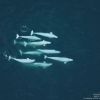
A researcher from FAU’s Harbor Branch and collaborators are the first to uncover the role kinship plays in complex groupings and relationships of beluga whales in 10 locations across the Arctic.
-
 +4 +1
+4 +1New study sparks fresh call for seagrass preservation
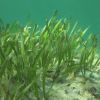
An increase in carbon dioxide emissions equivalent to 5 million cars a year has been caused by the loss of seagrass meadows around the Australian coastline since the 1950s. The stark finding was made possible by new modelling done by marine scientists at the Centre for Marine Ecosystems Research at Edith Cowan University (ECU) in Western Australia.
-
 +21 +1
Hundreds of dead dolphins washing up on French coast
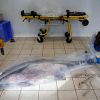
Dead dolphins are washing up on France’s Atlantic coast in such high numbers that local populations of the mammals are at risk, according to marine biologists. The overwhelming majority of dolphins are found drowned in the nets of fishing trawlers, and post mortems often show fractures, broken tails and flippers, and deep incisions cut into their skin by the nets.
-
 +19 +1
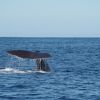
Blue Whales Make Rare Appearance Off San Francisco Coast, Prompting Warning For Ships
The Northern California coast tends to get its fair share of sightings of humpback whales and gray whales, but the largest mammals on earth, blue whales, don't do swim-bys quite so often as other species. This year, all rules are out the window.
-
 +9 +1
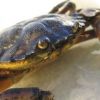
+9 +1Crabs feel pain
Plunge a live crab into a pot of boiling water, and it’s likely to try to scramble out. Is the crab’s behavior simply a reflex, or is it a sign of pain? Many scientists doubt that any invertebrate (or fish) feels pain because they lack the areas in the brain associated with human pain.
-
 +2 +1
+2 +1'Quietly Putting Hundreds of Species at Risk,' Trump Opens 5,000 Square Miles of Atlantic Ocean to Commercial Fishing
"Ancient and slow-growing deep sea corals, endangered large whales and sea turtles, and an incredible array of fish, seabirds, sharks, dolphins and other wildlife—these are the species and habitats that will pay the price."
-
 +13 +1
Alarm Bells Over Rise of Antimicrobial Resistance in Aquaculture
Spain's daily coronavirus death toll dropped to 288 on Sunday, the lowest since March 20, as the country eased its lockdown to allow children outside for the first time in six weeks. The health ministry said the figure dropped from 378 on Saturday and brought Spain's total toll to 23,190, the third highest number of deaths after the United States and Italy. In total, nearly 100,000 people have recovered. Spain has confirmed, via polymerase chain reaction (PCR) test, a total of more than 207,000 cases.
-
 +2 +1
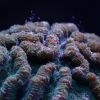
+2 +1The Florida Aquarium just made a breakthrough that will help save the third largest coral reef in the world
Ridged cactus coral are just one of a variety of species rescued from Florida's waters after coral reefs in the state began undergoing a major disease outbreak that started in 2014. The aquarium has successfully reproduced them in human care.
-
 +15 +1
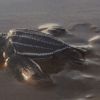
Ten years to save world’s most threatened sea turtle population
The warning in a new study follows the news that no leatherback turtle nests have been recorded in key Pacific coast nesting sites for the second year.
-
 +16 +1
Saving ocean life within a human generation is 'largely achievable' say scientists
A “substantial” recovery of life in the oceans could be achieved by 2050 if major threats such as climate change are dealt with, a study has said. The oceans are important sources of food, water and clean energy and key for tackling global warming as they store heat and carbon, but many marine species, habitats and ecosystems have suffered catastrophic declines.
-
 +21 +1
We should stop buying fish until the industry stops slaughtering dolphins
How many people want dolphins killed? Apart from the psychopath shooting them in Florida, and the Japanese hunters slaughtering them every year in Taiji cove, I would hazard a guess at none. They are perhaps the world’s most loved wild animals. Yet, every day, dolphin killers form an orderly queue, at supermarket checkouts in the UK and around the world. If you are buying fish, and there is no clear and watertight guarantee, you are likely to be complicit in something that would revolt you.
-
 +3 +1
+3 +1Sea turtles think plastic smells like food
The push against single-use plastic has some emotive mascots, including the iconic turtle with a straw in its nose. The working hypothesis about why turtles are so attracted to plastic is that plastic drifting in the ocean can look a lot like jellyfish. But how does that explain turtles caught up in, and eating, other kinds of plastic, like that straw?
-
 +4 +1
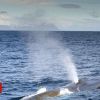
+4 +1'Astonishing' blue whale numbers at South Georgia
Scientists say they have seen a remarkable collection of blue whales in the coastal waters around the UK sub-Antarctic island of South Georgia. Their 23-day survey counted 55 animals - a total that is unprecedented in the decades since commercial whaling ended. South Georgia was the epicentre for hunting in the early 20th Century. The territory's boats with their steam-powered harpoons were pivotal in reducing Antarctic blues to just a few hundred individuals.
-
 +4 +1
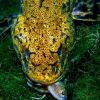
+4 +1Return of the burbot: 'great lost fish' to be reintroduced to UK
Forget dreams of wolves, bears or lynx – the next animal to be restored to the British countryside could be a river bottom-dwelling fish that resembles a giant tadpole. The burbot, much-maligned for its unprepossessing appearance with a fleshy appendage dangling from its chin, was last sighted in British rivers in 1969.
-
 +14 +1
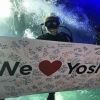
'Incredible journey': Loggerhead turtle, released from 20 years in captivity, swims 37,000km to Australia
An 180 kilogram turtled named Yoshi has excited scientists, who tracked her remarkable journey halfway around the world after she was released from 20 years in captivity.
Submit a link
Start a discussion