





















-
 +22 +1
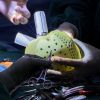
Major step forward in fabricating an artificial heart, fit for a human
Because the heart, unlike other organs, cannot heal itself after injury, heart disease—the top cause of mortality in the U.S.—is particularly lethal. For this reason, tissue engineering will be crucial for the development of cardiac medicine, ultimately leading to the mass production of a whole human heart for transplant.
-
 +23 +1
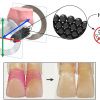
Shapeshifting microrobots can brush and floss teeth
In a proof-of-concept study, researchers from the School of Dental Medicine and School of Engineering and Applied Science shows that a hands-free system could effectively automate the treatment and removal of tooth-decay-causing bacteria and dental plaque.
-
 +21 +1
The Future of Leather: How Pineapple Leaves, Cacti, and Mycelium Are Revolutionizing the Industry
Leather is everywhere – in our shoes, our purses and luggage, our winter jackets and stylish furniture – but its effect is seen globally. To create the leather for our clothing, homewares, and other purposes, billions of cows are slaughtered each year. The livestock sector – which produces both food products and leather – is the biggest use of agricultural land worldwide. Grazing land and farmed feed crops for cattle result in deforestation, eliminating vital carbon sinks, destroying ecosystems, and harming nearby communities.
-
 +20 +1
iPhone's Future Could Depend on These Breakthrough Technologies
For Lucy Edwards, a blind, UK-based journalist and broadcaster, maintaining a social distance in public during the height of the pandemic was challenging. That's why she tried People Detection, a feature within the iPhone's Magnifier app that uses the iPhone 12 Pro's and 13 Pro's lidar sensor to detect when others are nearby.
-
 +17 +1
The first CRISPR gene-editing drug is coming—possibly as soon as next year
Until recently, CRISPR—the gene-editing technology that won scientists Jennifer Doudna and Emmanuelle Charpentier the 2020 Nobel Prize in chemistry—sounded more like science fiction than medicine; lab-created molecular scissors are used to snip out problematic DNA sections in a patient’s cells to cure them of disease. But soon we could see regulators approve the very first treatment using this gene-editing technology in an effort to combat rare inherited blood disorders that affect millions across the globe.
-
 +19 +1
Wearable muscles
Researchers at ETH Zurich have developed a wearable textile exomuscle that serves as an extra layer of muscles. They aim to use it to increase the upper body strength and endurance of people with restricted mobility.
-
 +23 +1
Artificial photosynthesis can produce food without sunshine
Artificial photosynthesis has been developed by scientists as a means of producing food without of the necessity for organic photosynthesis. The process turns water, energy, and carbon dioxide into acetate over the course of two electrocatalytic steps. Then, in the dark, organisms that produce food use acetate. The conversion of sunlight into food might be up to 18 times more effective with the hybrid organic-inorganic system.
-
 +19 +1
Scientists unveil stem cell research breakthrough
Chinese scientists have discovered a drug cocktail capable of converting a certain type of stem cell into a much more potent version that has the potential to grow into a complete organism on its own, according to a study published in the latest issue of the journal Nature this week.
-
 +24 +1
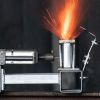
A Revolutionary New Battery Is Nearly Here, Scientists Say
Faster-charging, safer, longer-lasting solid-state batteries are on their way. The only question now is: How soon until we can plug in?
-
 +11 +1
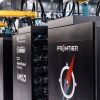
AMD-Powered Frontier Supercomputer Breaks the Exascale Barrier, Now Fastest in the World
The AMD-powered Frontier supercomputer is now the first officially recognized exascale supercomputer in the world, topping 1.102 ExaFlop/s during a sustained Linpack run. That ranks first on the newly-released Top500 list of the world's fastest supercomputers as the number of AMD-powered systems on the list has expanded significantly this year.
-
 +20 +1
6G will hit the market around 2030 amid the expansion of the 'industrial metaverse,' Nokia CEO says
6G networks will hit the market around 2030 as the "industrial metaverse" expands in the tech industry, Pekka Lundmark, the president and CEO of telecommunications company Nokia, has predicted.
-
 +22 +1
I tried Google's text-to-image AI and was shocked by the results
Text-to-image artificial intelligence programs aren’t anything new. Indeed, existing neural networks like DALL-E have impressed us with their ability to generate simple, photorealistic images from brief yet descriptive sentences. But this week I was introduced to Imagen(opens in new tab). Developed by Google Research’s Brain Team, Imagen is an AI similar to that of DALL-E and LDM. However, Brain Team’s aim with Imagen is to generate images with a greater level of accuracy and fidelity, using that same short and descriptive sentence method to create them.
-
 +12 +1
Smart mushroom farming as a serious alternative to meat
The Austrian-based start-up ATTA wants to make mushrooms a serious meat alternative - by building mushroom-growing facilities that are smart, simple and affordable.
-
 +16 +1
Practical Power Beaming Gets Real
Wires have a lot going for them when it comes to moving electric power around, but they have their drawbacks too. Who, after all, hasn’t tired of having to plug in and unplug their phone and other rechargeable gizmos? It’s a nuisance.
-
 +2 +1
+2 +1World’s largest vats for growing ‘no-kill’ meat to be built in US
The building of the world’s largest bioreactors to produce cultivated meat has been announced, with the potential to supply tens of thousands of shops and restaurants. Experts said the move could be a “gamechanger” for the nascent industry. The US company Good Meat said the bioreactors would grow more than 13,000 tonnes of chicken and beef a year. It will use cells taken from cell banks or eggs, so the meat will not require the slaughter of any livestock.
-
 +13 +1
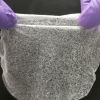
Cheap gel film pulls buckets of drinking water per day from thin air
Water scarcity is a major problem for much of the world’s population, but with the right equipment drinking water can be wrung out of thin air. Researchers at the University of Texas at Austin have now demonstrated a low-cost gel film that can pull many liters of water per day out of even very dry air.
-
 +17 +1
How robots can help build offshore wind turbines more quickly
Trying to attach a million-dollar, 60-ton wind turbine blade to its base is challenging in any circumstance — getting the angle wrong by even a fraction of a degree could affect the machine’s ability to generate power. Now imagine trying to do it in the middle of the North Sea, one of the world’s windiest spots, with waves swelling around you. It’s like tying a thread to a kite at the beach and then trying to put it through the eye of a needle.
-
 +4 +1
+4 +1Low-cost, battery-like device absorbs CO2 emissions while it charges
Researchers have developed a low-cost device that can selectively capture carbon dioxide gas while it charges. Then, when it discharges, the CO2 can be released in a controlled way and collected to be reused or disposed of responsibly.
-
 +19 +1
How Fast-Growing Algae Could Enhance Growth of Food Crops
A team including Professor Niall Mangan and researchers from Princeton University used computer modeling to identify the necessary features to support enhanced carbon fixation by an organelle called the pyrenoid, found in green algae, providing a blueprint for engineering this structure into crop plants.
-
 +10 +1
The wonder material graphene may have found its killer app
Close to where the college rowing teams of Britain’s second-oldest university practise their strokes along the River Cam, a grey shipping container sits outside a business unit waiting to be dispatched to Abu Dhabi. Inside is a piece of equipment devised by a firm called Levidian Nanosystems. In a deal announced on May 16th with Zero Carbon Ventures, a firm in the United Arab Emirates, Levidian will ship 500 more such units to the region over the next five years.
Submit a link
Start a discussion