





















-
 +18 +1
Blue Origin’s rocket exploded, but the capsule escape system worked a charm
One minute and four seconds after the launch of an uncrewed flight of Blue Origin's New Shepard launch system on Monday, September 12, the rocket suffered an anomaly. Explosive footage shows the New Shepard capsule's solid rocket escape system fire up to safely eject the capsule away from the rocket's first stage.
-
 +15 +1
Nuclear fusion reactor sustains plasma at 100 million C for 30 seconds
Scientists in South Korea have managed to get a nuclear fusion reactor to operate a stable plasma for 30 seconds, marking another promising step toward unlimited clean energy. Nuclear fusion, a process that physicists and engineers have been working on for decades, involves merging two atomic nuclei to form one larger nucleus under intense heat and pressure.
-
 +10 +1
NASA's New Gadget Creates Oxygen On Mars
Finally, NASA has come up with the news which could possibly be a stepping stone for human life on Mars. A device called MOXIE may help in sustaining human life by producing oxygen. NASA has been exploring Mars’s climate for the past few decades. They, along with SpaceX CEO Elon Musk, have hinted at the possibility of life on Mars.
-
 +26 +1
New contra-rotating turbine design produces double the energy of the world's largest turbine
Norway-based firm World Wide Wind is developing a new type of floating, vertical-axis wind turbine (VAWT) that it believes will radically change, and improve, the way we harness the wind's powers, a report from New Atlas reveals. Their VAWTs employ two sets of contra-rotating blades to produce double the output of today's biggest turbines, the company says.
-
 +24 +1
The world's biggest offshore wind farm is now fully operational
A facility described by Danish energy firm Orsted as the “world’s biggest offshore wind farm” is now fully operational, with its 165 turbines set to help power in excess of 1.4 million U.K. homes.
-
 +30 +1
Wave-riding generators promise the cheapest clean energy ever
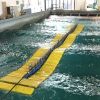
Sea Wave Energy Ltd (SWEL) has been working for more than a decade on a floating wave energy device it calls the Waveline Magnet. With several prototypes tested on- and off-shore, the company claims it delivers "ultra low cost," with high output.
-
 +18 +1
Soon electric vehicles could charge faster than your iPhone
Consumers could charge electric vehicle batteries up to 90 percent in ten minutes within five years, far surpassing the best superchargers in existence.
-
 +4 +1
+4 +1This Startup's Modified Trees Grow Faster, Store More Carbon
It doesn't take a scientist to understand why trees are so crucial in the fight to curb climate change. They can absorb and store carbon dioxide, a key greenhouse gas. But a Bay Area startup thinks trees can do better. Living Carbon has developed a technique to genetically modify trees that can grow faster, and store more carbon.
-
 +13 +1
The world's first hydrogen-powered passenger trains are here
The future of environmentally friendly travel might just be here -- and it's Germany that's leading the charge, with the first ever rail line to be entirely run on hydrogen-powered trains, starting from Wednesday.
-
 +20 +1
We Need to Talk About How Good A.I. Is Getting
We’re in a golden age of progress in artificial intelligence. It’s time to start taking its potential and risks seriously.
-
 +23 +1
Engineers fabricate a chip-free, wireless electronic “skin”
MIT engineers fabricated a chip-free, wireless electronic “skin.” The device senses and wirelessly transmits signals related to pulse, sweat, and ultraviolet exposure, without bulky chips or batteries.
-
 +4 +1
+4 +1Scientists have found a way to break down toxic ‘forever chemicals’
Scientists believe they found a solution to ripping apart so-called “forever chemicals” - human-made chemicals known as PFAS - which are now believed to be pervasive around the world. “Forever chemicals” don’t normally occur in nature and don’t break down in the environment, posing a risk to human health as well as to wildlife.
-
 +21 +1
Need more air in space? Magnets could yank it out of water.
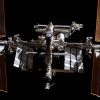
Humans tend to take a lot for granted, even something as simple as a breath of fresh air. It’s easy to forget how much our bodies depend on oxygen—until it becomes an invaluable resource, such as aboard the International Space Station. Although astronauts are typically sent to space with stores of necessary supplies, it’d be too costly to keep sending tanks of breathable air up to the station. Instead the oxygen that astronauts rely on for primary life support is created through a process called electrolysis, wherein electricity is used to split water into hydrogen gas and oxygen gas.
-
 +23 +1
Nanomaterials pave the way for the next computing generation
Technology on the nanometre scale could provide solutions to move on from the solid-state era. Solid-state computing has had a long run since the 1950s, when transistors began replacing vacuum tubes as the key component of electronic circuits.
-
 +17 +1
Ignition confirmed in a nuclear fusion experiment for the first time
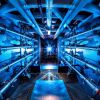
We have ignition. An analysis has confirmed that an experiment conducted in 2021 created a fusion reaction energetic enough to be self-sustaining, which brings it one step closer to being useful as a source of energy.
-
 +16 +1
Drug price controls are a dance with the devil: short-term savings will be overwhelmed by loss of innovation
Democrats have sent the legislative text of a sweeping proposal for drug price controls to the U.S. Senate parliamentarian, who may report on Monday whether the provisions qualify for the budget reconciliation process that allows lawmakers to evade a filibuster and pass a bill with a simple majority.
-
 +16 +1
The Inventor of Ibuprofen Tested the Drug on His Own Hangover
In retrospect, perhaps toasting the success of a new medication he helped invent with several shots of vodka in Moscow was not a good idea. However, it was too late to go back. English research scientist Stewart Adams was faced with the consequences of his actions: a serious hangover.
-
 +27 +1
How batteries will supercharge the renewable revolution
Renewables are a promising tool in the fight against climate change, but they have an essential bedfellow. “The only thing that’s holding those resources back from becoming 100 per cent of our total electricity generation is the ability to store that energy and dispatch it as needed,” Matt Harper, co-founder and CCO of Invinity Energy Systems, tells Euronews Green from the US.
-
 +15 +1
Major Step Forward In Fabricating An Artificial Heart, Fit For A Human
The future of cardiac medicine involves tissue engineering. It includes the creation of a human heart for transplant. Researchers at Harvard John A. Paulson School of Engineering and Applied Sciences (SEAS) have created the first biohybrid model of beating cardiac cells aligned helically. This model demonstrated that muscle alignment does, in fact, significantly increase the amount of blood the ventricle can pump with each contraction.
-
 +13 +1
This supercharged tree might help fight climate change
The problem with trees is that they are too slow. Part of the issue with catastrophic climate change is that, by some measures, an incredible amount of damage is already done. Even if all the coal-fired power plants were magically turned into wind and solar overnight, and all our cars were electric, all the greenhouse gases that we pumped into our atmosphere for 200 years would still be there.
Submit a link
Start a discussion