



















-
 +20 +2
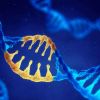
A New CRISPR Tool Flips Genes On and Off Like a Light Switch
CRISPRoff can cause a gene to stay silent for hundreds of generations, even when its host cells morph from stem cells into more mature cells.
-
 +26 +5
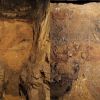
Neanderthal DNA extracted from cave dirt shows population movements 100,000 years ago
Where ancient humans lived — and when — can be unveiled using DNA extracted from sediment layers dug from cave floors.
-
 +26 +2
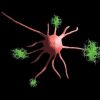
A Massive New Gene Editing Project Is Out to Crush Alzheimer’s
When it comes to Alzheimer’s versus science, science is on the losing side. Alzheimer’s is cruel in the most insidious way. The disorder creeps up in some aging brains, gradually eating away at their ability to think and reason, whittling down its grasp on memories and reality. As the world’s population ages, Alzheimer’s is rearing its ugly head at a shocking rate. And despite decades of research, we have no treatment—not to mention a cure.
-
 +18 +3
First videos to show the helix of 'dancing DNA' developed by scientists
Videos allowing us to see for the first time how small circles of DNA adopt dance-like movements inside a cell have been developed by researchers at universities in Yorkshire.
-
 +2 +1
+2 +1How Our Brutal Science System Almost Cost Us A Pioneer Of mRNA Vaccines
A doctor who witnessed the tribulations of mRNA vaccine pioneer Katalin Karikó warns that science is naturally hard, but the system that puts make-or-break financial pressures on American scientists makes it even harder.
-
 +1 +1
+1 +1Should You Blame Genes For Your Grades?
Can you blame your genes if you get bad grades? Why is educational achievement heritable?Comprehensive Minds to reveal the shocking truth!
-
 +19 +6
Biomarkers in fathers’ sperm linked to offspring autism
Biomarkers in human sperm have been identified that can indicate a propensity to father children with autism spectrum disorder. These biomarkers are epigenetic, meaning they involve changes to molecular factors that regulate genome activity such as gene expression independent of DNA sequence, and can be passed down to future generations.
-
 +23 +5
Now We Know Why Platypus Are So Weird - Their Genes Are Part Bird, Reptile, And Mammal
The first complete map of a platypus genome has just been released, and it's every bit as strange as you'd expect from a creature with 10 sex chromosomes, a pair of venomous spurs, a coat of fluorescent fur, and skin that 'sweats' milk.
-
 +12 +2
30 Years Since the Human Genome Project Began, What’s Next?
Eric Green, head of the nation’s top genomics research institute, looks back on how far the field has come and shares his bold vision for the future.
-
 +22 +4
Researchers restore lost sight in mice, offering clues to reversing aging
But many hurdles remain before approach can be tried in people
-
 +13 +1
The Epigenetic Secrets Behind Dopamine, Drug Addiction and Depression
New research links serotonin and dopamine not just to addiction and depression, but to the ability to control genes.
-
 +18 +3
A potential new treatment for premature aging diseases keeps stem cells fresh longer
The ends of our DNA, called telomeres, get shorter as we age. Our cells lose a bit of telomere every time they divide. This shortening is a normal and needed process that serves a protective function against cancer. This is because the older our cells get, the more likely they are to have accumulated damage or mutations that make them function incorrectly. Telomere shortening helps to take old cells that are reaching their “best before date” off the shelf before they can cause trouble.
-
 +10 +2
The curious DNA circles that make treating cancer so hard
Scientists are examining long-ignored extrachromosomal DNA to understand how cancer evolves resistance to drugs. Can the clues help us outfox cancer itself?
-
 +12 +1
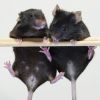
We discovered a missing gene fragment that's shedding new light on how males develop
A new finding in mice rewrites the textbook explanation of the male sex-determining gene, Sry. It might also help us better understand how males and females come to be.
-
 +13 +2
Genetics Steps In to Help Tell the Story of Human Origins
It’s not unusual for geochronologist Rainer Grün to bring human bones back with him when he returns home to Australia from excursions in Europe or Asia. Jawbones from extinct hominins in Indonesia, Neanderthal teeth from Israel, and ancient human finger bones unearthed in Saudi Arabia have all at one point spent time in his lab at Australian National University before being returned home.
-
 +23 +4
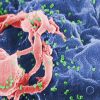
In a first, a person’s immune system fought HIV — and won
Some rare people may purge most HIV from their bodies, leaving only broken copies of the virus or copies locked in molecular prisons, from which there is no escape.
-
 +14 +1
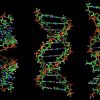
DNA from an ancient, unidentified ancestor was passed down to humans living today
A new analysis of ancient genomes suggests that different branches of the human family tree interbred multiple times, and that some humans carry DNA from an archaic, unknown ancestor. Melissa Hubisz and Amy Williams of Cornell University and Adam Siepel of Cold Spring Harbor Laboratory report these findings in a study published 6th August in PLOS Genetics.
-
 +3 +1
+3 +1Small Protein, Big Breakthrough for CRISPR Gene Editing
A new protein opens doors for gene editing by gaining access to hard-to-reach areas of the genome.
-
 +3 +1
+3 +1African American Genomes Yield Insight into Slavery Practices
A massive study finds that regional differences in how slaves were treated throughout the Americas are reflected in the DNA of present-day Americans of African descent.
-
 +12 +2
Neandertals may have had a lower threshold for pain
Pain is mediated through specialized nerve cells that are activated when potentially harmful things affect various parts of our bodies. These nerve cells have a special ion channel that has a key role in starting the electrical impulse that signals pain and is sent to the brain. According to a new study by researchers at the Max Planck Institute for Evolutionary Anthropology in Germany and the Karolinska Institutet in Sweden people who inherited the Neandertal variant of this ion channel experience more pain.
Submit a link
Start a discussion