





















-
 +21 +1
Three billion North American birds have vanished since 1970, surveys show
North America's birds are disappearing from the skies at a rate that's shocking even to ornithologists. Since the 1970s, the continent has lost 3 billion birds, nearly 30% of the total, and even common birds such as sparrows and blackbirds are in decline, U.S. and Canadian researchers report this week online in Science. "It's staggering," says first author Ken Rosenberg, a conservation scientist at the Cornell University Laboratory of Ornithology.
-
 +3 +1
+3 +1Birds Are Vanishing From North America
The number of birds in the United States and Canada has declined by 3 billion, or 29 percent, over the past half-century, scientists find.
-
 +17 +1
US and Canada lose 3bn birds in 50 years
Scientists conclude the major factor is habitat loss driven by human activity.
-
 +33 +1
Trump just gutted the law that saved American bald eagles from extinction
Could this be any more symbolic?
-
 +3 +1
+3 +1'Days or months left' for porpoise species Vaquita as it nears extinction
The Vaquita species was only discovered in 1958, but within a few decades numbers have hit critical levels.
-
 +4 +1
+4 +1Fewer than 19 vaquita porpoises left – study
Calls for Mexico to crackdown on use of illegal fishing nets after further decline of species
-
 +29 +1
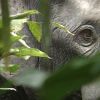
Elephant Extinction Will Raise Carbon Dioxide Levels in Atmosphere
One of the last remaining megaherbivores, forest elephants shape their environment by serving as seed dispersers and forest bulldozers as they eat over a hundred species of fruit, trample bushes, knock over trees and create trails and clearings. Their ecological impact also affects tree populations and carbon levels in the forest, researchers report, with significant implications for climate and conservation policies.
-
 +36 +1
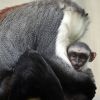
'The Numbers Are Just Horrendous.' Almost 30,000 Species Face Extinction Because of Human Activity
Rhino rays and seven species of primates are on the IUCN's Red List
-
 +10 +1
How Trump Could Make the Extinction Crisis Even Worse
Despite an alarming UN report that warns one million plant and animal species face extinction due to human activity, the Trump administration is poised to hasten species on their path to extinction by eroding critical wildlife protections. The UN’s landmark 1,500-page study, announced this week, warns that if we continue to destroy natural landscapes at rates “unprecedented in human history,” massive biodiversity loss will undermine food security, access to clean water, and sources of modern medicine by 2050.
-
 +3 +1
+3 +1Koalas are officially ‘functionally extinct’ and may be wiped out ‘within a generation’
KOALAS, we all love them. Show me someone who doesn’t want what’s best for a humble little koala and I’ll show you a liar. Despite this being the case, their numbers are declining and their future as a species looks to be in serious jeopardy.
-
 +6 +1
+6 +1Scientists warn a million species at risk of extinction
One million animal and plant species are at imminent risk of extinction due to humankind’s relentless pursuit of economic growth, scientists said on Monday in a landmark report on the devastating impact of modern civilization on the natural world.
-
 +27 +1
Civilization Is Accelerating Extinction and Altering the Natural World at a Pace ‘Unprecedented in Human History’
A dire United Nations report, based on thousands of scientific studies, paints an urgent picture of biodiversity loss and finds that climate change is amplifying the danger to humanity.
-
 +30 +1
Landmark UN Report to Show 'Transformational Change' Urgently Needed to Save Humanity and Natural World From Nightmarish Future
"Anyone who denies that we are in a human-induced extinction crisis is either lying or not paying attention." By Jon Queally.
-
 +2 +1
+2 +11 million species face extinction thanks to human activity, U.N. report says
The sixth mass extinction is coming. A draft report from the United Nations obtained by Agence France-Presse says that up to 1 million species of living organisms face extinction as a result of human influence. The report, which is set to be revealed on May 6, adds that the loss of biodiversity, while closely linked, poses "no less of a threat" than climate change. Deforestation has led to the loss of greenhouse gas-absorbing trees, polluted waters are killing protein-rich fish and limiting clean drinking water, and pollinating insects are dying rapidly.
-
 +23 +1
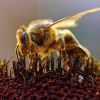
Wild Bee Population Collapses By 90% In New England, Study Warns
Researchers from the University of New Hampshire conducted a study to document declines in about 100 wild bee species critical to pollinating crops throughout New England. What they discovered, according to the study, was a collapse in the wild bee population across the state, reported AP.
-
 +3 +1
+3 +1‘When the Glaciers Disappear, Those Species Will Go Extinct’
America’s glaciers are losing ice as the world warms. That’s disrupting habitats for fish, insects and even bacteria.
-
 +33 +1
Earth could take 10 million years to recover from mass extinction caused by humans
Scientists investigating the possible effects of climate change have predicted it would take 10 million years for the diversity of species on our planet to recover after a mass extinction event. The authors of the paper published in the journal Nature Ecology and Evolution wanted to calculate how long it takes for the Earth to return to former levels of biodiversity following a mass extinction event. “Humanity is undeniably causing elevated rates of biodiversity loss through climate change, habitat destruction, invasive species introduction, and so on,” the authors warned in their study.
-
 +4 +1
+4 +1Regrowing tropical forests recover fast in tree species richness, but slow in species composition
Tropical forests that regrow on abandoned agricultural land contain within a few decennia already most of the species of the original old-growth forest. Within 20 years the species richness is already 80% of that of old-growth forests. Their species composition, however, is totally different. Tree species are different, as well as their abundances, a team of around 80 researchers writes in Science Advances.
-
 +16 +1
The Day the Dinosaurs Died
If, on a certain evening about sixty-six million years ago, you had stood somewhere in North America and looked up at the sky, you would have soon made out what appeared to be a star. If you watched for an hour or two, the star would have seemed to grow in brightness, although it barely moved. That’s because it was not a star but an asteroid, and it was headed directly for Earth at about forty-five thousand miles an hour.
-
 +40 +1
Is the Insect Apocalypse Really Upon Us?
Claims that insects will disappear within a century are absurd, but the reality isn’t reassuring either.
Submit a link
Start a discussion