





















-
 +9 +1
+9 +1What the newly-discovered Dead Sea Scrolls tell us about history
It was a dry day, like most days in the Judean Desert. It was the 1940s in the West Bank region of Qumran, where a group of Bedouin men were herding goats in the hills just west of the Dead Sea, so named because the water is so salty that very few organisms can survive in it. In the course of their day, the Bedouins noticed a nearby cave, in which they discovered clay jars filled with ancient leather scrolls. They had no idea they were about to forever change our understanding of Biblical history.
-
 +3 +1
+3 +1Astronomers see a ‘Space Jellyfish’
A radio telescope located in outback Western Australia has observed a cosmic phenomenon with a striking resemblance to a jellyfish. Published today in The Astrophysical Journal, an Australian-Italian team used the Murchison Widefield Array (MWA) telescope to observe a cluster of galaxies known as Abell 2877.
-
 +13 +3
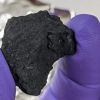
Extremely rare meteorite found in wake of spectacular U.K. fireball may contain the "building blocks of life"
Late last month, a spectacular fireball lit up the night sky over the United Kingdom and Northern Europe. Now, locals are starting to recover leftover meteorite fragments — and scientists say they may contain the "building blocks of life."
-
 +4 +1
+4 +1Newfound super-Earth alien planet whips around its star every 0.67 days
We keep getting reminders that the Milky Way's planetary diversity dwarfs what we see in our own solar system. The newfound exoplanet TOI-1685 b is yet another case in point. Astronomers found it circling a dim red dwarf star about 122 light-years from Earth. "Circling" is too ordinary a world for TOI-1685 b's motion, however; the alien world whips around its parent star once every 0.67 Earth days.
-
 +4 +1
+4 +1Rare supernova relic found at the core of our Milky Way
Data from NASA's Chandra X-ray Observatory suggests a supernova remnant known as Sagittarius A East (or Sgr A East) is the first known example of an unusual type of white dwarf stellar explosion called a Type Iax supernova in our own Milky Way galaxy.
-
 +21 +4
Riches in a Bronze Age grave suggest it holds a queen
A lavish Bronze Age burial found in southeastern Spain may hold a queen’s remains, researchers say. This unexpected discovery bolsters suspicions that women wielded political power in that region’s El Argar society, which lasted from around 4,220 to 3,570 years ago. Researchers have typically assumed that men ran Bronze Age societies (SN: 10/10/19).
-
 +11 +2
Yard-Sale Bowl Revealed To Be Rare Chinese Artifact Worth Up To $500,000
A Connecticut man bought the small porcelain bowl for $35, then asked Sotheby's experts to appraise it. They say it's a rare 15th-century Ming dynasty piece worth between $300,000 and $500,000.
-
 +22 +6
Functioning ‘mechanical gears’ seen in nature for the first time
Previously believed to be only man-made, a natural example of a functioning gear mechanism has been discovered in a common insect - showing that evolution developed interlocking cogs long before we did.
-
 +4 +1
+4 +1Archaeologists find unique ceremonial vehicle near Pompeii
Archaeologists have unearthed a unique Roman ceremonial carriage from a villa just outside Pompeii, the city buried in a volcanic eruption in 79 AD. The almost perfectly preserved four-wheeled carriage, made of iron, bronze and tin, was found near the stables of an ancient villa at Civita Giuliana, about 700 metres north of the walls of ancient Pompeii and close to where the remains of three horses were unearthed in 2018, including one still in its harness.
-
 +2 +1
+2 +1NASA discovered a dark, freaky pit on Mars and stared into the shadowy abyss
I used to have reoccurring nightmares about falling into a pit. A new image from NASA's Mars Reconnaissance Orbiter spacecraft (aka the MRO) pushes all my childhood scary-dream buttons.
-
 +18 +4
Newly discovered galaxy 'defies understanding', say astronomers
Scientists found a galaxy dating back to the early years of the universe, but appearing to be billions of years too old for that.
-
 +16 +2
Scientists confirm discovery of the most distant object of the Solar System
Scientists have confirmed the discovery of a planetoid four times farther from the Sun than Pluto, nicknamed 'Farfarout.'
-
 +13 +2
Pigs can play video games with their snouts, scientists find
Pigs can play video games, scientists have found, after putting four fun-loving swine to the test. Four pigs - Hamlet, Omelette, Ebony and Ivory - were trained to use an arcade-style joystick to steer an on-screen cursor into walls. Researchers said the fact that the pigs understood the connection between the stick and the game "is no small feat".
-
 +17 +5
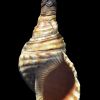
Ancient hunter-gatherer seashell resonates after 17,000 years
Archaeologists have managed to get near-perfect notes out of a musical instrument that's more than 17,000 years old. It's a conch shell that was found in a hunter-gatherer cave in southern France. The artefact is the oldest known wind instrument of its type. To date, only bone flutes can claim a deeper heritage.
-
 +9 +1
+9 +1Potentially habitable exoplanet candidate spotted around Alpha Centauri A in Earth's backyard
The nearest solar system to our own may actually host two potentially life-supporting planets, a new study reports. In 2016, scientists discovered a roughly Earth-size world circling Proxima Centauri, part of the three-star Alpha Centauri system, which lies about 4.37 light-years from Earth. The planet, known as Proxima b, orbits in the "habitable zone," the range of distances from a star at which liquid water could exist on a world's surface. (A second planet, Proxima c, was later discovered circling the star as well, but it orbits farther away, beyond the habitable zone's outer limits.)
-
 +15 +3
First tyrannosaur embryo fossils revealed
New scans of a tiny Cretaceous jaw and claw show the tyrant dinosaurs started out the size of a small dog. THE FIRST KNOWN fossils of baby tyrannosaurs reveal that some of the largest predators ever to stalk the Earth started life about the size of a Chihuahua—with a really long tail.
-
 +4 +1
+4 +1Scientists Discover 400-Year-Old Greenland Shark Likely Born Around 1620
Researchers used radiocarbon dating of eye proteins to determine the ages of 28 Greenland sharks, and estimated that one female was about 400 years old. The former vertebrate record-holder was a bowhead whale estimated to be 211 years old.
-
 +19 +2
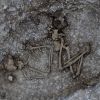
Archaeologists unearth bronze age graves at Stonehenge tunnel site
Bronze age graves, neolithic pottery and the vestiges of a mysterious C-shaped enclosure that might have been a prehistoric industrial area are among the finds unearthed by archaeologists who have carried out preliminary work on the site of the proposed new road tunnel at Stonehenge.
-
 +4 +1
+4 +1True identity of mysterious gamma-ray source revealed
An international research team including members from The University of Manchester has shown that a rapidly rotating neutron star is at the core of a celestial object now known as PSR J2039−5617
-
 +20 +4
Ridiculously Tiny Chameleons Discovered in Madagascar
Researchers have found a minuscule chameleon in Northern Madagascar, which they believe to be the smallest reptile on the planet. Small body, big attitude—just look at that face. The chameleon is Brookesia nana, abbreviated to B. nana (if you squint, it does kind of look like a banana). Females of the species are larger than males, at about three-quarters of an inch from snout to vent. The new record holders are the adult males, which are less than an inch including the tail. Oh, and the males also have huge hemipenes (genitals) in proportion to their size.
Submit a link
Start a discussion